
Understanding ASTM Testing Standards for High-Quality Geomembrane
Astm standards for geomembrane testing is a practical procurement topic for Middle East buyers comparing suppliers, specifications, and project risk. This guide uses the source product page for HDPE Geomembrane as the internal reference and focuses on what purchasing teams should verify before requesting a quotation.
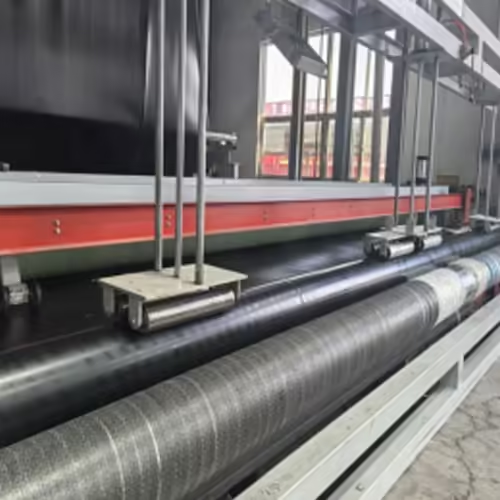
Table of Contents
- Quick buyer answer
- Source product context
- Specification and selection table
- Procurement checklist
- Useful internal links
- FAQ
Quick Buyer Answer
For B2B sourcing, the safest way to evaluate astm standards for geomembrane testing is to start from the application, then confirm the product configuration, quality documentation, packaging, and after-sales support. Do not substitute a material, machine model, or product version only by name; compare the actual operating environment and the supplier’s acceptance criteria.
Source Product Context
The relevant internal product reference is HDPE Geomembrane. The page and its related product information help buyers connect the article topic to a real product category instead of a generic definition.
- 80+ countries across Asia, Europe, Africa, and Americas trust our products for critical infrastructure projects
- Fully certified with ISO9001, ISO14001, OHSAS18001, CE, GRI-GM13, REACH, ASTM, and SGS standards
- As direct manufacturers with in-house polymer production, we eliminate middlemen and offer 15-30% better pricing than trading companies.
- 48-hour sample production for custom specifications. We adapt to your project requirements including special dimensions and performance criteria.
Specification and Selection Table
| Procurement factor | What to check | Why it matters | Recommended action |
|---|---|---|---|
| Material or configuration | Confirm the product page, drawing, and intended use | Prevents ordering the wrong grade, size, or model | Send drawings, standards, and operating conditions |
| Quality documentation | Ask for inspection method and available reports | Supports import, acceptance, and project compliance | Request test report or QC photos when needed |
| Delivery and support | Confirm packaging, shipping, spare parts, and response time | Reduces project delay and after-sales risk | Clarify lead time and service process before PO |
Procurement Checklist for Geomembrane
1. Confirm the application and working environment
Share the end-use scenario, drawings, expected load, installation environment, and any local compliance requirements. This helps the supplier recommend a suitable product instead of guessing from the keyword alone.
2. Ask for documented quality control
Request inspection photos, available test reports, production standards, and packaging details that are relevant to your order. For standards-driven projects, specify the exact standard edition or customer drawing during inquiry.
3. Compare total procurement risk, not only unit price
Lead time, packing method, after-sales support, spare parts, and export documentation can affect the true cost of a project. A slightly lower quote can become expensive if the product does not match the site conditions.
Useful Internal and External Links
- source product page for HDPE Geomembrane
- related internal product page
- related internal product page
- company website
- contact or inquiry page
External references for procurement teams:
FAQ
What information should I send when asking about astm standards for geomembrane testing?
Send the product size, quantity, application, destination country, drawings or photos, expected delivery time, and any mandatory standards. This reduces back-and-forth and helps the supplier quote accurately.
Can I rely only on the product name when comparing suppliers?
No. Product names are often broad. Compare the detailed specification, working condition, inspection method, and supplier support before making a substitution or purchase decision.
Why is the source product page important?
The source page gives buyers a real internal reference for the product category, images, and inquiry path. It also helps the article connect to a specific supplier page rather than remaining a generic explanation.
Request a Technical Quote
For a project quotation related to astm standards for geomembrane testing, prepare your drawings, quantity, application, destination port, and required standards, then contact the supplier through the inquiry page.
Send an inquiry or review the source product page.