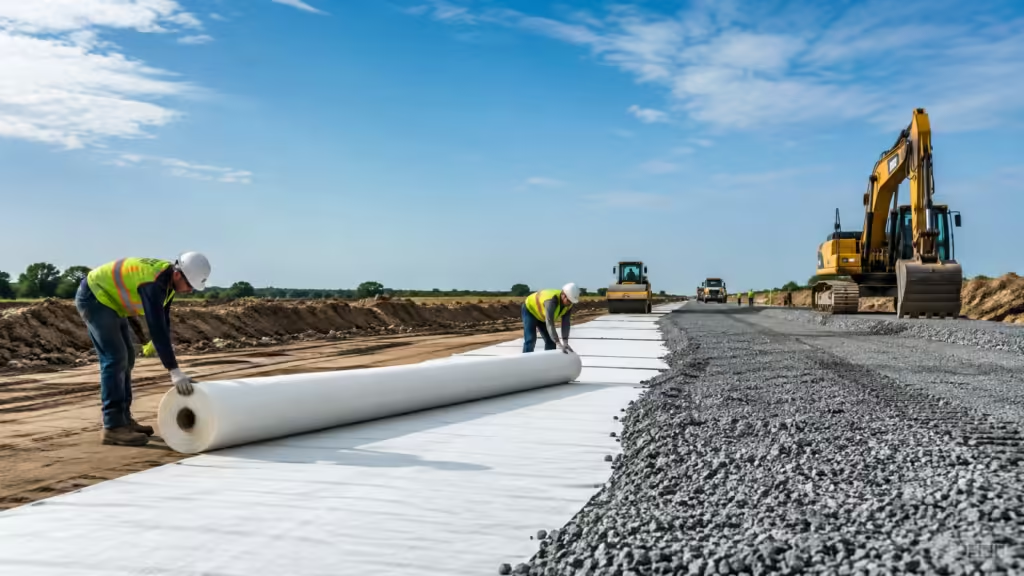
• Workers installing geotextile fabric over weak soil during road construction before aggregate placement
    Geotextile for Road Construction: How to Choose the Right Fabric Before Your Project Fails
    Geotextile for road construction should not be selected by GSM weight alone. The correct fabric depends on what problem the road project needs to solve: separating soil layers, improving drainage, stabilizing weak subgrade, or surviving heavy construction loads. Many road failures start below the surface. When fine soil mixes with aggregate, water cannot move properly, […]
    July 23, 2026
  • Composite Geotextile Tensile Strength: How to Choose the Right Reinforcement Performance for Geotechnical Projects
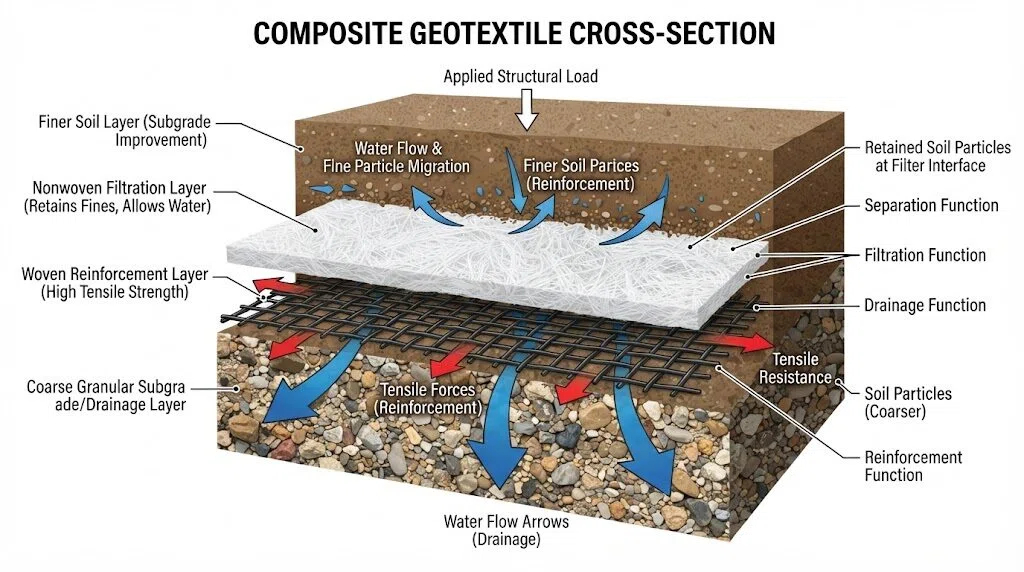
    Choosing a composite geotextile is not only about checking weight, thickness, or appearance. For reinforcement projects, composite geotextile tensile strength is one of the key values that determines whether the material can resist pulling forces, maintain soil stability, and perform under construction loads. Many project failures are not caused by the geotextile itself, but by […]
    July 16, 2026
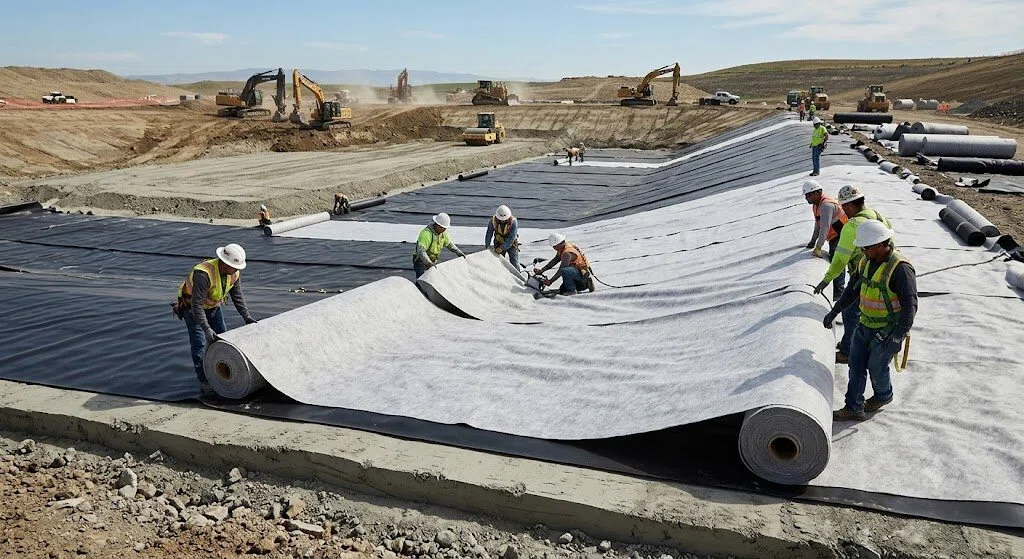
  • Professional installation of a landfill liner system, showing workers deploying a nonwoven geotextile protection layer over an HDPE geomembrane above compacted subgrade at a large-scale construction site.
    How CBR Puncture Strength Protects Geomembranes from Sharp Subgrade Damage
    If a geomembrane fails shortly after installation, the liner is not always the problem. In many projects, damage starts underneath the membrane, where sharp stones, crushed aggregate, or uneven subgrade create concentrated pressure points. Once construction equipment or overlying materials apply additional load, small punctures can quickly develop into leaks. Why do geomembranes fail on […]
    July 8, 2026
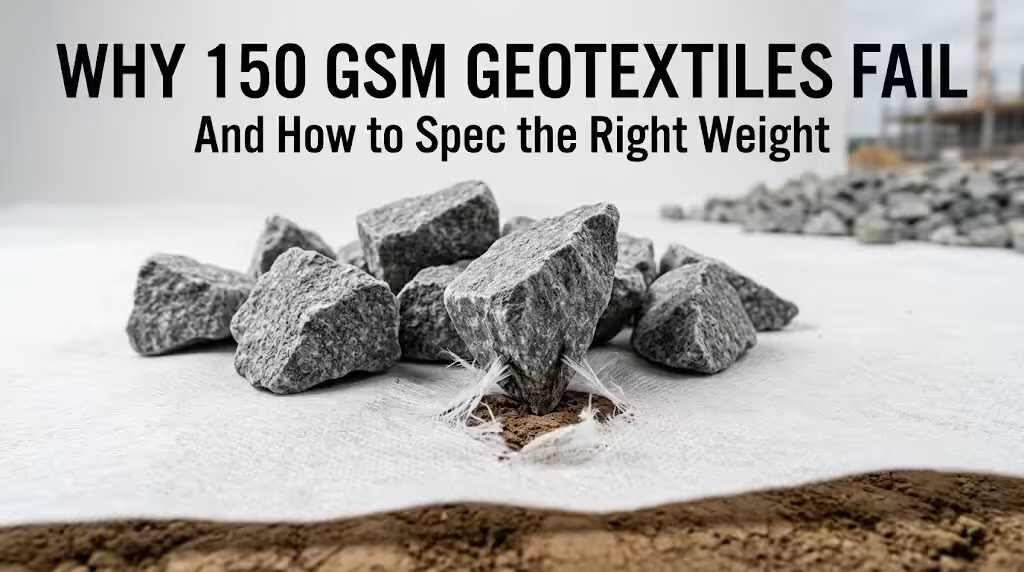
  • Blog featured cover image titled 'Why 150 GSM Geotextiles Fail And How to Spec the Right Weight' showing sharp angular quarry stones puncturing through a white non-woven staple fiber geotextile fabric layer, exposing the brown subgrade soil beneath.
    Why 150 GSM Geotextiles Fail Under Heavy Aggregate (And How to Spec the Right Weight)
    Dumping 75mm blasted quarry stone directly onto a thin filtration fabric instantly ruins your subgrade separation layer before compaction equipment even rolls out. If you under-spec your fabric weight, the aggregate punctures the matrix; if you over-spec, you waste thousands of dollars in unnecessary material overhead across large project acreages. What Causes a 150 GSM […]
    July 2, 2026
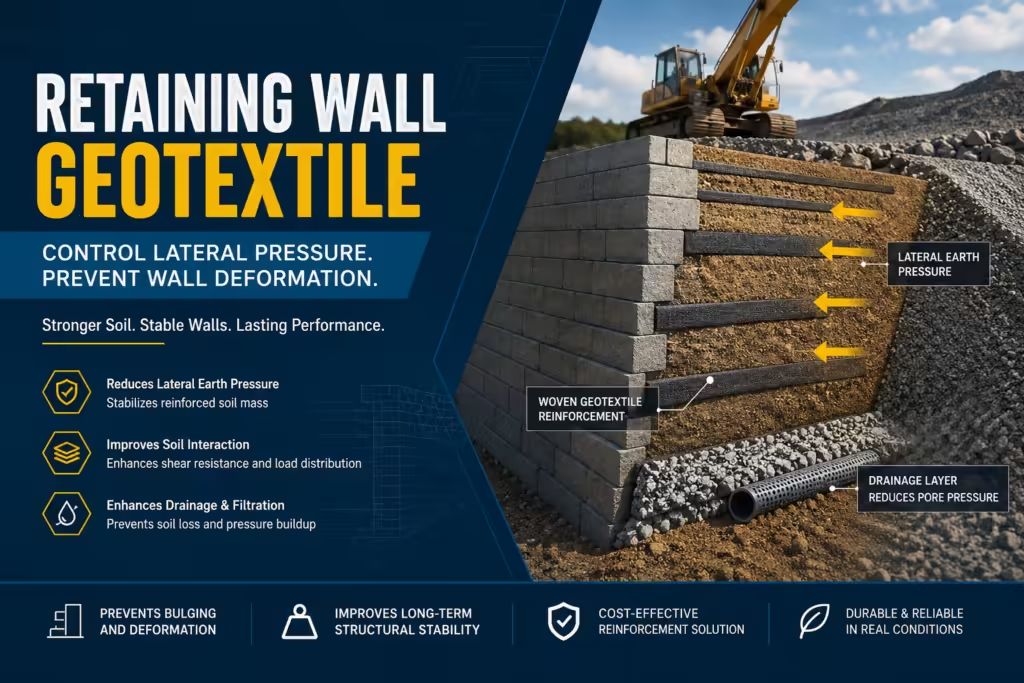
  • Retaining Wall Geotextile installed in an MSE wall system to reduce lateral earth pressure, reinforce backfill soil, and prevent wall deformation.
    Retaining Wall Geotextile for MSE Walls: Controlling Lateral Earth Pressure and Preventing Wall DeformationMSE
    When a mechanically stabilized earth (MSE) wall starts to bulge, crack, or slowly lean outward, the real issue is rarely the facing panels—it is almost always excess lateral earth pressure building up behind the reinforced zone. This is exactly where Retaining Wall Geotextile becomes a structural control layer rather than just a separation fabric. In […]
    June 30, 2026
  • Understanding ASTM Testing Standards for High-Quality Geomembrane
    Practical B2B guide to astm standards for geomembrane testing for Geomembrane buyers, covering selection factors, quality checks, links to the source produ
    June 24, 2026
  • Installation Guide: How to Prevent Tearing When Deploying Geomembrane
    Practical B2B guide to how to install geomembrane without tearing for Geomembrane buyers, covering selection factors, quality checks, links to the source p
    June 24, 2026
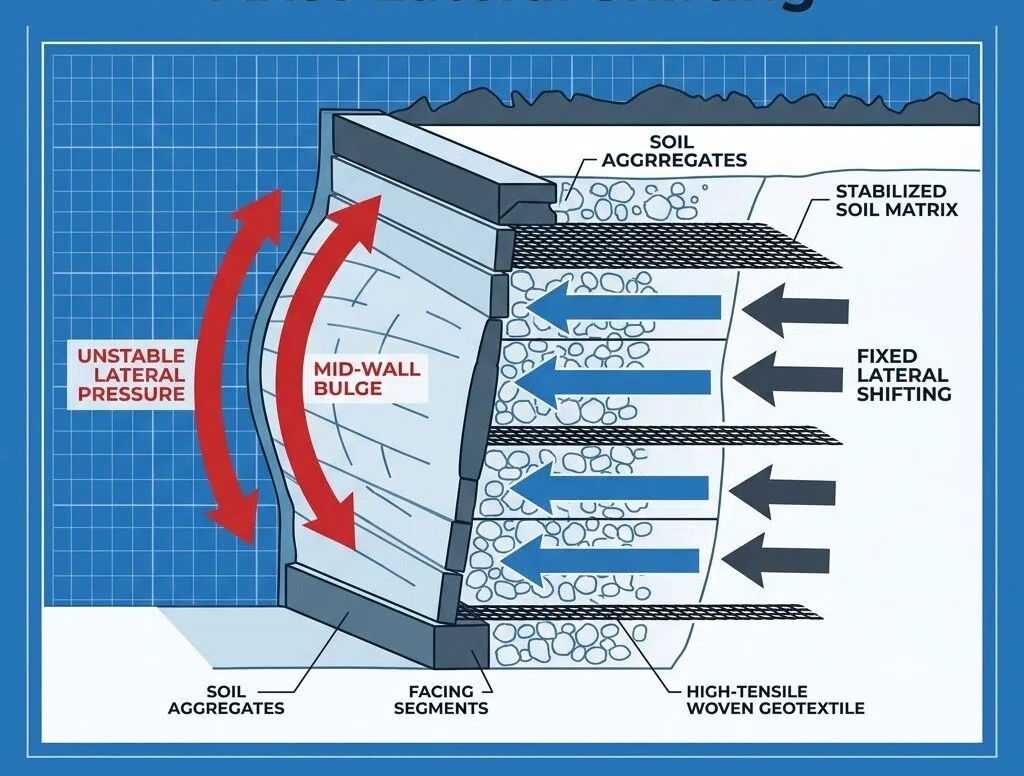
  • Technical cross-section diagram showing MSE wall bulging due to lateral earth pressure versus stabilized structure using high-tensile retaining wall geotextile reinforcement.
    Why Is Your MSE Wall Bulging? How Retaining Wall Geotextile Fixes Lateral Shifting
    When earthwork structures begin to deflect, site managers often misdiagnose the failure as a simple facing block issue. In reality, structural shifting is an internal mechanics problem driven by massive lateral forces within the backfill zone. To arrest this movement, engineers must look past superficial aesthetic fixes and implement a heavy-duty retaining wall geotextile stabilization […]
    June 24, 2026
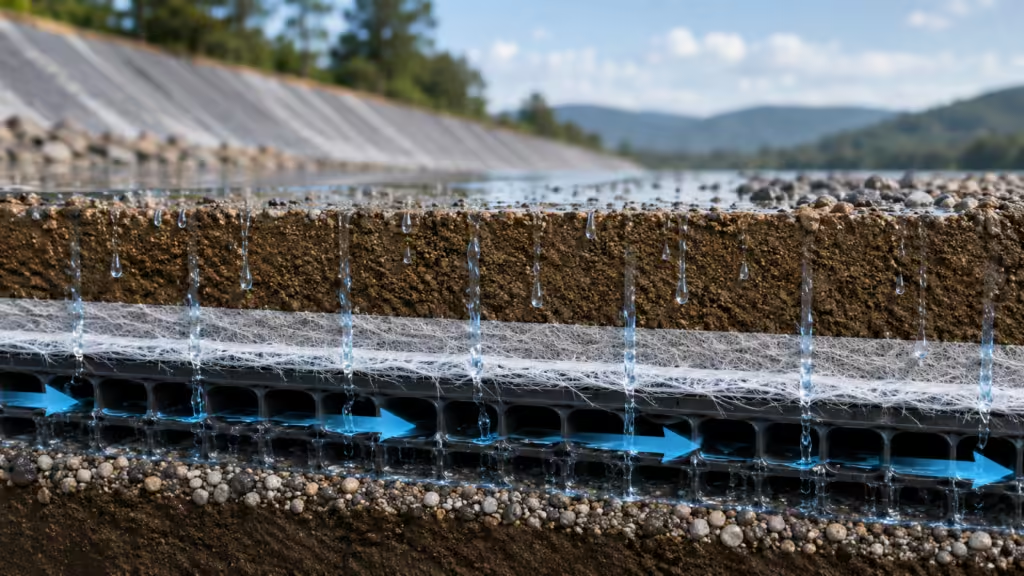
  • Hydraulic conductivity in continuous filament drainage material showing water infiltration through soil and horizontal flow through drainage channels
    Hydraulic Conductivity: Why Bad Flow Calculations Cause Water Accumulation
    Hydraulic Conductivity is not just a number on a drainage product sheet. In high-permeability projects, it helps decide whether water can move through a drainage layer fast enough to prevent ponding, pressure build-up, and long-term drainage failure. This guide explains what the parameter means, how it affects water flow rate, why poor flow calculation causes […]
    June 10, 2026
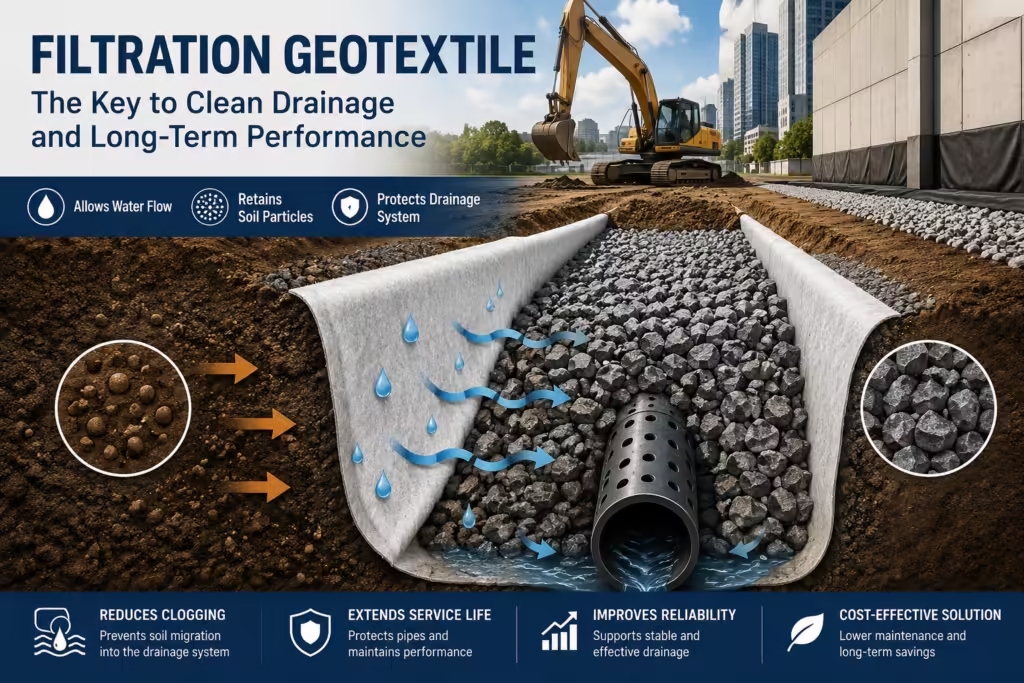
  • Filtration Geotextile drainage system cover image showing geotextile fabric, fine soil retention, water flow, gravel trench, perforated pipe, and clogging prevention
    How Filtration Geotextile Keeps Fine Soil Out of Drainage Systems
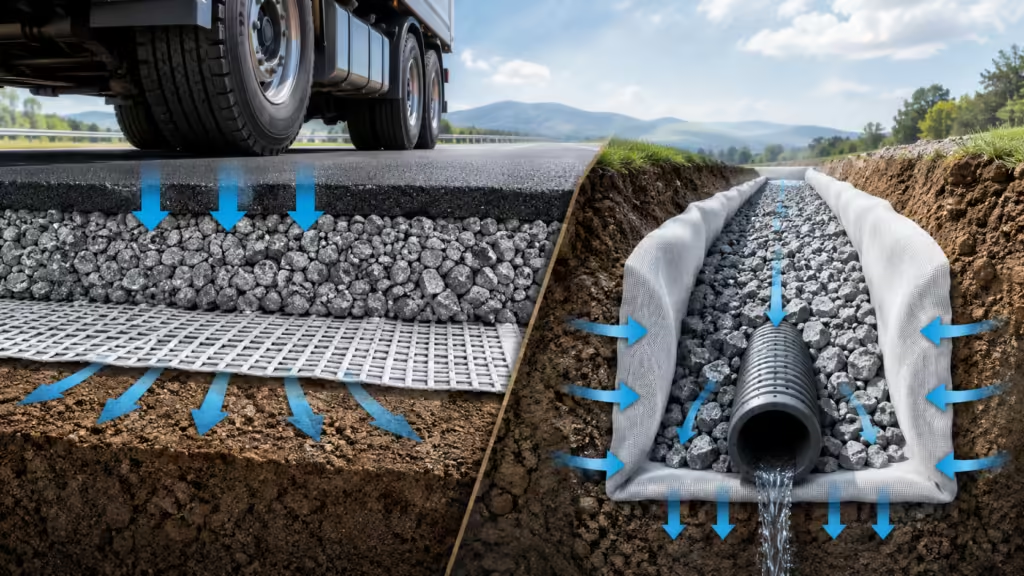
    Filtration Geotextile is used when drainage systems need two things at the same time: water must keep moving, but fine soil must not migrate into the gravel layer or drainage pipe. That balance matters in blind drains, subsurface channels, French drains, retaining wall drainage, road edge drains, and underground gravel trenches. Once fine particles move […]
    June 8, 2026
  • Geotextile polyester installation with cover layer in reservoir and mining project
    Geotextile Polyester Aging Risk in Outdoor Mining and Reservoirs
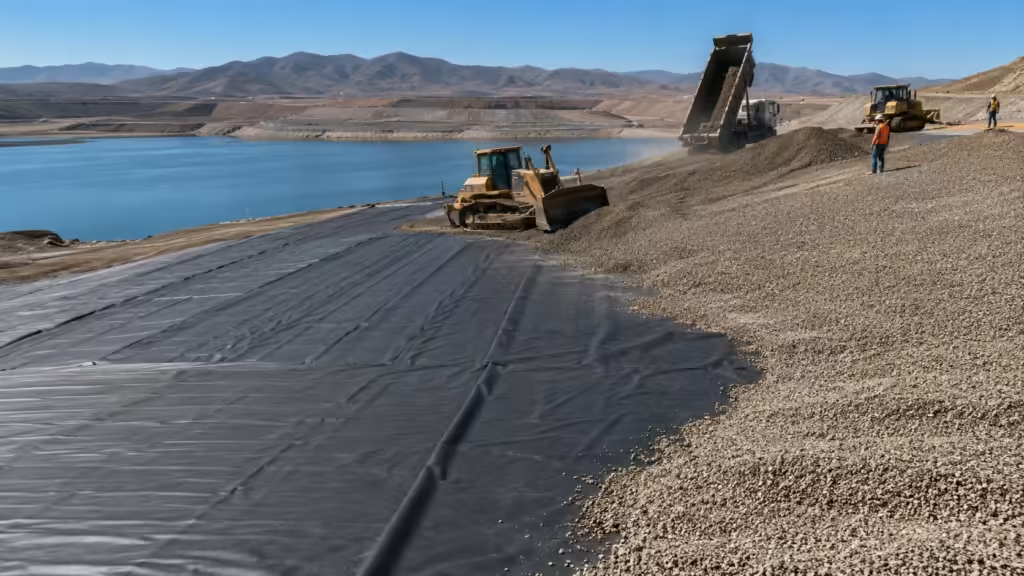
    For open-pit mines, reservoir slopes, tailings areas, drainage channels, and exposed containment works, geotextile polyester is not judged only by how strong it looks on the day of delivery. The real question is what happens after weeks or months of sun, heat, rain, wind, and dust before the material is fully covered. This guide explains […]
    June 3, 2026
  • Woven vs Non woven geotextile cover image showing woven fabric reinforcing a road base and non woven fabric filtering water in a drainage trench
    Woven vs Non woven Geotextile: Reinforcement or Filtration?
    Woven vs Non woven is not just a fabric comparison. In real civil engineering projects, it is usually a function decision: does the site need reinforcement and separation, or does it need filtration, drainage, and protection? Many buyers make the mistake of choosing by price, GSM, or what is “commonly used.” That can lead to […]
    June 1, 2026
  • Geotextile fabric under riprap for coastal erosion control and shoreline protection
    Geotextile Fabric for Erosion Control: Stop Soil Loss Behind Riprap
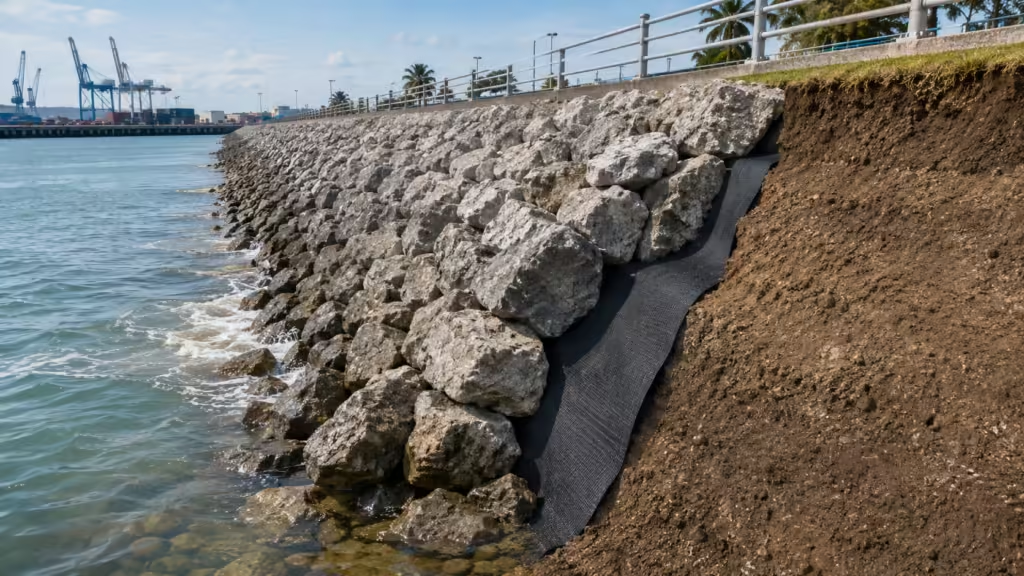
    Coastal erosion is rarely just a surface problem. When waves, tides, runoff, and storm surge keep moving water through a shoreline slope, fine soil particles can wash out from behind rock armor or revetment systems. Over time, that hidden soil loss can lead to settlement, voids, slope instability, and expensive repairs. That is why geotextile […]
    May 25, 2026
  • Continuous Filament Geotextile used in railway and airport foundation infrastructure
    Continuous Filament Geotextile: Reducing Rupture Risk in Railways, Airports, and Heavy Pavements
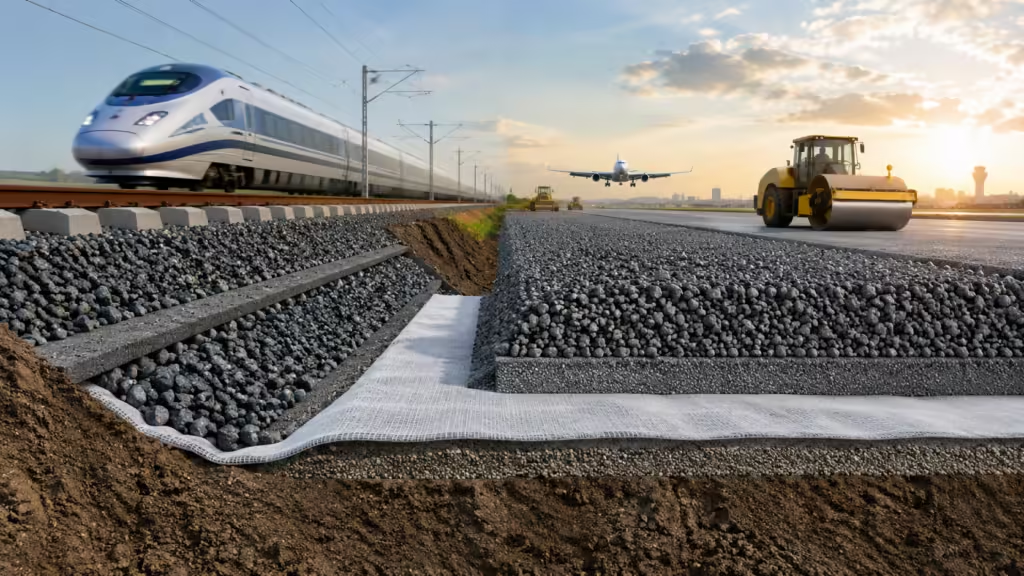
    Continuous Filament Geotextile is specified when transport infrastructure cannot afford early material rupture, drainage failure, or long-term performance loss. In high-speed railway, airport runway, and heavy pavement projects, the geotextile layer is not just a fabric placed under aggregate. It is part of the foundation system that helps control separation, filtration, drainage, and long-term stability. […]
    May 23, 2026
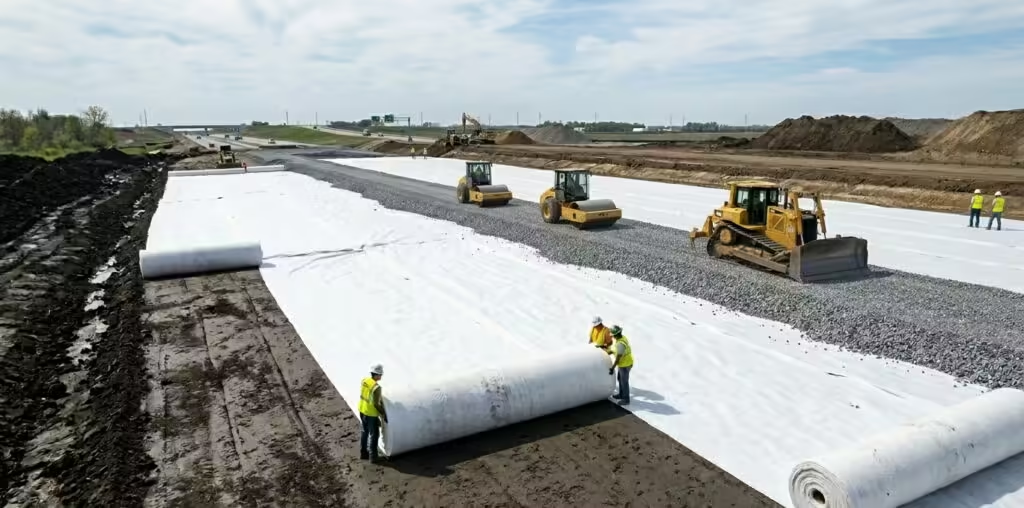
  • A wide-angle, text-free engineering photograph of a large highway construction site. Workers roll out wide sheets of white staple fiber geotextile fabric over dark clay soil, followed by a fleet of yellow bulldozers spreading aggregate base and compactors rolling the subbase.
    Can Staple Fiber Geotextile Fix Your Soft Subgrade and Stop Differential Settlement?
    Passing a heavy proof-roll on soft, saturated clay subgrades is a persistent headache for civil contractors and site engineers. When heavy dump trucks and compactors drive over unreinforced weak soil, the expensive base gravel sinks directly into the mud, leading to severe deep ruts and massive material overruns. Integrating an engineered Staple Fiber Geotextile into […]
    May 18, 2026
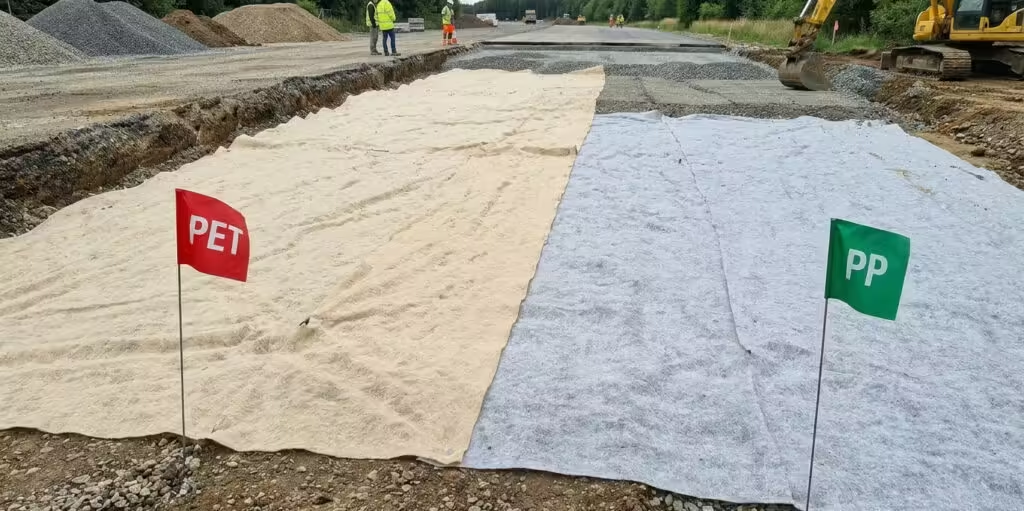
  • Real-world field trial comparison between tan-colored PET geotextile and white PP geotextile during a road subgrade stabilization project.
    PET vs PP Geotextile: The Engineering Guide to pH Compatibility and Chemical Degradation Risk
    When evaluating PET vs PP Geotextile for long-term infrastructure projects, the decision often boils down to more than just tensile strength or initial unit cost. For design institute engineers and project procurement managers, the stakes are significantly higher than simple material logistics. A wrong choice at the specification stage can lead to premature polymer degradation, […]
    May 14, 2026
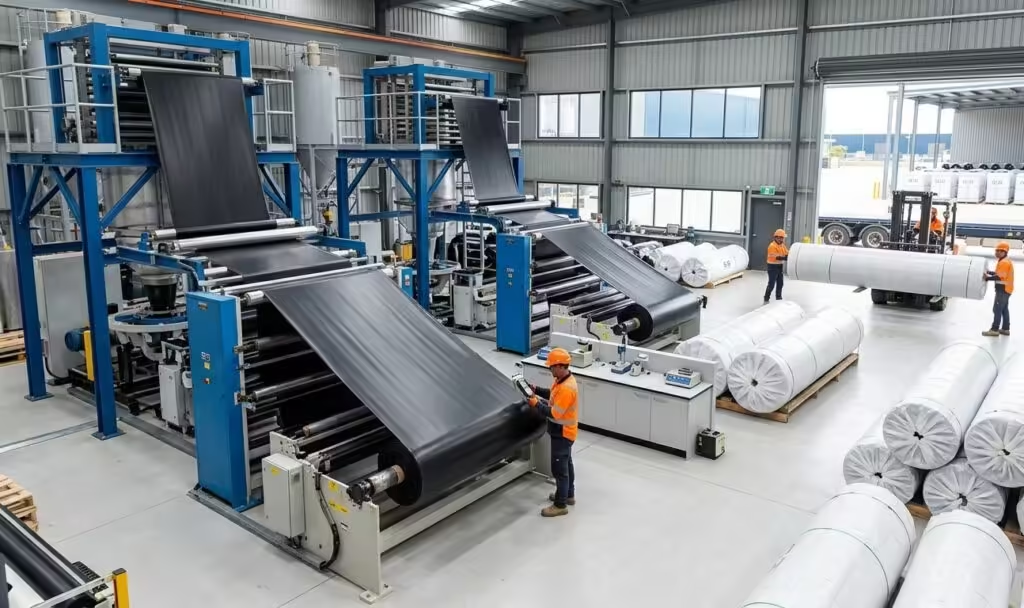
  • Interior view of a professional geomembrane manufacturer facility showing high-capacity extrusion lines, on-site QC testing station, and neatly wrapped HDPE liner rolls for bulk purchase logistics.
    How to find a reliable Geomembrane Manufacturer for the project
    In the world of civil engineering and environmental containment, the margin for error is non-existent. Whether you are lining a 50-hectare tailings pond in Chile or a municipal landfill in Southeast Asia, the integrity of your project rests entirely on a thin layer of high-density polyethylene. For procurement managers, the challenge is not just finding […]
    May 11, 2026
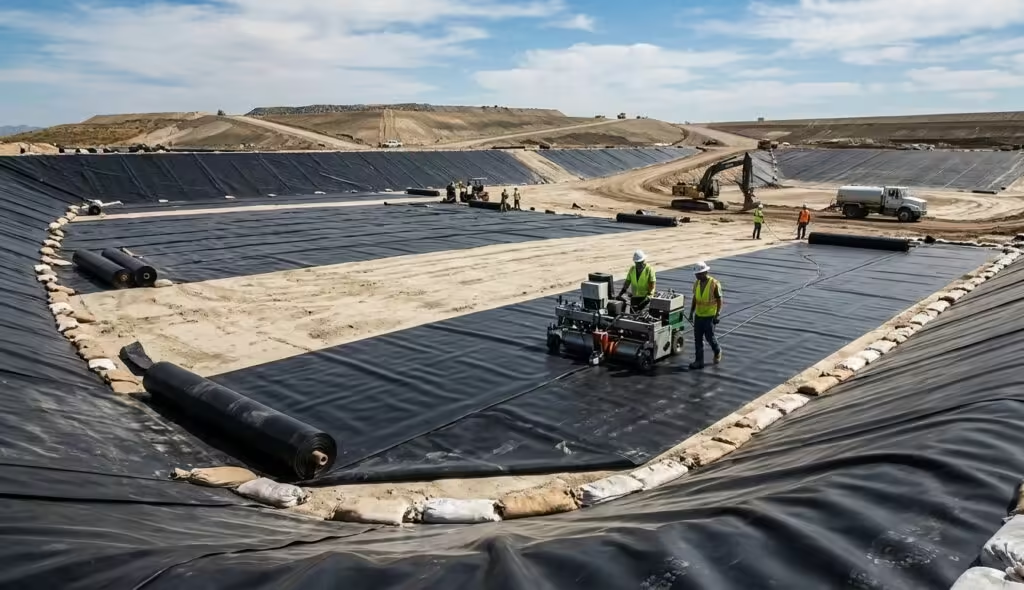
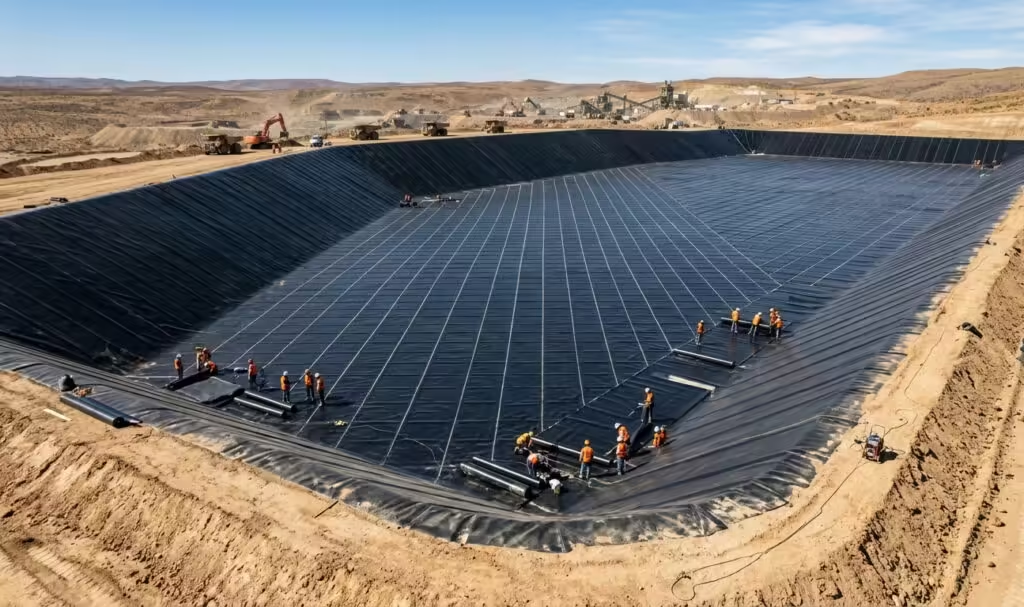
  • Aerial view of a large-scale environmental containment site showing the installation of HDPE liners meeting the GRI-GM13 Standard for landfill and mining applications.
    GRI-GM13 Standard Guide: Mastering HDPE Quality Control for Global Bidding
    In the realm of international civil engineering and environmental containment, technical specifications serve as the bedrock of project longevity. For procurement officers and site engineers, the GRI-GM13 Standard is not merely a suggestion—it is the definitive benchmark for High-Density Polyethylene (HDPE) geomembranes. Established by the Geosynthetic Institute (GSI), this specification provides a rigorous framework that […]
    May 7, 2026
  • Professional installation of high-density polyethylene liner in a massive industrial reservoir, demonstrating strict HDPE Quality Control and GRI-GM13 compliance.
    HDPE Geomembrane Standards: A Professional Guide to GRI-GM13 & ASTM Compliance
    In the high-stakes world of environmental containment—ranging from municipal landfills to hazardous mining leach pads—the integrity of a Geomembrane is the only barrier between a successful operation and an ecological catastrophe. For procurement managers and lead engineers, the challenge isn’t just buying a plastic liner; it’s ensuring that the material meets rigorous HDPE Geomembrane Standards […]
    April 29, 2026
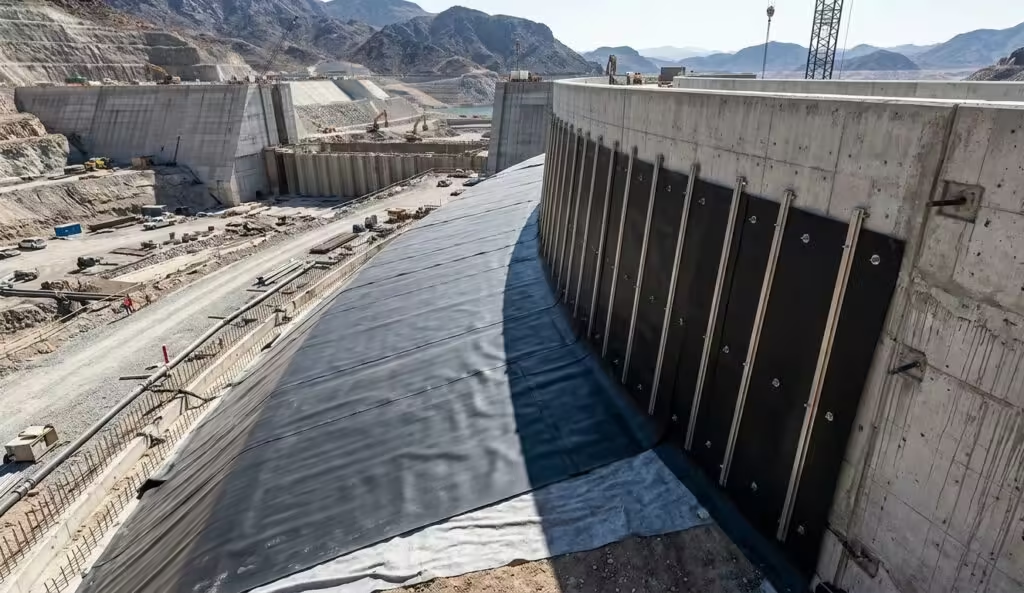
  • Technical installation of HDPE liner showing professional geomembrane sealing to a concrete wall using stainless steel batten bars at a dam construction site.
    Advanced Geomembrane Sealing Guide: Mastering Complex Technical Interfaces
    In large-scale containment projects, such as dams, landfills, and chemical lagoons, the primary geomembrane liner is only as strong as its weakest connection. While welding two flat sheets of HDPE is relatively straightforward, the true challenge lies in the precision required for Geomembrane Sealing at irregular points: concrete walls, pipe penetrations, and corner transitions. Statistically, […]
    April 27, 2026
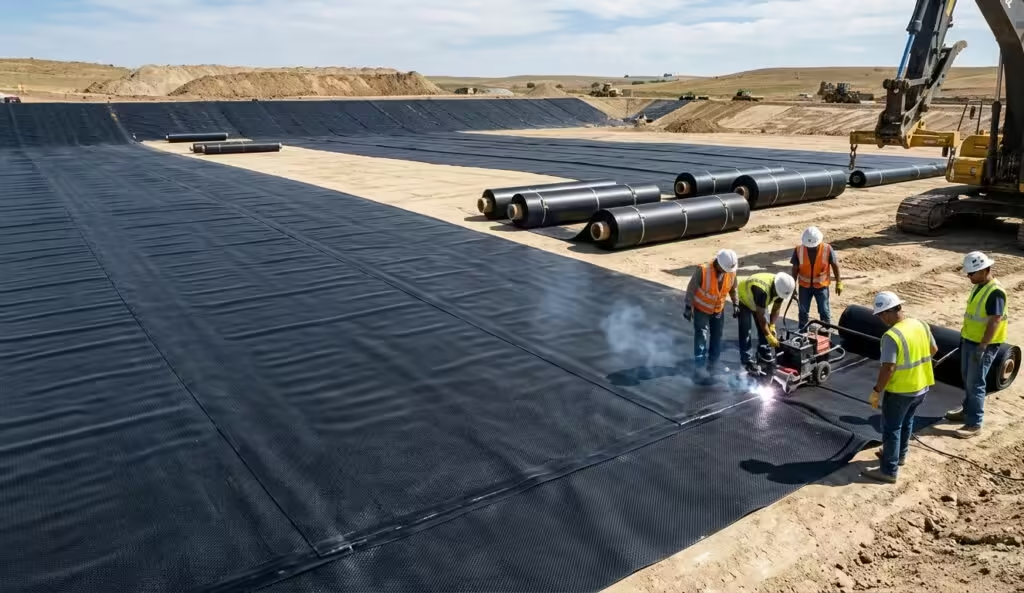
  • Professional installation of composite geomembrane at a large-scale containment site, featuring hot-wedge welding of HDPE liner with geotextile protection layer.
    Composite Geomembrane Installation: Why Geotextile Protection Layers are Mandatory
    In modern hydraulic engineering, the integrity of a seepage barrier is the single most important factor determining the lifespan of a reservoir or industrial pond. While HDPE liners have long been the industry standard, the shift toward using a Composite Geomembrane has become mandatory in high-risk environments. The reason is simple: a geomembrane is an […]
    April 24, 2026
More News →

News

Home / News

Ready to Start Your Project?

Join 1,000+ satisfied clients across 80+ countries who trust EcoGeo Material for their geosynthetic needs. Get your free quote and technical consultation today.

Global Export Leader

80+ countries across Asia, Europe, Africa, and Americas trust our products for critical infrastructure projects

Certified Excellence

Fully certified with ISO9001, ISO14001, OHSAS18001, CE, GRI-GM13, REACH, ASTM, and SGS standards

Advanced Manufacturing

$10M+ automated facility with 300+ employees including 58 technical specialists and independent testing laboratory

Complete Customization

OEM/ODM services, free samples for testing, and fully customizable specifications to meet your exact requirements

官网询盘
About EcoGeo
Contact EcoGeo
Copyright © 2025 EcoGeo Material Geotechnical Material Manufacturing Plant All Rights Reserved. Powered By Easybiz