
Benefits of NonWoven Geotextile Fabric in Landfill Bases
Welcome to My Blog!
Before we dive into the content, if you’re interested in our products or have any questions, please feel free to visit our Contact Us page on the website. Our team is ready to assist you with inquiries, orders, or any support you may need.
Now, let’s get started on our journey together. I hope you find the content here insightful, engaging, and valuable.
Table of Contents
Introduction
The modern landfill system is more than just a waste containment site—it’s a complex engineering structure designed to prevent environmental pollution and groundwater contamination. One of the key materials ensuring its success is the nonwoven geotextile fabric, a vital component for separation, filtration, and protection within landfill bases.
In this article, we’ll explore the essential role and benefits of nonwoven geotextile fabric in landfill bases, from enhancing filtration and drainage to ensuring long-term environmental safety and project durability.
The Role of NonWoven Geotextile Fabric in Landfill Engineering
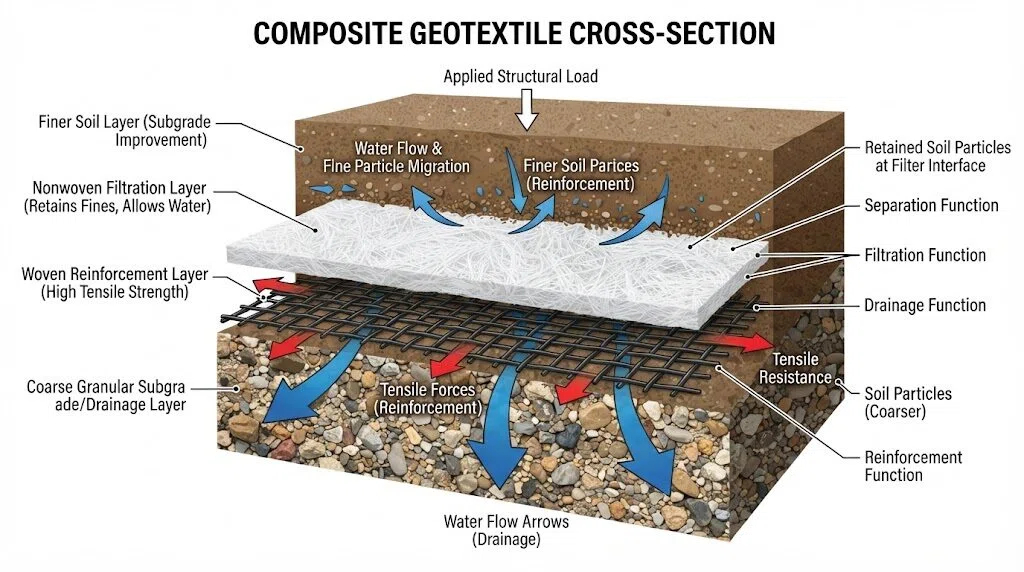
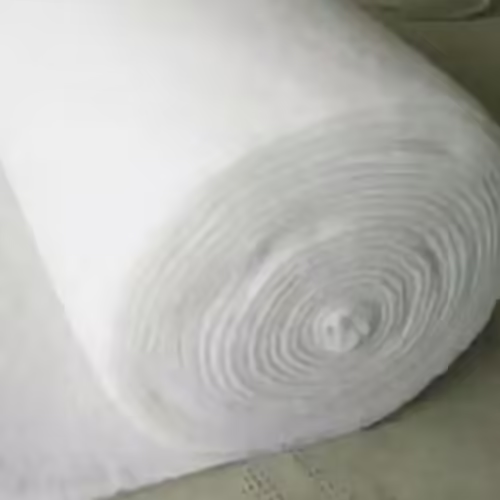
A nonwoven geotextile fabric is made from synthetic fibers that are mechanically bonded to create a durable, permeable material. In landfill base systems, it acts as a multifunctional barrier that separates soil layers, filters leachate, prevents geomembrane puncture, and promotes drainage.
According to a study published in the Journal of Geotechnical and Geoenvironmental Engineering, incorporating nonwoven geotextile fabric can improve base layer filtration efficiency by more than 40% while reducing leachate accumulation. This directly enhances the structural integrity and environmental performance of landfill systems.
Key Benefits of NonWoven Geotextile Fabric in Landfill Bases
1. Improved Leachate Filtration and Drainage
Leachate management is one of the biggest challenges in landfill design. Nonwoven geotextile fabric allows liquids to pass while trapping fine soil particles, maintaining a stable drainage system. This prevents clogging in leachate collection pipes and reduces maintenance costs over time.
2. Protection of Geomembrane Liners
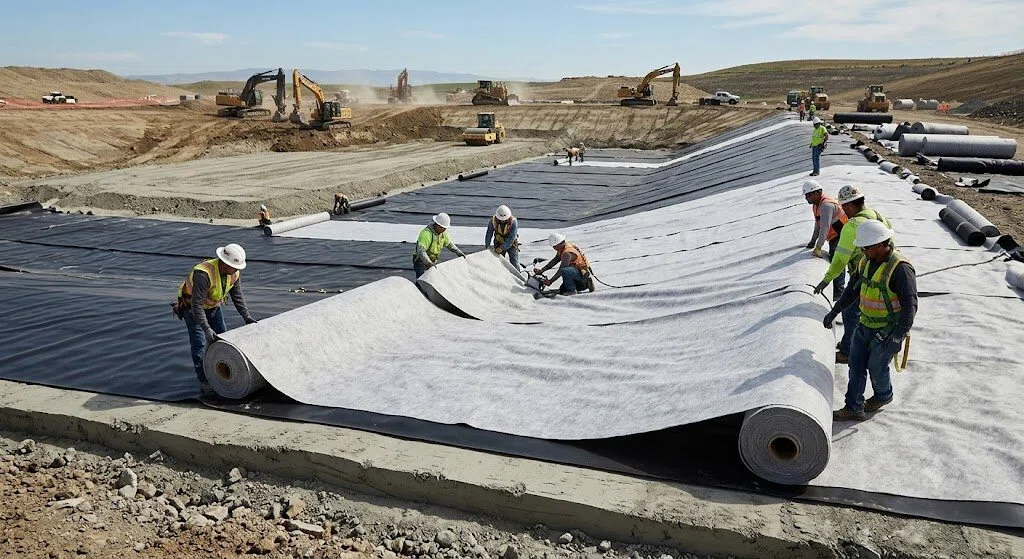
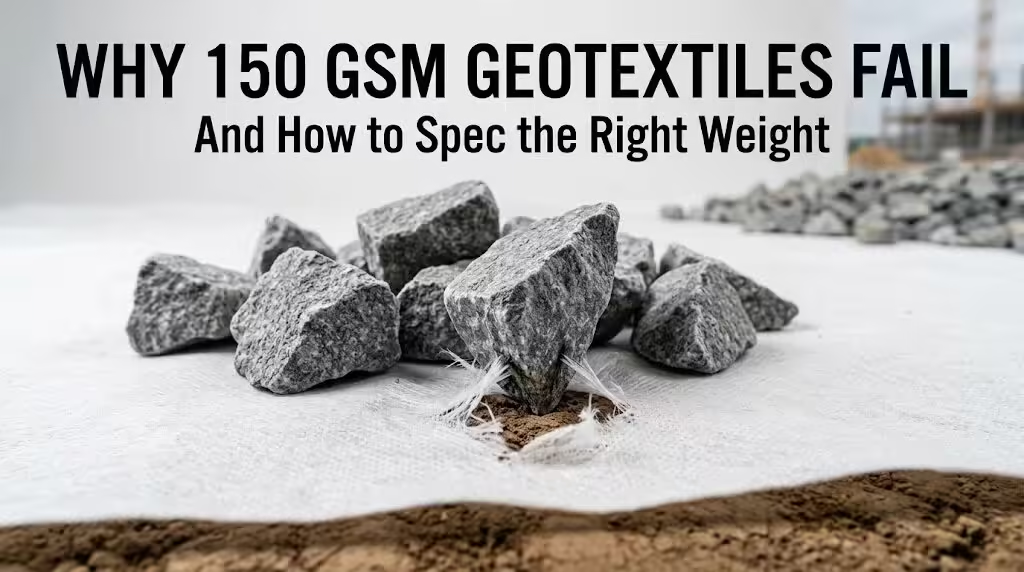
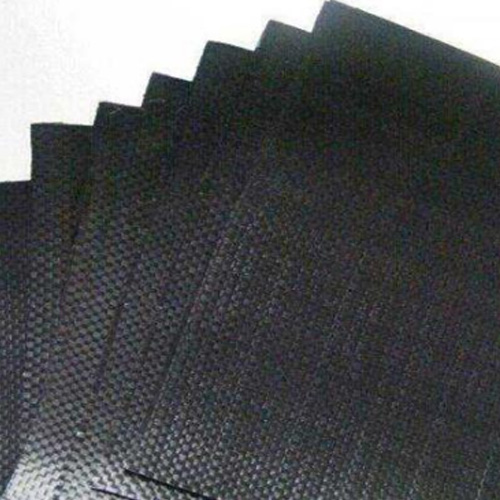
Placed above or below geomembrane liners, nonwoven geotextile fabric acts as a cushioning layer. It absorbs mechanical stress during waste placement and compaction, preventing punctures or tears in the liner. This protection is crucial because even a small liner defect can lead to contamination of surrounding soils and groundwater.
3. Soil Separation and Base Stability
The separation function of nonwoven geotextile fabric prevents mixing between subgrade soil and drainage aggregates. This maintains structural strength and uniform load distribution, extending the landfill’s operational lifespan and minimizing settlement issues.
4. Chemical and Biological Resistance
Landfill environments expose materials to chemicals, leachates, and microorganisms. Nonwoven geotextile is chemically inert and resistant to biological degradation, ensuring long-term durability and consistent performance even in harsh conditions.
Performance Comparison of NonWoven Geotextile Fabric Types
The choice of fabric type affects drainage performance, mechanical strength, and protection capacity. Below is a reference table comparing commonly used nonwoven geotextile fabrics for landfill bases.
| Fabric Type | Main Function | Typical Application | Advantages | Durability |
|---|---|---|---|---|
| Lightweight NonWoven Fabric | Filtration & Drainage | Leachate control layers | High permeability, easy installation | Moderate |
| Medium Weight Fabric | Separation & Protection | Geomembrane cushioning, soil separation | Balanced strength and filtration | High |
| Heavy Weight Fabric | Reinforcement & Cushioning | Base liner protection and stress relief | Excellent puncture resistance | Very High |
Selecting the right nonwoven geotextile fabric depends on the landfill design, expected load, leachate composition, and drainage requirements. Working with an experienced manufacturer ensures the material’s technical specifications align with project needs.
Installation Considerations for NonWoven Geotextile
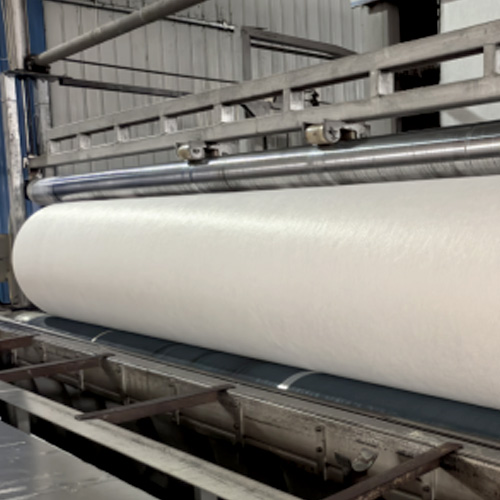
To maximize performance, proper installation practices are crucial:
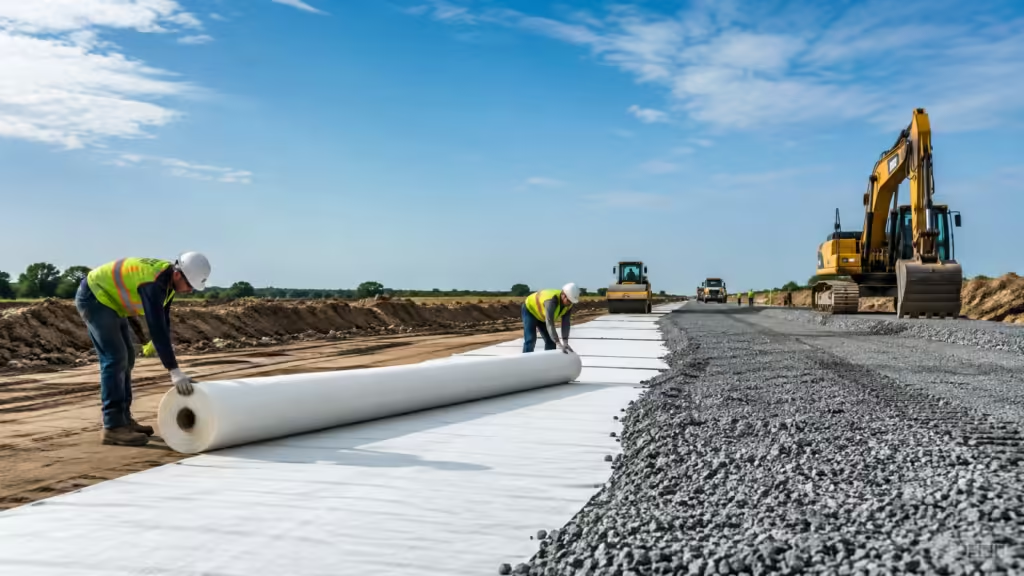
- Surface preparation: Ensure the subgrade is smooth, free of sharp objects, and compacted.
- Overlap and alignment: Overlap adjacent sheets by at least 300 mm to maintain integrity.
- Anchoring: Use pins or trenching to secure the edges and prevent displacement.
- Protection: Avoid dragging heavy machinery directly over the fabric.
- Inspection: Perform quality checks before placing overlying materials or geomembranes.
Following these procedures ensures that the nonwoven geotextile performs as intended, enhancing landfill stability and preventing liner damage.
Environmental and Economic Advantages
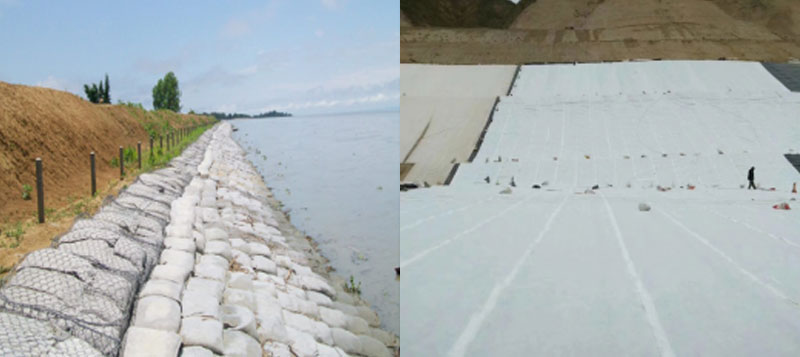
Using nonwoven geotextile fabric in landfill bases provides measurable benefits beyond engineering performance.
- Reduced material costs: Eliminates the need for thick gravel layers in drainage systems.
- Improved sustainability: Reduces the use of natural aggregates, minimizing environmental impact.
- Extended landfill life: Better drainage and soil separation delay system degradation.
A report by the International Geosynthetics Society (IGS) found that integrating geotextile fabrics in landfill design can lower base construction costs by up to 20% while improving leachate control efficiency.
Conclusion
The integration of nonwoven geotextile fabric in landfill bases represents a major advancement in sustainable waste management and geotechnical engineering. Its multifunctional role—filtration, separation, protection, and drainage—ensures both structural integrity and environmental compliance. At EcoGeo Material, we combine decades of experience in geosynthetics manufacturing with modern engineering expertise to deliver high-performance nonwovengeotextile fabric solutions tailored to your landfill and environmental projects.
Ready to strengthen your landfill base design with proven materials?
Contact EcoGeo Material today to discuss your project requirements and discover how our geosynthetic solutions can ensure long-term performance and environmental protection.
FAQ
What is the main purpose of nonwoven geotextile fabric in landfill bases?
It provides separation, filtration, protection, and drainage functions, ensuring long-term landfill stability and environmental safety.
How long does nonwoven geotextile fabric last underground?
Depending on material quality and environmental exposure, it can last 25–50 years or more.
Can nonwoven geotextile resist harsh landfill chemicals?
Yes. It is made from polypropylene or polyester, which are resistant to acids, alkalis, and organic compounds.
Is nonwoven geotextile fabric suitable for use under geomembranes?
Absolutely. It is often used as a cushioning layer to prevent geomembrane puncture from sharp aggregates or waste.
How to choose the right nonwoven geotextile for a landfill project?
Consider factors such as tensile strength, permeability, thickness, and expected stress conditions. Consulting a professional manufacturer is recommended.