
Choosing The Right Non-Woven Geotextile Fabric For Drainage
Table of Contents
Introduction
Welcome to EcoGeo Material’s guide on selecting the optimal non-woven geotextile fabric fabric for your drainage and separation needs. As a professional geomaterials manufacturer based in Shandong, China, we understand that correct material selection is paramount to the longevity and performance of any civil or environmental engineering project.
Understanding Non-Woven Geotextile Fabric
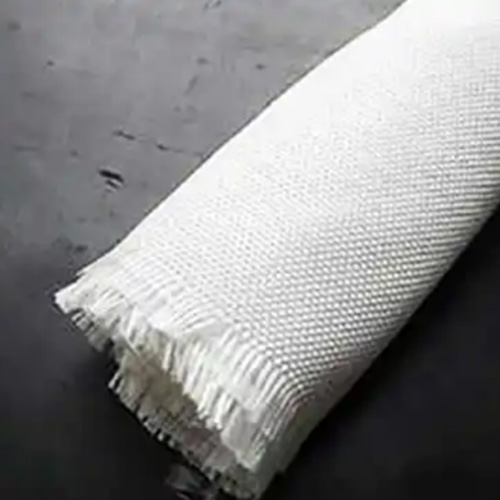
Non-woven geotextile fabrics are indispensable components in modern infrastructure. Understanding their composition and function is the first step toward successful material selection.
Definition and Manufacturing Process
A non-woven geotextile fabric is a permeable synthetic material made from fibers (typically polypropylene (PP) or polyester (PET)) randomly oriented and bound together to form a mat-like fabric.
The most common manufacturing technique is needle-punching. This process mechanically interlocks the fibers, creating a resilient, three-dimensional structure with high porosity. This unique structure gives non-woven geotextile fabric their superior filtering and fluid transmission characteristics—a key advantage offered by EcoGeo Material’s high-quality production line.
Key Functions in Drainage Systems: Filtration and Separation
In drainage applications, non-woven geotextile fabric serve two primary, critical roles:
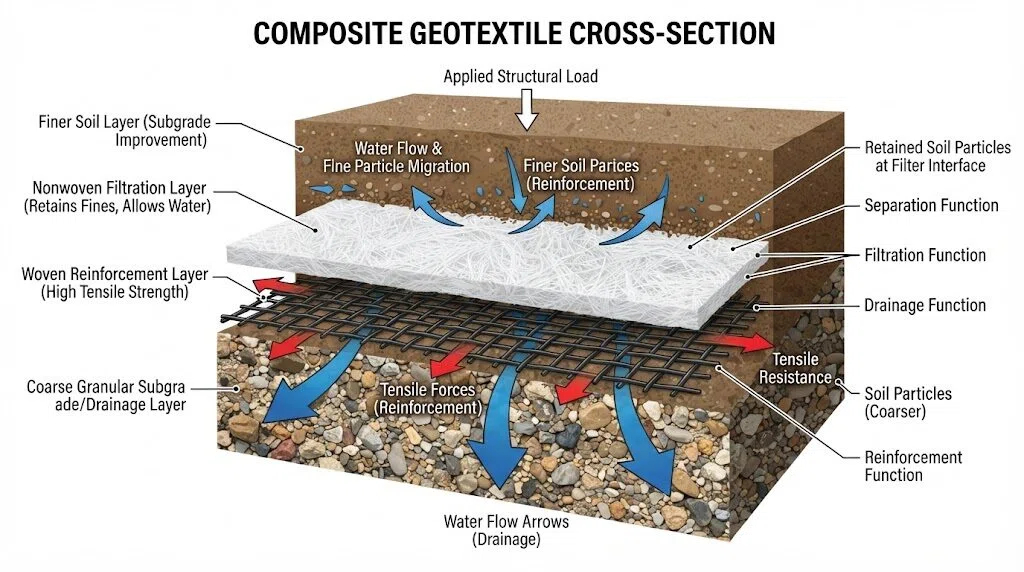
- Filtration: The fabric allows water to pass through freely while retaining fine soil particles. This prevents the clogging of perforated pipes, gravel drains, or drainage composites, ensuring the long-term efficiency of the system.
- Separation: It isolates two adjacent layers of soil or aggregate with different particle sizes. For instance, separating fine subgrade soil from a coarse drainage layer prevents contamination and intermixing, which would otherwise compromise the drainage layer’s hydraulic capacity.
Why Non-Woven for Drainage?
While woven geotextiles offer superior tensile strength for reinforcement, non-woven geotextile fabric are the material of choice for almost all drainage and filtration tasks due to their unique properties.
High Permittivity and Water Flow Characteristics
The random, fibrous structure of non-woven fabric creates numerous interconnecting pore spaces. This results in high permittivity (the ability to transmit fluid through its thickness), ensuring excellent lateral and normal water flow. This is critical in applications like French drains or trench drains, where rapid water movement is essential.
Protection and Cushioning Against Dynamic Loads
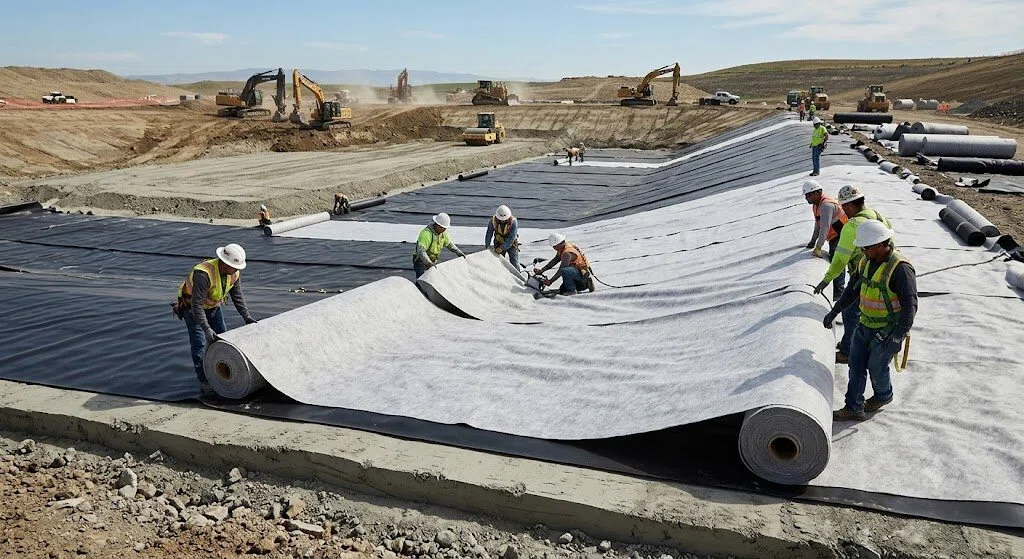
Beyond drainage, non-woven fabrics are widely used to protect underlying geomembranes (like our core product, Geomembrane) in landfill and water storage applications. Their thickness and inherent elongation provide an exceptional cushioning layer, absorbing the stress from sharp rocks or aggregate layers and significantly reducing the risk of puncture under both static and dynamic loads.
Critical Technical Specs for Drainage
Choosing the right non-woven geotextile fabric depends on satisfying specific technical requirements dictated by the soil conditions and hydraulic design. Procurement professionals must prioritize the following parameters:
Permittivity and Pore Size Distribution
- Permittivity ($\Psi$): This value is paramount for drainage projects. It measures the volumetric flow rate of water per unit area under a unit hydraulic gradient and is crucial for ensuring the fabric can handle the anticipated water flow without creating hydrostatic pressure buildup.
- Apparent Opening Size (AOS): Also known as $O_{95}$, this determines the maximum opening size of the geotextile’s pores. The AOS must be carefully matched to the soil’s particle size distribution to ensure adequate soil retention (preventing fines from washing through) while maintaining adequate permeability (allowing clean water to pass).
Strength Parameters: Tensile and Puncture Strength
Even when the primary function is drainage, strength remains a key factor:
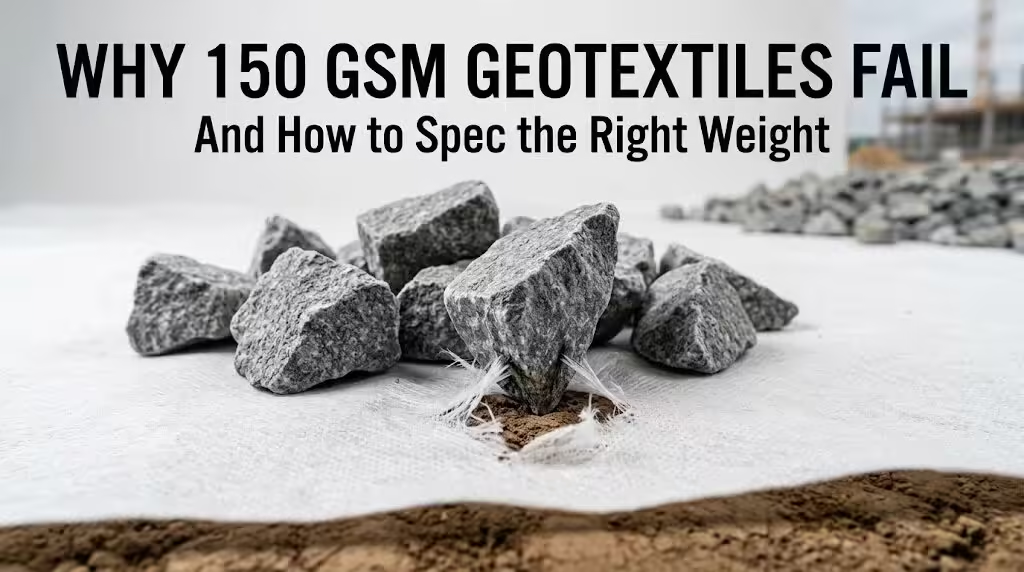
- Puncture Resistance: Measured by standard tests (e.g., CBR Puncture), this is vital when the fabric is installed over uneven ground or beneath aggregate fill. Higher puncture resistance is required for protecting geomembranes in harsh environments like mining or landfill cells.
- Tensile Strength: While non-woven fabrics have lower strength than woven ones, they still need sufficient tensile strength to withstand installation stresses, handling, and potential movement during their service life.
Durability: UV and Chemical Stability
Geotextiles used in environmental projects, such as wastewater treatment facilities or tailing ponds, must withstand exposure to various chemicals.
- Materials like polypropylene (PP) are highly inert and offer excellent chemical stability against acids, alkalis, and many organic solvents.
- The fabric must also possess adequate UV resistance if it is exposed to sunlight during installation or temporary service.
Selection Guide by Project Type
EcoGeo Material serves a wide range of industries, each with unique drainage requirements:
Road and Railway Drainage
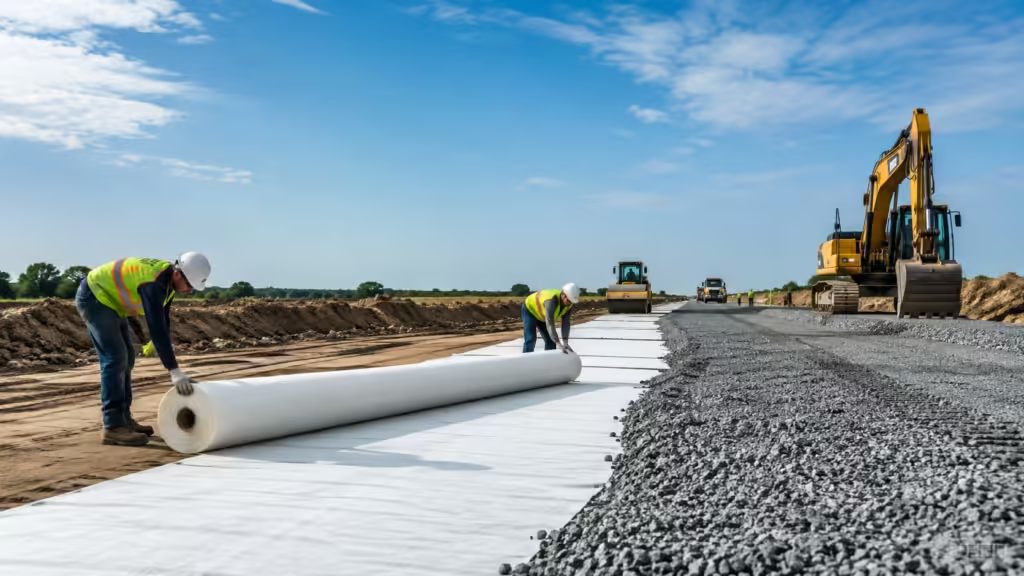
Here, the focus is typically on separation and filtration. A medium-weight, high-permittivity non-woven fabric prevents the intrusion of fine subgrade soils into the granular base course, maintaining the structural integrity of the pavement over time.
Landfill and Hydraulic Engineering
These projects require the highest levels of protection. Heavyweight, high-puncture-resistance non-woven fabrics are essential to shield costly geomembrane liners from damage caused by angular stones in the protective soil layer.
Landscape and Sports Field Drainage
These applications usually demand lighter GSM fabrics with high permeability for efficient subsurface drainage, preventing standing water and maintaining a stable playing surface or healthy plant environment.
Tunnel and Underground Structure Drainage
In tunnels and basements, non-woven geotextile fabric are often used in conjunction with drainage geocomposites (e.g., drainage nets) to collect and convey seepage water away from the structure while filtering out fine particles.
Calculating and Selecting the Right GSM
The Grams per Square Meter (GSM) represents the material’s weight, which is directly proportional to its thickness and, generally, its strength and cushioning capacity.
- Design Principle: You must satisfy two criteria: the Hydraulic Criterion (based on AOS and Permittivity to ensure proper filtration) and the Mechanical Criterion (based on Puncture and Tensile Strength to ensure survival during installation).
- The greater the hydraulic flow requirement or the rougher the subgrade, the higher the required GSM/weight will be. Always consult the project’s engineering specifications to find the balance between cost-effectiveness and performance.
EcoGeo Material: Your Non-Woven Drainage Solutions
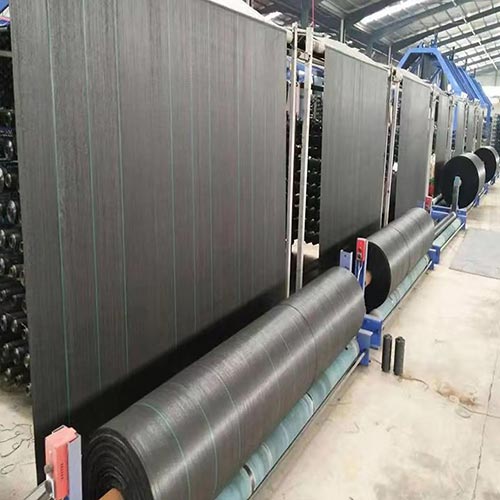
Choosing EcoGeo Material means partnering with a specialist committed to geosynthetic excellence.
Quality Control and Certifications
Located in Shandong, our state-of-the-art facility maintains strict quality control, ensuring that our non-woven geotextile fabric meet or exceed international standards for permittivity, AOS, and strength, providing reliable products for your most demanding projects.
Customization and Installation Support
We offer a range of customizable specifications, including various widths and lengths, to minimize on-site waste and optimize installation efficiency. Our team provides technical consultation to help you select the exact fabric grade needed for optimal filtration and drainage performance.
Installation and Maintenance Tips
To maximize the long-term performance of your non-woven drainage system:
- Subgrade Preparation: Ensure the subgrade is free of large rocks, sharp objects, and debris before deployment to prevent immediate puncture.
- Overlapping: Proper overlapping (anchoring) is critical, particularly in areas of high stress or sloping ground, to maintain continuous filtration and separation integrity.
- UV Exposure: Minimize the fabric’s exposure to direct sunlight before covering it, as prolonged UV exposure can degrade its tensile strength and durability.
Conclusion
Selecting the correct non-woven geotextile fabric for drainage transcends merely choosing a fabric; it is about ensuring the long-term hydraulic integrity and mechanical protection of your civil or environmental engineering investment. The decision rests on carefully balancing three critical parameters: permittivity for water flow, AOS for soil retention, and strength for installation survival.
At EcoGeo Material, we are dedicated to providing high-quality, manufactured geotextiles that meet these stringent requirements across diverse applications—from road subgrades and landfill protection to specialized hydraulic works.
FAQ
What is the expected lifespan of non-woven geotextile fabric?
When properly installed and covered, non-woven geotextile fabric are designed to last for decades, often exceeding the design life of the project itself.
Is PP or PET better for drainage?
Both are excellent. PP (polypropylene) is generally preferred for its superior chemical resistance in acidic/alkaline environments, while PET (Polyester) may offer slightly higher short-term tensile strength.
How does non-woven compare to a drainage net?
Non-woven provides excellent filtration and separation; drainage nets (geocomposites) are used primarily for high-volume, rapid water conveyance. The two are often used together, with the non-woven acting as the filter layer surrounding the net.
Need Help Choosing the Right Geotextile for Your Project?
If you’re unsure about which non-woven geotextile fabric (by GSM, AOS, or Puncture Resistance) is best suited for your specific drainage, separation, or protection application, our geomaterials experts are here to help.
Contact EcoGeo Material today for a personalized consultation on product specifications and installation guidance, ensuring your infrastructure project is durable, stable, and up to code.