
Dam Rehabilitation with Geosynthetics: Materials, Methods and Long-Term Performance
Table of Contents
Dam Rehabilitation must balance safety, longevity, and cost, and geosynthetic liners are proving to be an effective tool in many retrofit scenarios. This article explains how these liners function, the materials commonly used, installation approaches, and the typical mistakes engineers and contractors should avoid during retrofit projects.
Why modern Dam Rehabilitation needs new tools
Traditional repair methods—concrete overlays, riprap, or earthen buttressing—still have their place. But many aging dams present leakage, seepage paths, or embankment erosion that require flexible, impermeable solutions. Geosynthetic liners provide reliable impermeability while accommodating settlement and differential movement often encountered in retrofits.
Geosynthetic liners: materials and functions in Dam Rehabilitation
Geosynthetic liners include geomembranes (HDPE, LLDPE, PVC), geosynthetic clay liners (GCLs) and geotextile-backed composites. In Dam Rehabilitation, geomembranes are commonly selected for their low permeability and chemical resistance. GCLs—bentonite clay encased in geotextile—offer self-sealing properties useful in foundation contact zones. The choice of geosynthetic liner affects installation method, anchoring requirements and long-term performance.
Site assessment and compatibility considerations
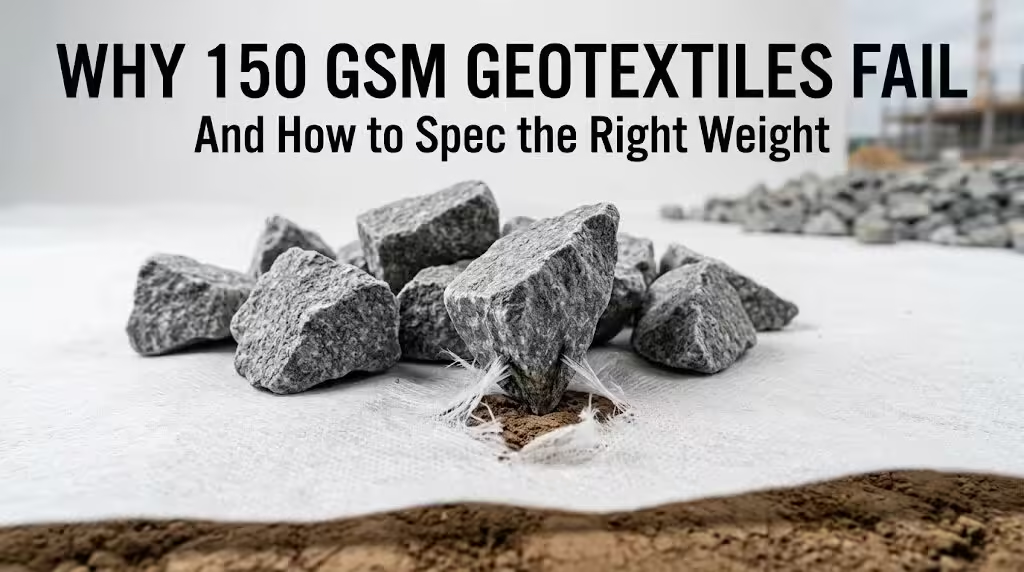
Successful Dam Rehabilitation begins with a thorough site investigation. Substrate condition, slope stability, and downstream environment must be assessed. Some older embankments have uneven surfaces or debris that can puncture a liner—surface preparation and cushion layers (geotextiles or sand) are therefore essential. Compatibility between the liner and any existing seepage control measures should be checked to avoid unintended interactions.
Installation methods and quality control
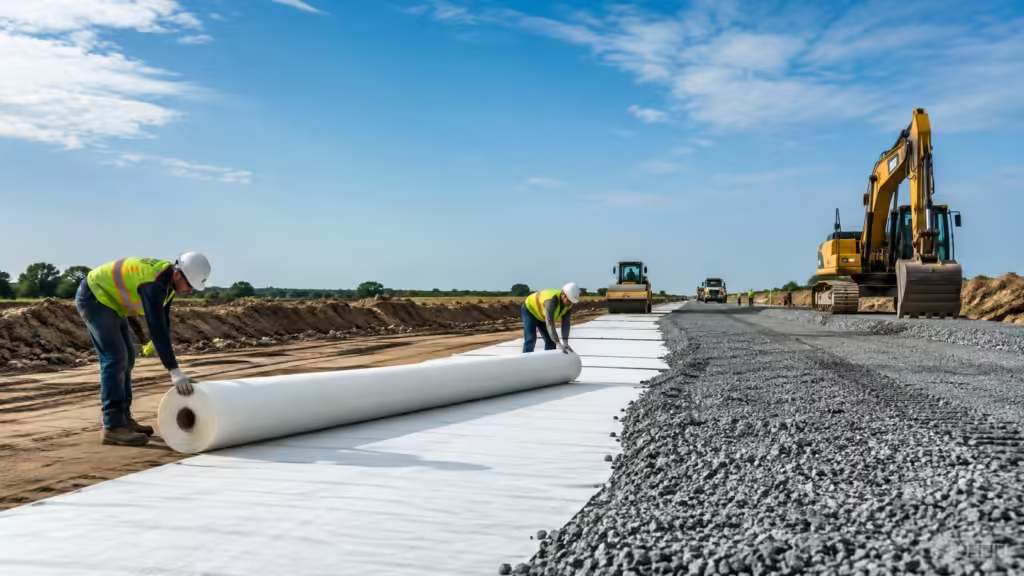
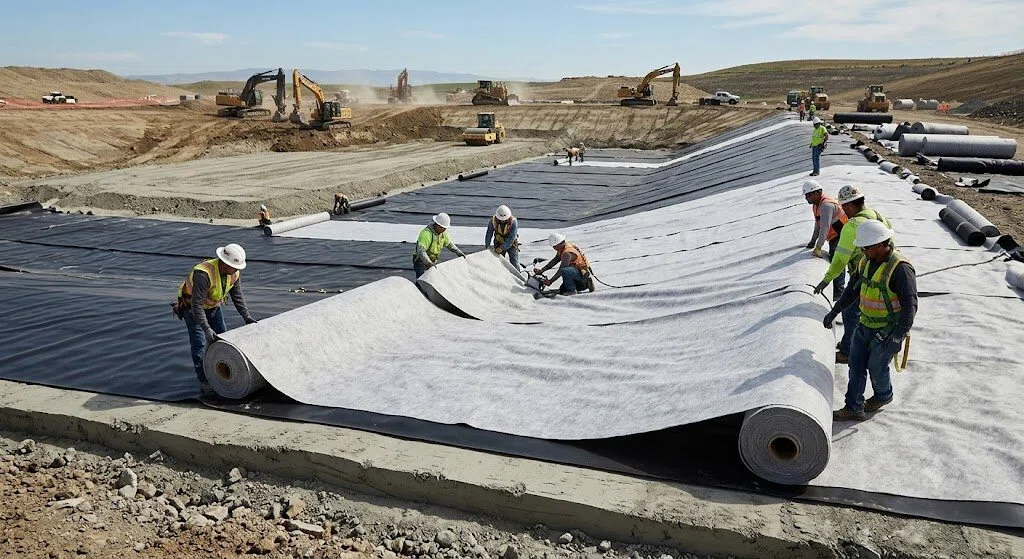
Installation for Dam Rehabilitation commonly uses either loose-laid, anchored, or fully adhered techniques depending on exposure and hydraulic conditions. Seaming methods (thermal welding for HDPE, extrusion welding for PVC) control the hydraulic integrity of the system. Quality control during field welding, including non-destructive testing and seam shear testing, is critical. During installation, avoid excessive tensioning which can cause stress concentrations and eventual tears.
Managing interfaces: liner to structure transitions
Transitions where liners meet spillways, outlets, or concrete structures are frequent failure points in Dam Rehabilitation projects. Proper termination details—mechanical anchors, stainless steel termination bars and protective cover slabs—prevent uplift and water ingress behind the liner. Designers should detail anchoring zones and allow for inspection access.
Addressing low-frequency seepage and uplift
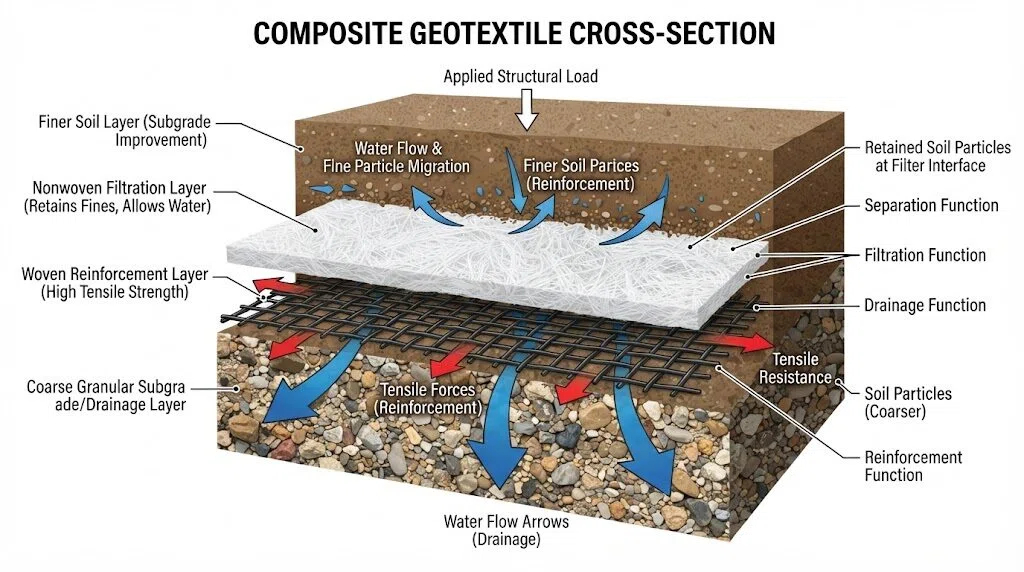
Some dams require combined solutions: a geosynthetic liner for seepage control together with drainage geocomposites to relieve uplift and pore pressure. Combining a geomembrane with a geonet drainage layer can prevent hydraulic uplift under transient head conditions. Such paired systems are commonly used in Dam Rehabilitation where reservoirs experience fluctuating levels.
Common mistakes to avoid in Dam Rehabilitation with liners
A few recurring errors affect performance: insufficient substrate preparation, inadequate seam testing, improper anchoring at terminations, and underestimating the need for protective cushion layers. Another common oversight is neglecting debris and roots; even small sharp objects can puncture liners over time. Contractors should follow manufacturer installation guides and perform third-party inspections when in doubt.
Monitoring and maintenance after retrofit
Post-installation monitoring is part of any responsible Dam Rehabilitation plan. Regular visual inspections, remote sensing (thermal or aerial imagery) and targeted seam tests can detect problems early. Maintenance access, ease of repair and documented as-installed drawings support long service life.
Regulatory and environmental considerations
Regulatory approvals for Dam Rehabilitation vary regionally. Environmental assessments should consider liner material leachability, impacts on downstream habitats, and emergency breach scenarios. Choosing liners with known performance records and documented test reports simplifies permitting and reduces unforeseen constraints.
Case examples and performance data
Published case studies show geosynthetic liners performing well in seepage control and slope protection when designs follow established geotechnical practice. For design guidance and standard practices, reference documents such as ASTM standards for geomembrane testing and geosynthetic design guides are useful starting points.
Conclusion: integrating liners into holistic Dam Rehabilitation strategies
Geosynthetic liners are not a universal fix, but when selected and installed correctly they can significantly extend dam life. They are most effective as part of a broader Dam Rehabilitation strategy that includes site investigation, slope stability measures, and monitoring. Careful attention to materials, interfaces and quality control prevents many of the common failures seen in retrofit projects.
If you want to learn more about Dam Rehabilitation using Geosynthetics, please click here.