
Safe Fish Pond Liner Selection: A Guide to Avoiding Toxicity and Aquaculture Pond Seepage
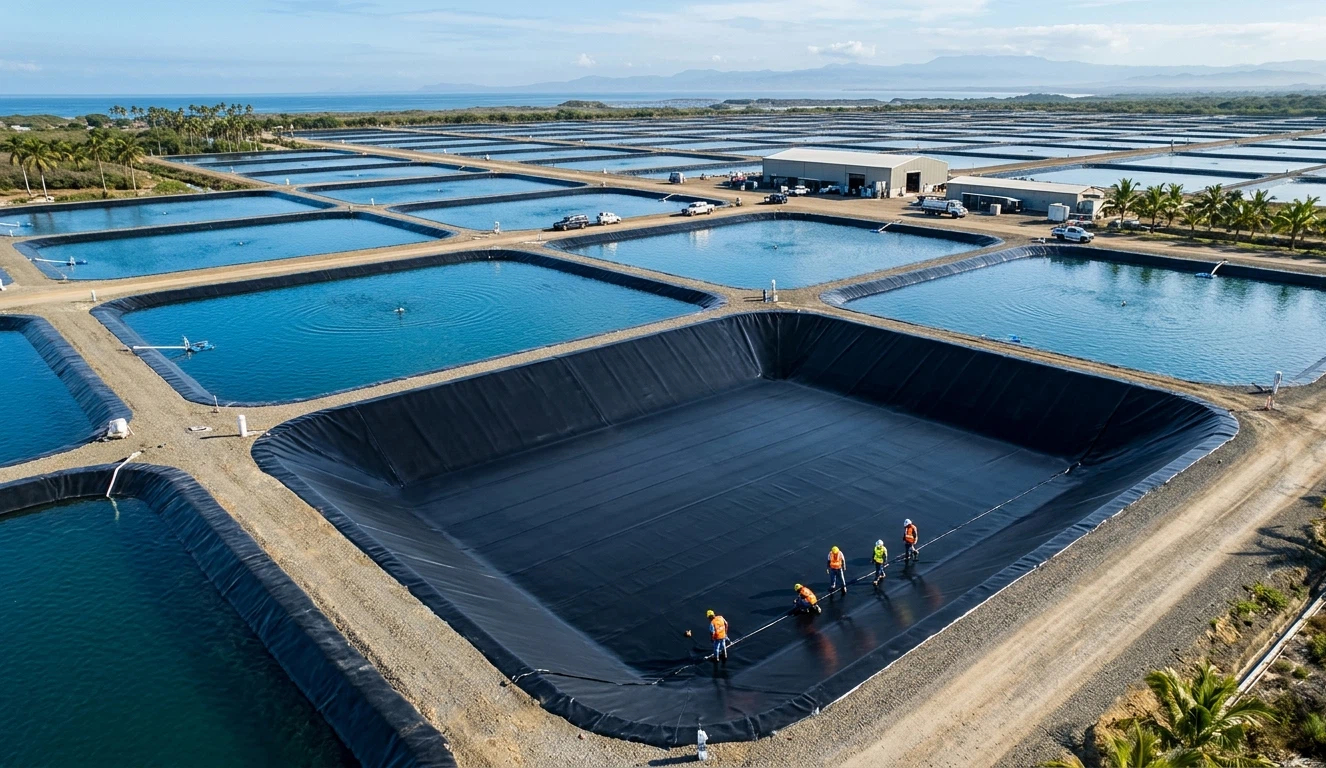
For a commercial aquaculture operator, the pond is more than a hole in the ground; it is a pressurized biological reactor. The success of your harvest depends on a razor-thin margin of water quality and containment. Choosing the wrong Fish Pond Liner is perhaps the most expensive mistake an investor can make, leading to catastrophic stock loss or persistent soil contamination.
In modern aquaculture, the transition from earthen ponds to lined systems is driven by the need for biosecurity and environmental control. However, the market is flooded with low-grade materials that leach heavy metals or degrade under the sun within months. This guide serves as a technical “pitfall map” to help you navigate material science and ensure long-term profitability.
Table of Contents
The Toxicity Trap: Why Virgin Resin Matters
The first “trap” many farmers fall into is prioritizing thickness over molecular purity. In High-Density Fish Farming, the chemical stability of the containment layer is paramount. Many budget-friendly liners are manufactured from recycled polyethylene, which can contain trace amounts of lead, cadmium, or arsenic.
To protect your livestock, you must insist on a 100% Virgin HDPE Liner. Virgin resin ensures that no unknown additives are present in the polymer chain. This is especially critical when dealing with non-toxic pond liners for sensitive fish species, such as trout or ornamental koi, which react poorly to even trace levels of plasticizers.
Using a food-grade geomembrane for commercial fish ponds guarantees that the material meets FDA or international standards for contact with consumables. If your liner is not certified as food-grade, you risk chemical migration into the fish tissue, which could lead to failed inspections during the export or retail process.
Stopping the Leak: Solving Aquaculture Pond Seepage
Uncontrolled Aquaculture Pond Seepage is a silent profit killer. Not only does it waste water—a precious resource in arid regions—但 it also destabilizes the surrounding soil and allows nutrients to leach into the groundwater.
When Comparing PVC vs HDPE for fish farm seepage control, HDPE (High-Density Polyethylene) is generally the superior choice for large-scale operations. While PVC is more flexible and easier to handle for small garden ponds, it lacks the chemical resistance required for the high ammonia levels found in intensive aquaculture. HDPE provides a more robust barrier against root penetration and mechanical damage during the harvesting process.
A high-quality Fish Pond Liner acts as a total impermeable barrier. This allows you to maintain precise salinity levels and medication concentrations, which would otherwise be impossible in an earthen pond where water is constantly being exchanged with the surrounding environment.
The Sun is Your Enemy: UV Resistance and Longevity
The most common cause of liner failure is “photo-oxidation.” Exposed edges of a Fish Pond Liner are bombarded by ultraviolet radiation daily. Without proper stabilization, the polymer chains break down, causing the material to become brittle and crack—a process known as stress cracking.
Investing in a UV Resistant Geomembrane is a non-negotiable requirement for outdoor ponds. These liners are infused with high-quality carbon black (usually at a concentration of 2-3%), which absorbs UV rays and dissipates them as heat before they can damage the plastic’s structure.
According to the Food and Agriculture Organization (FAO) of the United Nations, the thermal expansion and UV exposure in tropical climates can reduce the life of a poor-quality liner to less than two years. In contrast, a stabilized HDPE liner can last upwards of 20 years if properly maintained.
Liner Material Comparison: HDPE vs. PVC vs. EPDM
| Feature | HDPE (High-Density) | PVC (Polyvinyl) | EPDM (Rubber) |
| Purity | 100% Virgin Resin Available | High (Often contains plasticizers) | High |
| UV Resistance | Excellent (with Carbon Black) | Moderate (Degrades faster) | Outstanding |
| Seam Strength | Thermal Welding (Strongest) | Solvent / Tape (Moderate) | Tape / Adhesive (Moderate) |
| Chemical Resistance | Superior | Moderate | High |
| Best For | Commercial Fish Pond Liner | Small Garden Ponds | Complex Shapes / Landscaping |
Practical Maintenance: How to Extend the Lifespan of Your Aquaculture Liner?
Once installed, the lifespan of your containment system depends on operational discipline. Mechanical damage during cleaning is the leading cause of “preventable” leaks. When pondering how to extend the lifespan of your aquaculture liner?, consider these three field-tested rules:
1.Protect the Waterline: Most UV damage occurs at the waterline where the liner is exposed to both sun and air. Using a protective “sacrificial” strip or covering the top edge with soil/concrete can double the liner’s life.
2.Avoid Sharp Tools: During the desilting process, ensure that only plastic shovels or specialized suction pumps are used. A single puncture in a Fish Pond Liner can compromise the biosecurity of the entire pond.
3.Monitor Gas Buildup: In some soil types, methane or air can get trapped under the liner, causing “whales” or bubbles. Installing proper under-liner venting is essential to prevent mechanical stress on the geomembrane.
Engineering for High-Density Fish Farming
In a High-Density Fish Farming environment, the biological load on the water is extreme. Higher concentrations of fish produce higher levels of waste, which creates a chemically aggressive environment. A standard domestic Fish Pond Liner may not have the oxidative induction time (OIT) necessary to withstand these conditions.
We recommend selecting a liner that complies with ASTM D5199 standards for thickness and ASTM D5397 for stress crack resistance. Refer to the ASTM International Geomembrane Standards for specific technical benchmarks. These certifications ensure the material can handle the physical stress of thousands of fish and the chemical stress of water treatment additives.
Implementing a professional-grade Fish Pond Liner allows for easier cleaning and faster turnover between harvests. In earthen ponds, you often need weeks to dry out the soil and kill pathogens. With a lined pond, a simple pressure wash and disinfection can have you ready for the next stock in days.
Conclusion: Choosing Value Over Price
The initial cost of a Fish Pond Liner is a fraction of the total investment in stock, feed, and labor. Attempting to save a few cents per square meter by purchasing non-certified or recycled material is a gamble that rarely pays off.
By insisting on a food-grade geomembrane for commercial fish ponds, you ensure that your product remains safe for human consumption and your ecosystem remains stable. A high-quality Fish Pond Liner is not just a plastic sheet; it is the foundation of your aquaculture business.
Select your Fish Pond Liner based on technical data, UV stability, and material purity to ensure a leak-free, profitable future.
FAQ
Can I install a Fish Pond Liner myself?
Small ponds can be DIY, but commercial ponds require professional hot-wedge welding to ensure the seams are as strong as the material itself.
How thick should an aquaculture liner be?
For most commercial fish farms, a thickness of 0.75mm (30 mil) or 1.0mm (40 mil) is the industry standard for durability.
Does a black Fish Pond Liner heat up the water too much?
While black absorbs heat, the massive volume of water acts as a heat sink. In most cases, the temperature difference is negligible for the fish.
How do I find a leak in a Fish Pond Liner?
Look for wet spots on the outer embankments or use a “vacuum box” test on the seams during the initial installation.
Is HDPE safe for all fish?
Yes, provided it is a 100% Virgin HDPE Liner free from toxic additives and heavy metals.