
Technical Guide: Geomembrane Leak Detection Methods for Wastewater Ponds
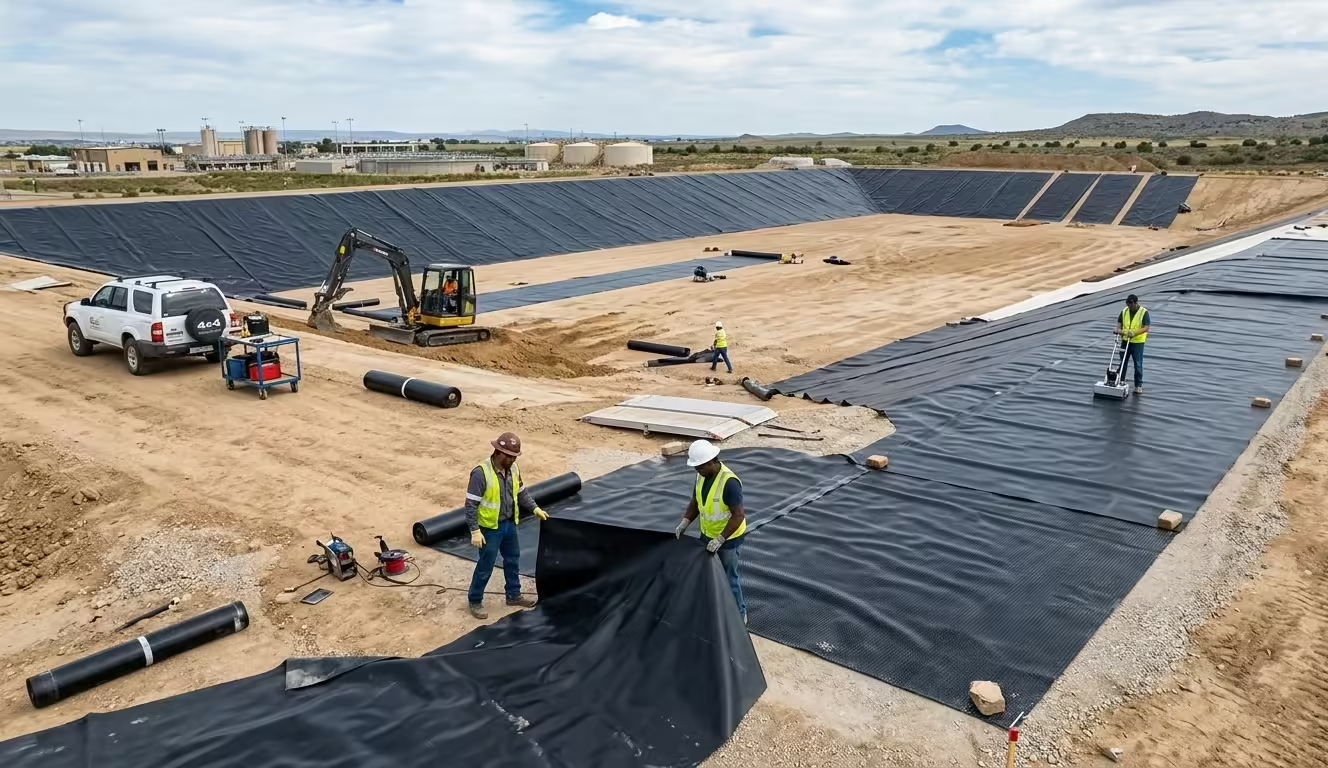
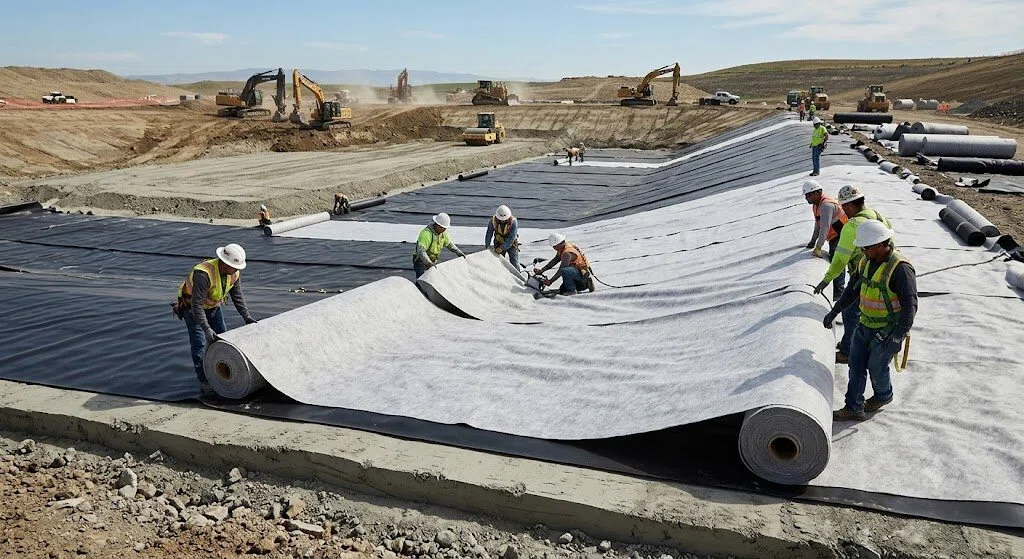
In industrial wastewater management, the containment of hazardous effluents is a primary regulatory requirement. The failure of a containment system can lead to catastrophic environmental damage and legal liabilities. Consequently, implementing a robust geomembrane leak detection strategy is no longer optional; it is a fundamental aspect of facility lifecycle management.
Engineers often ask how to detect leaks in geomembrane liners after installation or during periodic maintenance. This technical review explores the advanced methodologies used in wastewater pond inspection to ensure zero-seepage performance.
Table of Contents
Electrical Leak Location (ELL) Systems
The most widely recognized and accurate method in the industry is electrical leak detection geomembrane technology. This method utilizes the electrical insulating properties of the geomembrane itself (typically HDPE or LLDPE) to locate breaches.
Principle of Operation:
An electrical potential is applied across the liner. Since the geomembrane acts as an insulator, any hole or tear will create a point of low resistance where current can flow through. This geomembrane leak detection method is highly sensitive and can locate holes smaller than 1mm.
There are two primary sub-methods:
- Arc Testing (Dry Method): Used on exposed liners. A high-voltage brush scans the surface, and an arc is formed when a leak is encountered.
- Dipole Method (Wet Method): Used when the liner is covered with water or soil. It measures voltage differentials in the conductive layer above the liner.
According to the ASTM D7007 Standard, electrical leak detection geomembrane is the benchmark for validating liner integrity in critical containment zones.
Ground Penetrating Radar (GPR) Applications
While ELL is excellent for conductive environments, GPR leak detection geomembrane offers a non-destructive alternative for detecting subsurface anomalies and moisture accumulation behind the liner.
GPR works by emitting high-frequency radio waves. When these waves encounter a change in the dielectric constant—such as a pocket of escaped wastewater beneath a liner—the signal reflects back to the receiver. This technique is particularly useful for wastewater pond inspection where the exact location of a “plume” needs to be identified without draining the entire pond. Utilizing GPR leak detection geomembrane allows for real-time visualization of soil saturation levels, providing an early warning system before a minor leak becomes a structural failure.
Tracer Gas and Traditional Leak Testing
For specialized applications, tracer gas (typically Helium or Hydrogen) is injected beneath the liner. Sensors on the surface detect the escaping gas to pinpoint the breach. While effective, this is often more labor-intensive than modern geomembrane leak detection electronic methods.
Standard leak testing geomembrane protocols also include:
- Vacuum Box Testing: Focused primarily on seam integrity.
- Air Pressure Testing: Used for double-track weld seams.
However, for comprehensive coverage of the entire surface area, integrated geomembrane leak detection remains the superior choice for large-scale wastewater infrastructure.
Method Comparison Table
The following table provides a technical comparison of the primary geomembrane leak detection technologies available for leak testing geomembrane projects.
| Method | Sensitivity (Min Hole Size) | Application Environment | Primary Advantage |
| Electrical (ELL) | < 1.0 mm | Dry (Exposed) or Wet (Covered) | Extremely high precision; ASTM validated. |
| GPR | N/A (Detects Voids) | Subsurface/Soil covered | Detects soil saturation and voids without contact. |
| Tracer Gas | ~ 2.0 mm | Controlled environments | Effective for complex geometries. |
| Vacuum Testing | Large Breaches | Seams only | Immediate on-site verification of welds. |
Industrial Lifespan and Inspection Frequency
The longevity of a wastewater pond is directly proportional to the frequency and quality of wastewater pond inspection. Environmental factors such as UV exposure, chemical degradation, and mechanical stress can degrade Wall Panel Materials and geomembranes over time.
Regular geomembrane leak detection prevents the slow accumulation of contaminants in the groundwater. In commercial settings, a bi-annual leak testing geomembrane schedule is recommended to comply with EPA standards and ISO 14001 environmental management protocols.
FAQ
What is the most accurate geomembrane leak detection method?
The electrical leak detection geomembrane (ELL) method is considered the most accurate, capable of finding pinhole leaks.
Can you find leaks if the pond is full of water?
Yes, using the Dipole method of leak testing geomembrane, we can detect leaks through the water layer.
How often should a wastewater pond inspection be performed?
It is recommended to perform a professional wastewater pond inspection at least once every two years or after any major seismic/environmental event.
Does GPR find the hole itself?
GPR leak detection geomembrane primarily finds the “leakage plume” or moisture pockets under the liner, which leads technicians to the source.