
Geomembrane Selection Guide: Avoiding 5 Critical Material Mistakes

Selecting the right liner for an industrial project isn’t just about checking a box—it’s about preventing a multi-million dollar environmental disaster. Whether you are lining a mining tailing pond or a municipal wastewater lagoon, the materials you choose today dictate your maintenance costs for the next 20 years.
Many procurement managers fall into the trap of looking at price tags rather than performance data. In this geomembrane selection guide, we will strip away the marketing fluff and look at the technical reality of why liners fail and how you can specify the right material from day one.
Table of Contents
Comprehensive Geomembrane Selection Guide for Industrial
When you begin your procurement process, you aren’t just buying a plastic sheet; you are buying a barrier system. The first step in any geomembrane selection guide is understanding that “one size fits all” does not exist in geosynthetics. If you treat all liners as equal, you are already inviting geomembrane material mistakes into your project site.
Mistake 1: Misjudging Chemical Compatibility
The most frequent cause of premature failure is a lack of understanding regarding chemical compatibility of HDPE vs LLDPE. While High-Density Polyethylene (HDPE) is the industry gold standard for chemical resistance, it isn’t universal.
If you are looking for how to choose geomembrane for wastewater treatment, you must analyze the specific effluent profile. For instance, high concentrations of hydrocarbons or certain acids can cause swelling or stress cracking in lower-grade liners. Always request a geomembrane chemical resistance chart from your manufacturer to cross-reference with your specific liquid waste. Relying on “general” resistance is a recipe for common pond liner failures.
Mistake 2: Overlooking UV Exposure and Thermal Expansion
Many industrial liners are left exposed for years. A common error found in any geomembrane selection guide is failing to specify the carbon black content or UV stabilizers required for long-term sun exposure.
Furthermore, HDPE has a high coefficient of thermal expansion. If your HDPE liner specifications don’t account for “waves” or “bridging” during installation in extreme temperatures, the material will eventually fail at the seams. LLDPE (Linear Low-Density Polyethylene) offers more flexibility and might be a better choice if the subgrade is uneven or if the installation happens in colder climates.
Mistake 3: Sacrificing Thickness for Upfront Savings
In the world of B2B procurement, the temptation to downgrade from 2.0mm (80 mil) to 1.5mm (60 mil) to save 15% on material costs is high. However, any professional geomembrane selection guide will tell you that thickness is your primary defense against puncture.
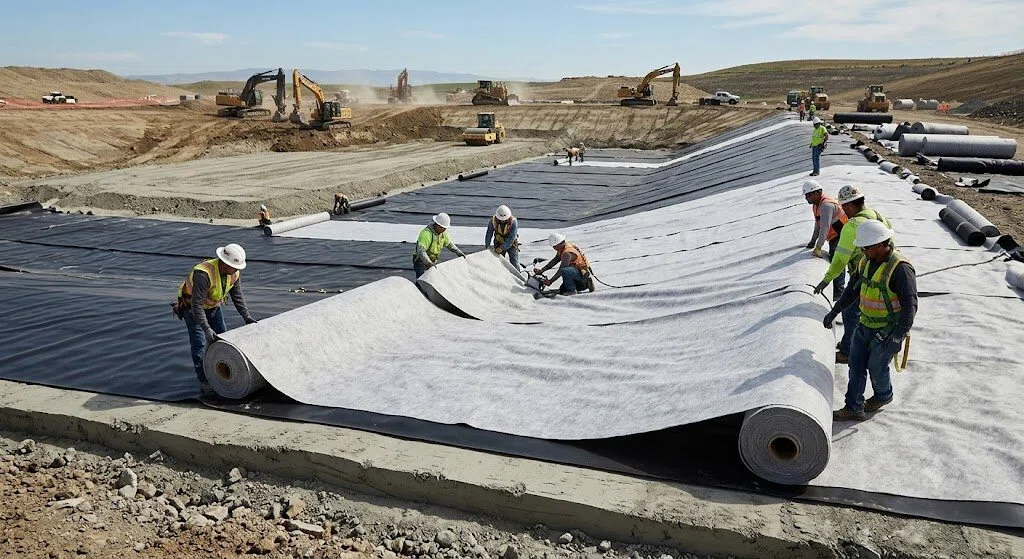
During installation, heavy machinery or even sharp aggregates in the subgrade can compromise a thin liner. If you are dealing with common pond liner failures, the root cause is often a physical puncture that occurred during backfilling. Stick to the HDPE liner specifications recommended by the Engineer of Record (EoR) rather than the accounting department.
Mistake 4: Ignoring Environmental Stress Cracking (ESCR)
Not all HDPE is created equal. Some low-cost manufacturers use “regrind” or inferior resins that meet basic strength tests but fail miserably in Environmental Stress Crack Resistance (ESCR).
This is a critical point in this geomembrane selection guide: always verify the resin batch. If the material cannot handle long-term mechanical stress combined with environmental factors, it will develop micro-cracks. These cracks are nearly impossible to find once the pond is filled, leading to invisible, costly seepage.
Mistake 5: Failing to Sync Material with Installation Reality
You can have the best material in the world, but if the material properties don’t match the site conditions, you’ve made one of the most expensive geomembrane material mistakes.
For example, PVC is highly flexible and easy to weld but has poor UV resistance compared to HDPE. If your project requires high flexibility for complex corners but will be exposed to the sun, you need a specialized solution. A balanced geomembrane selection guide should always weigh the “ease of welding” against “long-term environmental resistance.”
Technical Comparison: At a Glance
To avoid common pond liner failures, use the following table to narrow down your material choice based on project needs.
| Property | HDPE (High Density) | LLDPE (Linear Low) | PVC (Polyvinyl Chloride) |
| Chemical Resistance | Excellent | Very Good | Moderate |
| Flexibility | Low (Rigid) | High | Excellent |
| UV Resistance | Best | Good | Requires Cover |
| Ease of Seaming | Professional Required | Professional Required | Easy / Solvent Weld |
Finalizing Your Geomembrane Selection Guide Checklist
Before you sign that purchase order, run through this checklist to ensure you haven’t overlooked the technical nuances:
1.Consult the Chart: Does the geomembrane chemical resistance chart confirm your material choice against all site chemicals?
2.Verify the Resin: Does the manufacturer provide MTRs (Mill Test Reports) for every roll?
3.Check the Thickness: Does it meet or exceed the ASTM D5199 standard for your specific application?
4.Confirm the Application: Are you choosing this because it’s the “standard,” or is it actually the best how to choose geomembrane for wastewater treatment approach for your specific site?
Following this geomembrane selection guide won’t just save you money on the initial purchase
If you are still unsure, remember that the geomembrane selection guide process should always include a consultation with a geosynthetics engineer. Don’t let geomembrane material mistakes become the reason your next project fails.
FAQ
What is the most durable material for hazardous waste?
Generally, HDPE is preferred due to its superior chemical resistance, but always check the geomembrane selection guide for specific compatibility.
Can I use LLDPE for exposed liners?
Yes, provided it has the correct UV stabilizers, though HDPE typically offers longer life in direct sunlight.
How often should I reference a geomembrane selection guide during a project?
At least twice: once during the design phase and once during procurement to ensure the delivered specs match the design.
Is thickness more important than material type?
No. A thick material with poor chemical resistance will fail just as fast as a thin material with poor puncture resistance. Use a geomembrane selection guide to balance both.