
Geomembrane Standards & Regulations: Global Compliance Guide
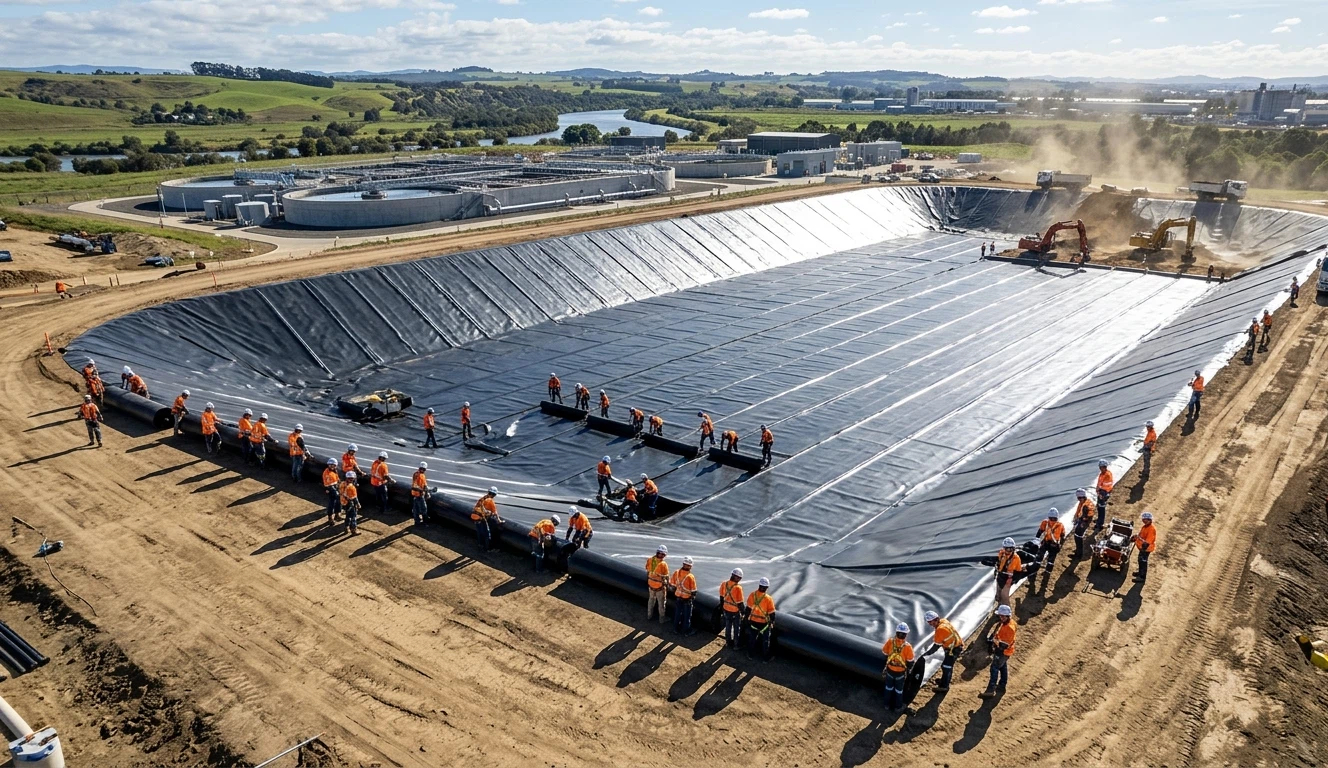
Environmental containment systems in 2026 demand unprecedented levels of durability and chemical resistance. Whether you are designing a containment pond or a hazardous waste landfill, it is crucial to understand the latest geomembrane standards to ensure structural integrity and regulatory approval. These frameworks do more than ensure material quality; they mitigate the catastrophic financial and environmental risks associated with leakage.
Navigating the landscape of international compliance requires a granular understanding of different governing bodies. For most global infrastructure projects, the primary reference points are the American Society for Testing and Materials (ASTM) and the Geosynthetic Institute (GSI).
Table of Contents
The Foundation: ASTM Geomembrane Specifications
The foundation of most modern lining projects lies in geomembrane standards set by ASTM International. These standards define the physical, mechanical, and chemical properties required for materials like HDPE, LLDPE, and PVC.
A critical component of this framework is ASTM D5199, which provides the standard test method for measuring the nominal thickness of geosynthetics. Since thickness directly correlates with puncture resistance and longevity, adhering to this specific testing protocol is non-negotiable for quality control. Engineers must verify that every roll of material delivered to the site conforms to these rigorous geomembrane standards before installation begins.

GRI Certification and the GM13/GM17 Protocols
While ASTM focuses on broad testing methods, the Geosynthetic Research Institute (GRI) provides material-specific specifications that are often more stringent. For high-density polyethylene, GRI GM13 is often considered the peak of geomembrane standards for HDPE liners. It specifies the frequency of testing and the required values for properties such as carbon black content and oxidative induction time (OIT).
Achieving GRI certification is a marker of high-tier manufacturing. For projects involving linear low-density polyethylene, GRI GM17 serves as the equivalent benchmark. These geomembrane standards are updated periodically to reflect advancements in polymer science, ensuring that liners installed in 2026 can withstand extreme UV exposure and chemical degradation for decades.
European Compliance: EN Geomembrane Guidelines
For projects within the European Union, adherence to EN geomembrane guidelines (such as EN 13361 and EN 13362) is mandatory for CE marking. These standards emphasize the “Intended Use” of the liner, whether for reservoirs, dams, or canals.
European geomembrane standards often require a comprehensive assessment of “Durability of the Product,” which includes long-term resistance to leaching and microbiological attack. Choosing the right material requires cross-referencing geomembrane standards across different regions to meet the specific safety coefficients required by local environmental agencies.
Wastewater Applications: Protecting Groundwater
Applying the correct geomembrane standards for wastewater treatment is essential to prevent groundwater contamination. Wastewater often contains volatile organic compounds (VOCs) and varying pH levels that can degrade substandard liners.
In these environments, the liner must act as a functional barrier against both liquids and gasses. Rigorous third-party testing validates that geomembrane standards have been met, specifically regarding chemical compatibility tests (ASTM D5322). For municipal utilities, achieving total project compliance with geomembrane standards involves verifying that the installation team also follows the GRI-GS series for seam integrity.
| Property | ASTM Test Method | GRI GM13 Requirement (HDPE) | EN ISO Equivalent |
| Thickness | ASTM D5199 | Min. 1.5mm (Avg) | EN ISO 9863-1 |
| Tensile Strength | ASTM D6693 | Type IV Specimens | EN ISO 527 |
| Carbon Black | ASTM D1603 | 2.0% to 3.0% | ISO 6964 |
| Puncture Resistance | ASTM D4833 | 320 N to 640 N (based on mil) | EN ISO 12236 |
Data Source: Geosynthetic Institute (GSI) Specifications
Quality Control and Field Testing
Regular thickness testing under geomembrane standards ensures that the manufactured product remains consistent throughout the production run. However, field performance is equally dependent on seam quality. Vacuum box testing and spark testing are the preferred methods for verifying that the fusion or extrusion welds meet the engineering specifications.
When sourcing liners, request documentation proving geomembrane standards are met for each specific batch. This transparency is vital for risk management. Long-term performance is dictated by adherence to geomembrane standards during both the manufacturing and the installation phases.
Global Compliance and Local Regulations
In 2026, many jurisdictions have implemented local adaptations of these international norms. For example, some Australian and Middle Eastern projects may combine ASTM durability requirements with specific local temperature-resistance benchmarks.
Procurement teams must ensure their facility operates under the highest geomembrane standards available to avoid environmental fines. Implementation of these standards provides a standardized language for engineers, manufacturers, and regulators to collaborate on complex infrastructure projects.
FAQ
What is the primary difference between ASTM D5199 and GRI GM13?
ASTM D5199 is a specific test method for thickness, whereas GRI GM13 is a comprehensive material specification that sets the minimum values for various properties.
Why is GRI certification important for wastewater projects?
It guarantees that the material has undergone specific testing for chemical resistance and long-term durability, which is critical in corrosive wastewater environments.
How do EN geomembrane guidelines affect global sourcing?
Materials intended for the EU market must carry the CE mark, proving they meet European safety and performance standards, even if they were manufactured elsewhere.
Can I use the same geomembrane standards for landfill and water reservoirs?
Generally, yes, but the specific stress-crack resistance and thickness requirements may vary significantly based on the waste type and hydrostatic pressure.