
Geotextile Polyester Aging Risk in Outdoor Mining and Reservoirs
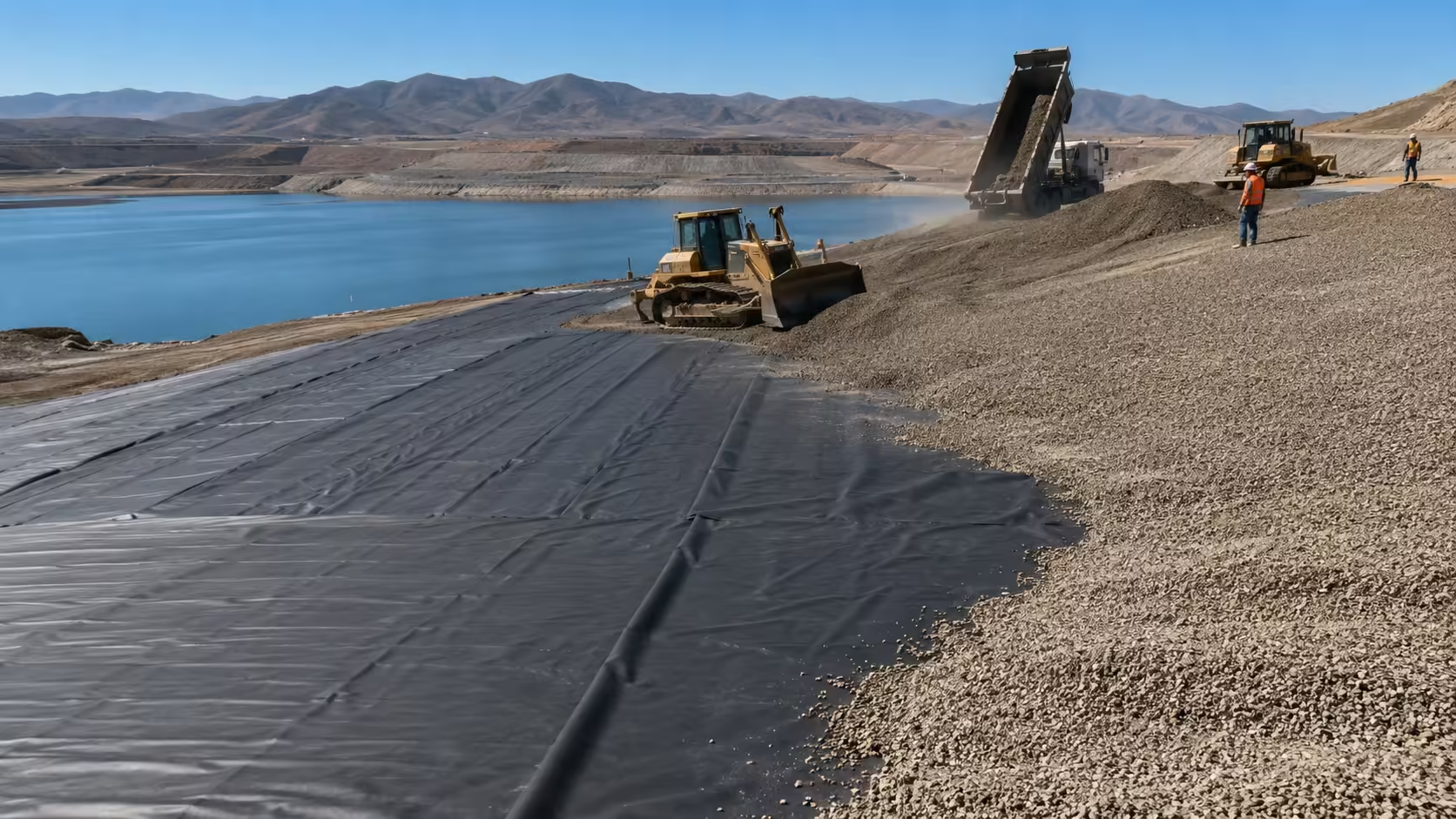
For open-pit mines, reservoir slopes, tailings areas, drainage channels, and exposed containment works, geotextile polyester is not judged only by how strong it looks on the day of delivery. The real question is what happens after weeks or months of sun, heat, rain, wind, and dust before the material is fully covered.
This guide explains how geotextile polyester behaves under outdoor exposure, why UV aging and brittleness happen, and what project teams can do to reduce long-term material risk.
Table of Contents
Why geotextile polyester aging matters in mining and reservoir sites
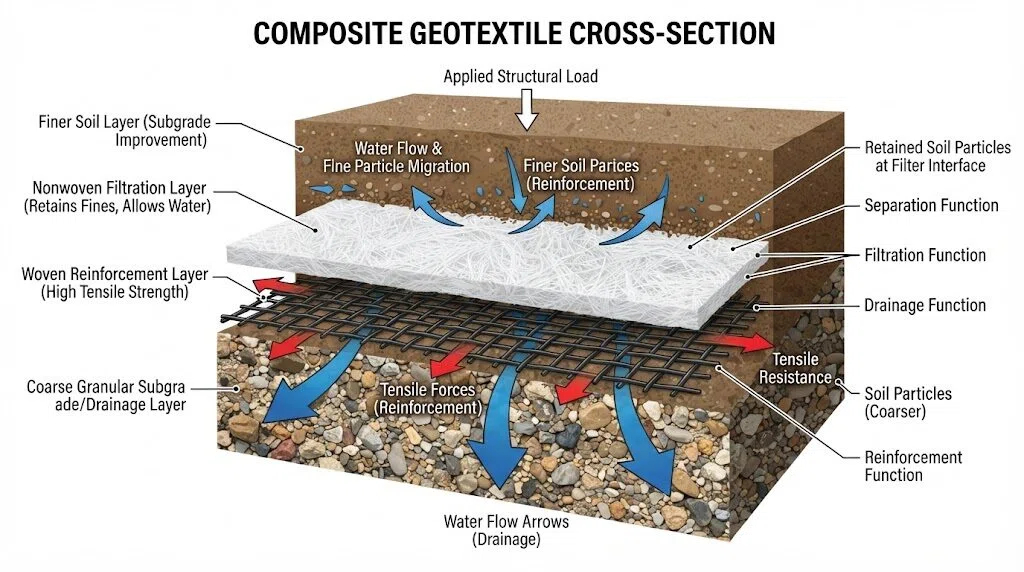
Outdoor geosynthetic projects often fail quietly before they fail visibly. A fabric may look acceptable during installation, but excessive UV exposure can reduce tensile strength, flexibility, and installation survivability. In mining and reservoir projects, that matters because the fabric may work as a filtration layer, separation layer, drainage support, reinforcement layer, or geomembrane protection layer.
The Wikipedia overview of geosynthetics explains that geotextiles are synthetic-fiber fabrics used for functions such as separation, reinforcement, filtration, and drainage. That functional role is why geotextile polyester should not be selected only by unit price or mass per square meter. Outdoor durability is part of engineering performance.
What geotextile polyester is used for in harsh outdoor projects
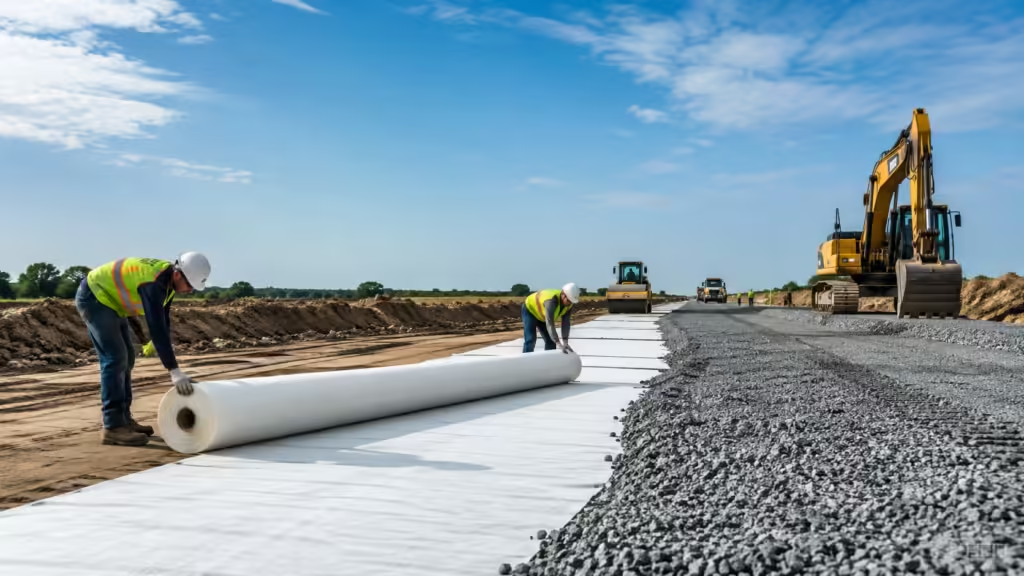
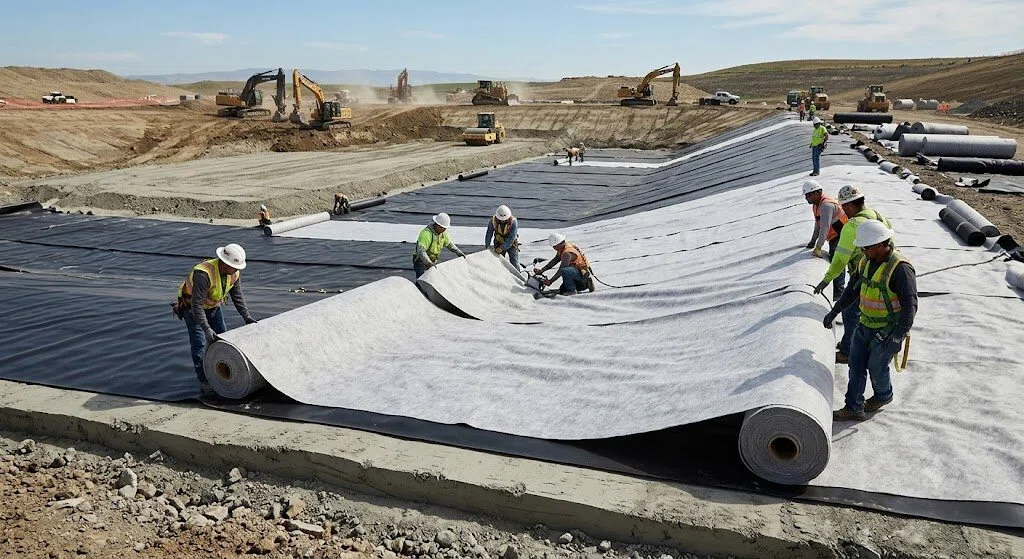
In practical engineering, geotextile polyester may be used below riprap, under gravel drainage layers, behind retaining structures, around reservoir lining systems, or beneath geomembranes in containment areas. In open-pit mines, it can help drainage systems keep soil particles from moving into aggregate layers. In reservoirs, it can protect membranes and support slope stability when combined with the right cover system.
These applications require more than fabric strength. Buyers should also check elongation, puncture resistance, water permeability, apparent opening size, chemical compatibility, and long-term exposure conditions. ASTM D4491 covers water permeability testing for geotextiles in terms of permittivity under standard testing conditions, which is useful when filtration and drainage are key design functions.
Does geotextile polyester degrade in sunlight?
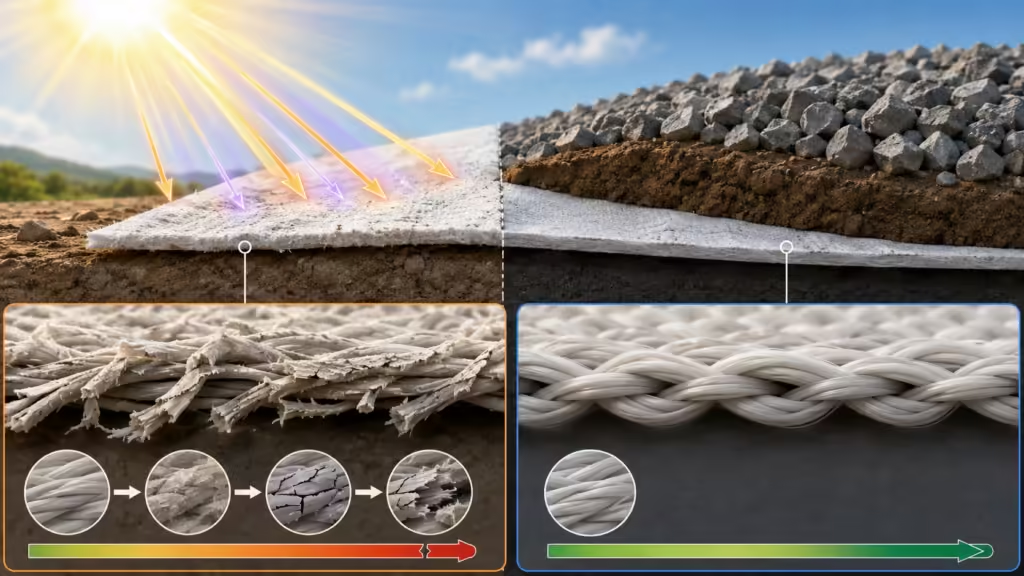
Yes, it can degrade if it remains exposed long enough without protection. The concern is not only color fading. UV radiation, heat, moisture, and oxygen can gradually affect polymer chains, causing surface aging, tensile strength loss, and brittleness.
ASTM D4355 is one of the most relevant references here because it covers deterioration in tensile strength of geotextiles after exposure to xenon arc radiation, moisture, and heat. This makes it useful for comparing UV resistance between products, although it should not be treated as a direct service-life guarantee for every project site.
Why outdoor geotextile becomes brittle over time
Brittleness is usually not caused by one factor. UV radiation can weaken polymer structure. Heat can accelerate oxidation. Wet-dry cycles can stress the surface. Wind-blown sand can abrade exposed fibers. If the fabric is left uncovered, these factors can work together.
For geotextile polyester, the first visible signs may include stiffness, surface fuzzing, cracking, or reduced flexibility. The more serious issue is hidden performance loss. A brittle fabric may tear more easily during backfilling, slope maintenance, or cover placement. That can reduce filtration, separation, or protection performance before the project reaches its intended service life.
Polyester vs polypropylene geotextile under sunlight
Many buyers ask whether PET is better than PP in outdoor exposure. The honest answer is: both materials need exposure control.
Polyester may offer good tensile performance and lower creep in many reinforcement-related uses. Polypropylene can provide strong chemical resistance in many environments. But both can suffer when exposed to UV for too long without stabilizers or covering.
For geotextile polyester, the key is not simply “PET or PP.” The better question is whether the product has the right UV stabilization, tensile strength retention data, installation protection, and cover timing for the project. ASTM D4595 covers wide-width tensile strength and elongation testing for geotextiles, which helps buyers compare mechanical performance before and after exposure-related testing.
How long can geotextile stay exposed before covering?
There is no universal number that applies to every roll, climate, project, and fabric structure. Exposure tolerance depends on polymer type, UV stabilizer package, mass per unit area, fiber structure, color, temperature, altitude, sunlight intensity, and whether the fabric is stored or already installed.
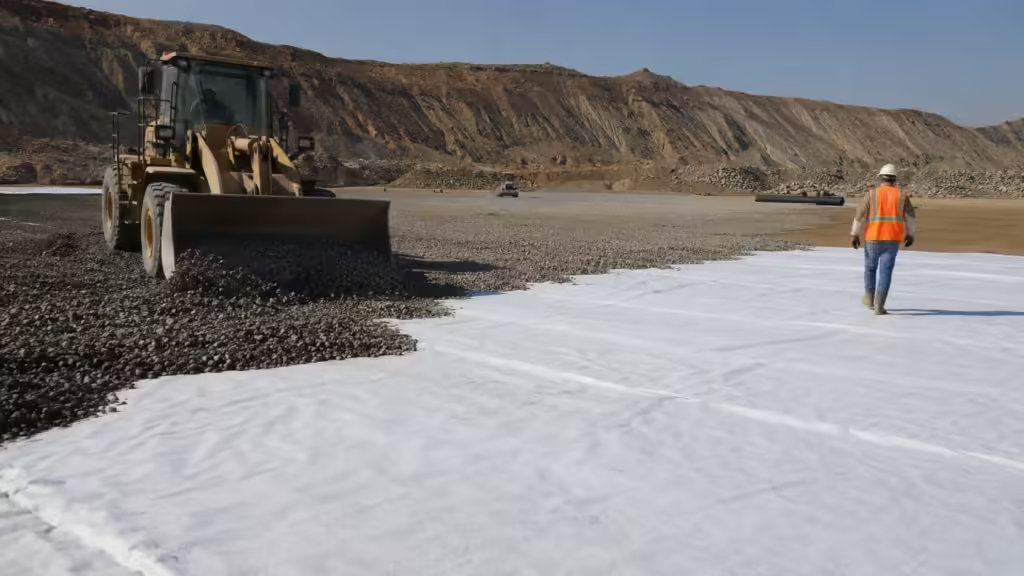
For geotextile polyester, the safest project rule is simple: minimize open exposure. Store rolls under cover. Avoid leaving installed fabric uncovered for long periods. Place soil, gravel, riprap, geomembrane, or other protection layers as soon as the installation sequence allows.
FHWA guidance for geosynthetic-reinforced soil design notes that design strength should consider reduction factors such as installation damage, creep, and durability. Although the document focuses on reinforced soil systems, the design idea is useful for exposed projects: long-term performance must be reduced for real project risks, not assumed from initial strength alone.
How to protect geotextile polyester from UV aging
Project teams can reduce UV aging risk with better specification and site control.
Practical steps include:
1.Specify UV resistance or strength retention data.
2.Ask for ASTM D4355 or equivalent weathering test results.
3.Choose the right mass per unit area and tensile strength.
4.Keep rolls wrapped or shaded before installation.
5.Avoid long-term uncovered exposure after placement.
6.Use soil, gravel, riprap, concrete blocks, or geomembrane cover where required.
7.Inspect exposed areas after storms, delays, or construction pauses.
8.Match fabric selection to project chemistry, drainage needs, and mechanical stress.
For geotextile polyester, protection is not only about the product itself. It is also about installation planning. A good material can still lose value if it sits uncovered in strong sunlight for too long.
Common mistakes in outdoor geotextile projects
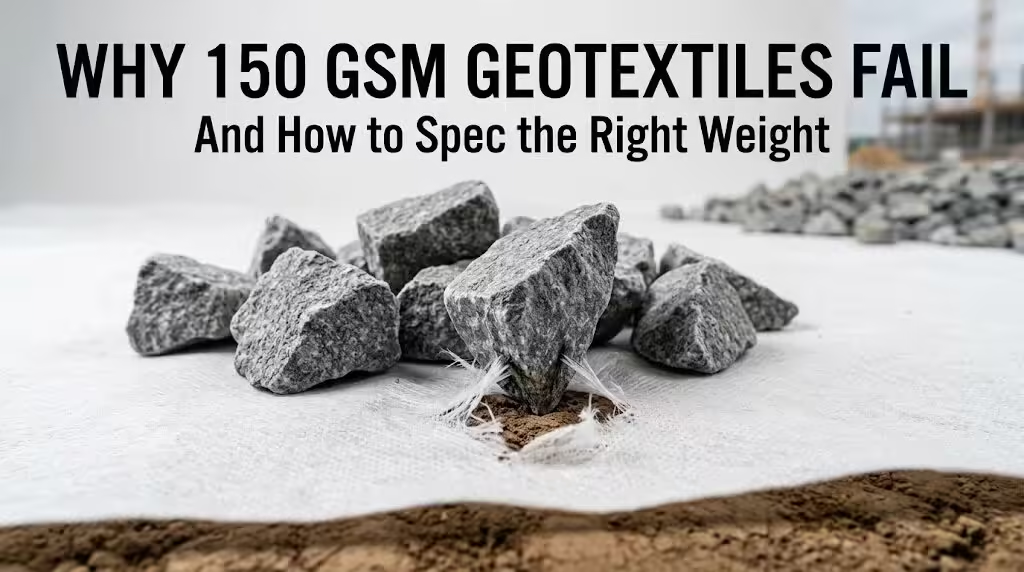
The first mistake is choosing only by weight. A heavier fabric may help, but weight alone does not prove UV durability, filtration performance, or puncture resistance.
The second mistake is leaving rolls in the sun before installation. Project delays can age material before it reaches the slope.
The third mistake is installing fabric too early and covering it too late. This is common in mining and reservoir projects where earthwork schedules change.
The fourth mistake is ignoring test data. If UV aging is a known risk, retained tensile strength after exposure should be reviewed.
The fifth mistake is using geotextile polyester as if it were a permanently exposed surface layer. In most civil applications, it is designed to work within a protected system, not as an uncovered outdoor fabric for years.
A social media example such as this Instagram geotextile installation post shows geotextile use in landfill, pond, reservoir, and mining-related systems, which is useful for visualizing how geosynthetics are typically combined with other protection or lining layers.
Conclusion
Geotextile polyester can be a strong and practical material for outdoor mining, reservoir, drainage, filtration, and protection systems. But long-term sun exposure changes the risk profile. UV aging, heat, moisture, and abrasion can reduce flexibility and strength if the material is not properly specified and protected.
The smartest approach is to treat geotextile polyester as part of a full engineering system: correct product selection, verified test data, covered storage, controlled installation, and timely protection after placement.
FAQ
Does geotextile polyester degrade in sunlight?
Yes. Long-term direct sun exposure can cause UV aging, surface brittleness, and tensile strength loss if the material is not protected.
How can projects reduce UV aging risk?
Use UV-stabilized material, request weathering test data, store rolls under cover, and cover the installed fabric as soon as possible.
Is polyester geotextile better than polypropylene outdoors?
Not automatically. Both need UV protection. The better choice depends on test data, project conditions, chemical exposure, and required function.
Can geotextile be left uncovered permanently?
Usually no. Most geotextiles are designed to work under soil, gravel, riprap, geomembrane, or another protective layer.