
HDPE Chemical Compatibility: Geomembrane Resistance Data for Leachate & Acids
In the design of industrial waste storage and treatment facilities, the integrity of the containment system is the primary defense against environmental risk and legal liability. HDPE Chemical Compatibility directly dictates the service life of a geomembrane when exposed to aggressive chemical agents. For projects handling strong acids, bases, or complex organic solvents, engineers must rely on validated technical data to select materials that prevent containment failure due to structural degradation.
High-Density Polyethylene (HDPE) has become the industry standard for hazardous waste landfills and industrial impoundments due to its high crystallinity. However, this resistance is not absolute. Understanding the science of HDPE Chemical Compatibility and its performance across diverse waste streams is a prerequisite for ensuring long-term engineering safety.
Table of Contents
What is HDPE Chemical Compatibility?
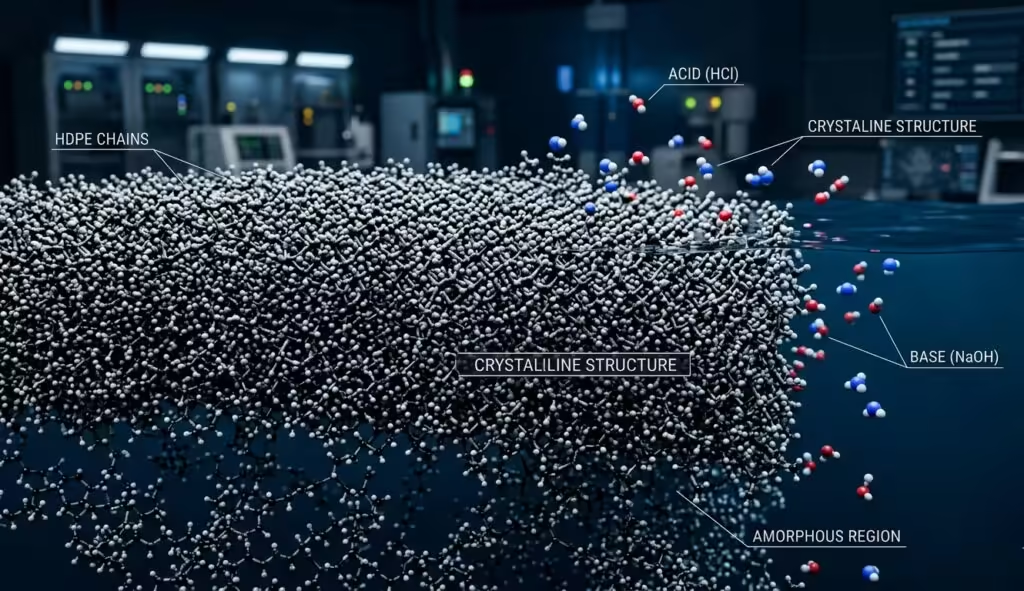
At the molecular level, HDPE Chemical Compatibility refers to the polymer’s ability to maintain its physical and mechanical properties when exposed to a specific chemical environment. HDPE molecules feature a dense, tightly packed structure with minimal branching, granting the material its natural low permeability. When a chemical substance contacts the geomembrane, “compatibility” implies that the substance will not cause polymer chain scission (degradation) or excessive swelling.
When evaluating HDPE Chemical Compatibility, engineers focus on two core processes: chemical reaction and physical absorption. Chemical reactions, such as oxidation, alter the molecular structure and lead to embrittlement. Physical absorption can cause softening or dimensional instability. For environmental engineering, the key to ensuring the service life of geomembranes in corrosive environments lies in selecting resin specifications that resist the permeation of specific waste fluids.
Industrial Fluids and Resistance: A Data-Driven Analysis
When managing landfill leachate chemical resistance HDPE, the environment becomes complex. Leachate is a cocktail of organic and inorganic compounds with highly volatile pH levels. Generally, the pH range for high density polyethylene liners is remarkably broad, maintaining stability from pH 2 to pH 12.
For more challenging applications, such as secondary containment liners for sulfuric acid, HDPE performance far exceeds that of other synthetic materials. According to the Geosynthetic Institute (GRI) standards, HDPE maintains high tensile strength and crack resistance even in 50% concentration sulfuric acid.
HDPE geomembrane chemical resistance chart for industrial waste
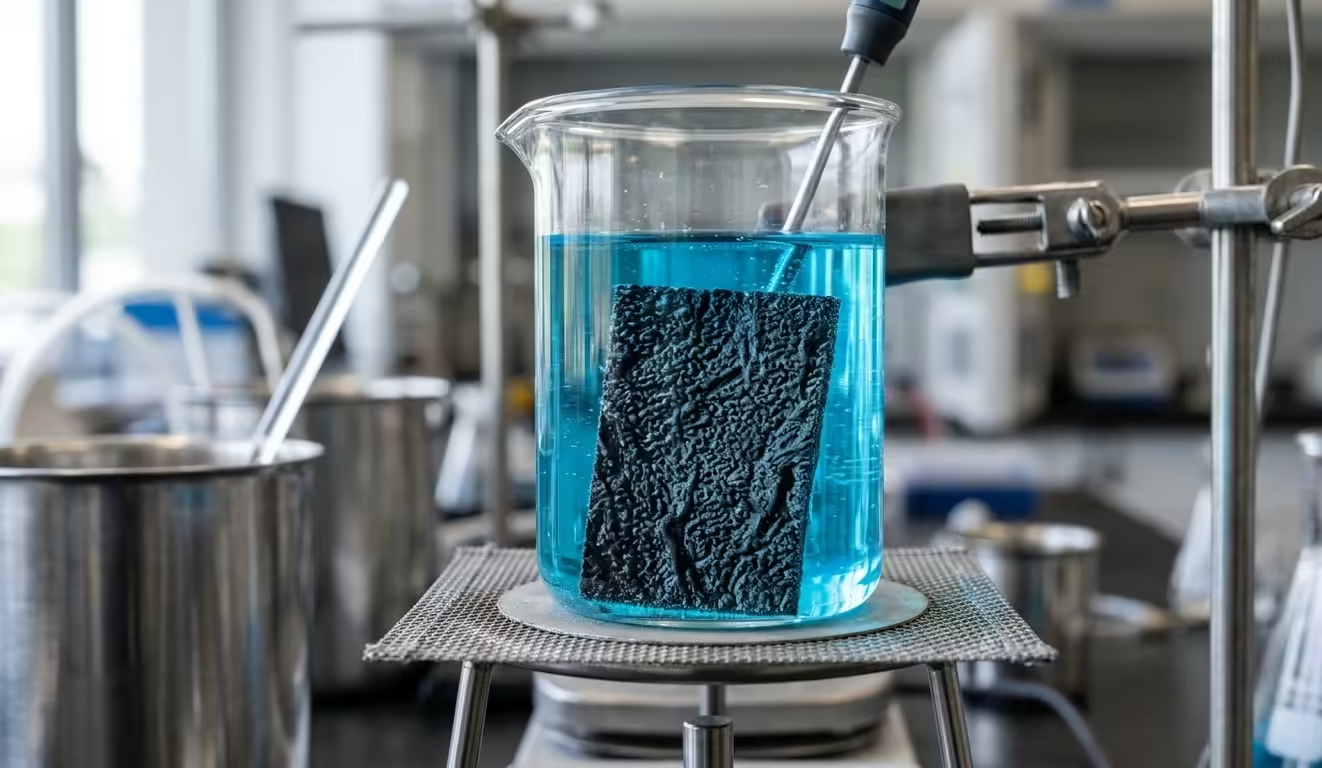
The following table summarizes HDPE performance across typical industrial waste fluids. This data is based on laboratory evaluations conducted under ASTM D5322 compatibility testing for geomembranes.
| Waste Fluid Type | Core Components | Compatibility Rating | Degradation/Weight Change |
| Strong Acids | Sulfuric Acid (< 80%) | Excellent | < 1% (7-day immersion) |
| Strong Alkalis | Sodium Hydroxide | Excellent | Negligible change |
| Landfill Leachate | Heavy metals, Organic acids | Superior | Variable by composition |
| Hydrocarbons | Diesel, Gasoline, Oils | Good | Slight swelling; reversible |
| Oxidizing Acids | Nitric Acid (> 30%) | Limited | Risk of oxidative degradation |
Note: Performance is significantly influenced by temperature and pressure. Data cited from ASTM D5322 standard test procedures.
Temperature and Stress: The Overlooked Variables
Discussing HDPE Chemical Compatibility is impossible without considering ambienttemperature. As temperature increases, the kinetic energy of polymer chains rises, leading toan exponential increase in chemical permeation rates. For example, an acid that is 100%compatible at 20° C may significantly reduce the Oxidative Induction Time (OIT) of the materialat 60°C.
Furthermore, HDPE Chemical Compatibility involves Environmental Stress Cracking (ESCR). Certain chemicals, such as surfactants or specific hydrocarbons, may not “corrode” the HDPE directly but can accelerate the propagation of micro-cracks under mechanical load. This is why industrial design requires multi-axial stress testing via ASTM D5747 in addition to reviewing a standard HDPE geomembrane chemical resistance chart for industrial waste.
HDPE vs LLDPE: Chemical Resistance Comparison
During material selection, engineers often perform an HDPE vs LLDPE chemical resistancecomparison. While Linear Low-Density Polyethylene (LLDPE) offers superior flexibility andelongation, HDPE holds the absolute advantage in chemical resistance. The higher density ofHDPE (typically above 0.940g/cm3) creates a more formidable barrier against small-moleculepenetration, especially in high-concentration chemical or organic solvent applications.
This structural advantage ensures that HDPE Chemical Compatibility provides a larger safety margin in aggressive media. For permanent industrial containment, HDPE remains the technical baseline for regulatory compliance.
Compliance and Long-Term Monitoring
To ensure that HDPE Chemical Compatibility meets project specifications, the material must comply with internationally recognized standards like GRI-GM13. This standard specifies rigorous indices for resin density, carbon black content, and antioxidant performance.
Even with the correct material selection, long-term chemical exposure can lead to the evolution of physical properties. Therefore, it is recommended to conduct periodic “coupon testing” to monitor the dynamic status of HDPE Chemical Compatibility throughout the facility’s operation. This is not only a matter of risk management but also a necessity for meeting environmental oversight (such as EPA guidelines).
Conclusion
Accurately assessing HDPE Chemical Compatibility is the cornerstone of any large-scale environmental project. By cross-referencing an HDPE geomembrane chemical resistance chart for industrial waste with specific project variables like temperature, pressure, and fluid composition, designers can significantly mitigate the risk of containment failure.
As material science advances, HDPE Chemical Compatibility remains the gold standard in industrial containment. If you are facing the challenge of managing high-concentration acid or alkaline wastewater, always consult the latest technical specifications and ASTM certifications to ensure your system can withstand decades of operational stress.
FAQ
Can HDPE be used to contain concentrated nitric acid?
It is not recommended for high concentrations. Oxidizing acids (like Nitric Acid > 30%) cause oxidative scission of polymer chains, which is a known limitation in HDPE Chemical Compatibility.
Does chemical resistance drop if the temperature reaches 50° C?
Yes. Higher temperatures accelerate chemical permeation. In such cases, permeation rates must be recalculated, and increasing the geomembrane thickness should be considered.
How do I verify a material meets ASTM D5322?
Request an independent third-party lab report from your supplier that details tensile retention and hardness changes following ASTM D5322 compatibility testing for geomembranes.
How much better is HDPE resistance compared to LLDPE?
In most acidic and alkaline environments, HDPE permeation rates are approximately 30-50% lower than LLDPE, making HDPE the safer choice for critical industrial applications.