
Hidden Fees in Geomembrane Cost? 5 Traps Every Buyer Should Avoid

In the industrial containment sector, a low initial quote is often the most expensive mistake a procurement manager can make. While the headline geomembrane cost might seem attractive, it frequently masks a series of technical compromises and logistical gaps that can lead to catastrophic failure. Understanding the total geomembrane cost is not just about comparing unit prices; it is about evaluating the integrity of your entire project over a 20 to 50-year lifecycle.
As global supply chains shift, navigating the landscape of industrial liners requires a sophisticated approach to data. This guide exposes the hidden variables that drive the true geomembrane cost and provides a strategic roadmap for securing high-performance materials without falling victim to industry “traps.”
Table of Contents
Trap 1: The “Blended Resin” Deception
The most common way an unethical geomembrane supplier reduces their quote is by using recycled or “blended” resins. Virgin high-density polyethylene (HDPE) is the industry standard for a reason: it offers superior resistance to Stress Cracking (ESC) and Ultraviolet (UV) degradation.
When a geomembrane price seems 20% lower than the market average, it is often because the material contains post-consumer plastic. These impurities weaken the polymer lattice. According to the Geosynthetic Institute (GSI), using non-virgin resin can reduce the service life of a liner from 50 years to less than 10, effectively tripling your long-term geomembrane cost when you account for the inevitable replacement and soil remediation.

Trap 2: The Landed Cost Illusion
Many buyers make the mistake of focusing solely on the geomembrane cost per m2 at the factory gate. In international procurement, the “Ex-Works” price is only half the story.
A significant portion of the total geomembrane cost is consumed by ocean freight, port handling, and inland transportation. Industrial rolls are exceptionally heavy—a single 40ft container typically holds only 22 tons. If your supplier hasn’t optimized the roll width for container loading, you may end up paying for “dead space,” which can add up to $0.15 to the geomembrane cost per m2. Always request a “DDP” (Delivered Duty Paid) or “CIF” quote to understand the true financial impact.

Trap 3: The Specification Gap (ASTM GM13 Compliance)
Another hidden trap lies in the “nominal” vs. “minimum” thickness. Some suppliers quote based on nominal thickness but deliver material that is at the bottom end of the tolerance range.
To ensure you are getting what you paid for, your geomembrane procurement tips should always include a mandate for ASTM D5199 testing. This standard ensures that the material meets the strict thickness requirements necessary for hazardous waste containment. If a liner is even 0.1mm thinner than specified, the structural integrity is compromised, and you are effectively paying a premium for a sub-par product.
Market Price Comparison Table (Standard HDPE)
This table provides a baseline for current market rates. Any quote significantly below these ranges should be treated with extreme caution.
| Material Thickness (mm) | Resin Type | Weight (kg/m²) | Est. Geomembrane Price (USD/m²) | Safety Rating |
| 0.75 mm (30 mil) | 100% Virgin HDPE | 0.71 | $0.90 – $1.20 | Low Pressure |
| 1.00 mm (40 mil) | 100% Virgin HDPE | 0.95 | $1.25 – $1.65 | Standard Industrial |
| 1.50 mm (60 mil) | 100% Virgin HDPE | 1.43 | $1.85 – $2.35 | High Containment |
| 2.00 mm (80 mil) | 100% Virgin HDPE | 1.90 | $2.45 – $3.20 | Critical/Landfill |
Trap 4: Neglecting On-Site Testing Costs
The geomembrane cost extends beyond the material delivery. A critical hidden expense is the Quality Assurance (CQA) process.
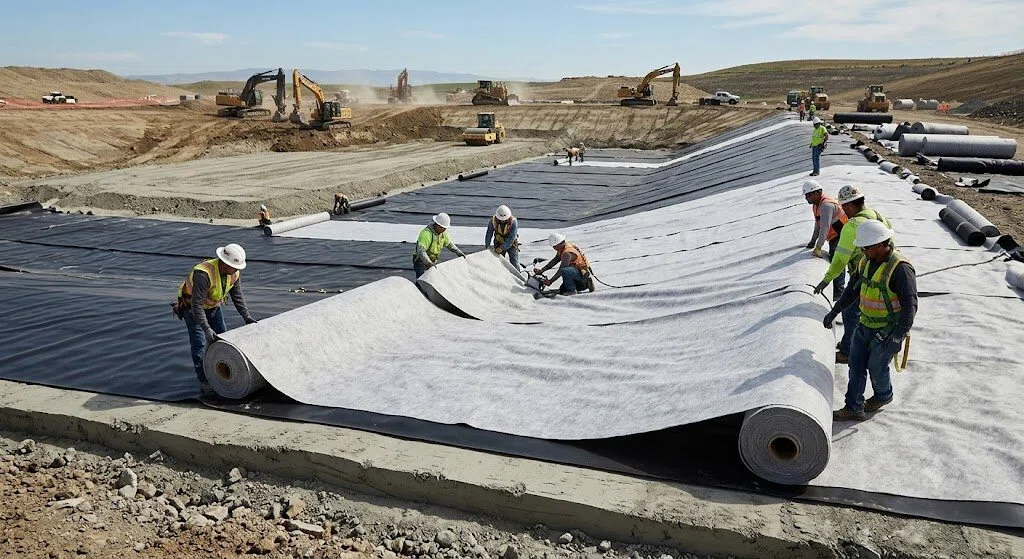
For a successful installation, every seam must undergo destructive and non-destructive testing, such as Air Pressure tests and Vacuum Box tests. If your geomembrane supplier does not provide a comprehensive installation guide or certified welding parameters, your labor costs will skyrocket as technicians struggle to achieve a consistent bond. Budgeting at least 15% of your total material geomembrane cost for professional CQA is a best practice that prevents expensive leaks later.
Trap 5: The Origin Mystery
Do you know who actually manufactured your liner? Many “suppliers” are simply brokers who buy from the lowest bidder on a per-order basis. This lack of traceability is a major risk.
When researching how to choose geomembrane supplier, you must demand Mill Test Reports (MTRs) for every batch. An MTR links your specific roll to a resin lot and a production line. Without this, your geomembrane cost includes a massive “uncertainty tax.” If a failure occurs, you will have no legal or technical recourse against the manufacturer. A reputable partner will provide full transparency, ensuring your geomembrane cost is backed by a verifiable paper trail.
Strategic Geomembrane Procurement Tips
To navigate these traps and optimize your budget, follow these professional geomembrane procurement tips:
1.Request OIT Test Data: Oxidative Induction Time (OIT) tests measure how long the liner will resist oxidation. High OIT values mean a longer lifespan and lower long-term geomembrane cost.
2.Verify Carbon Black Dispersion: Ensure the carbon black is evenly distributed (Category 1 or 2) to prevent localized UV damage.
3.Consolidate Logistics: Order in full container loads (FCL) to minimize the impact of shipping on the overall geomembrane cost.
4.Audit the Factory: Use a third-party inspector to verify that the geomembrane supplier is actually using the resin they claimed in the quote.
Conclusion
Minimizing your geomembrane cost is a matter of technical diligence, not just aggressive negotiation. By identifying the five traps—from resin purity to hidden logistics—you can ensure that your procurement strategy is built on a foundation of facts.
n the high-stakes world of industrial containment, the most effective way to manage your geomembrane cost is to invest in quality from the start. A well-chosen liner from a transparent geomembrane supplier is the only way to protect both your environment and your bottom line.
FAQ
Why does the geomembrane cost fluctuate so much?
The price is tied to the global crude oil market and resin availability, as well as seasonal shifts in international shipping rates.
What is the average geomembrane cost per m2 for a mining pond?
For a 1.0mm HDPE liner, the current geomembrane cost typically ranges from $1.25 to $1.65 per square meter, depending on order volume.
Can I use a thinner liner to save money?
While it reduces the immediate geomembrane price, a thinner liner has a higher risk of puncture during installation, which can double your costs in repair fees.
How to choose geomembrane supplier for a government project?
Prioritize suppliers with ISO 9001 certification and those who can provide ASTM GM13 compliant test reports for every roll.
Does a higher geomembrane cost always mean better quality?
Not necessarily. A higher price could be due to inefficient logistics. Focus on technical specs like OIT and Tensile Strength rather than price alone.