
The Critical Guide to Leach Pad Design and Seepage Control: How to Maximize Mineral Recovery?
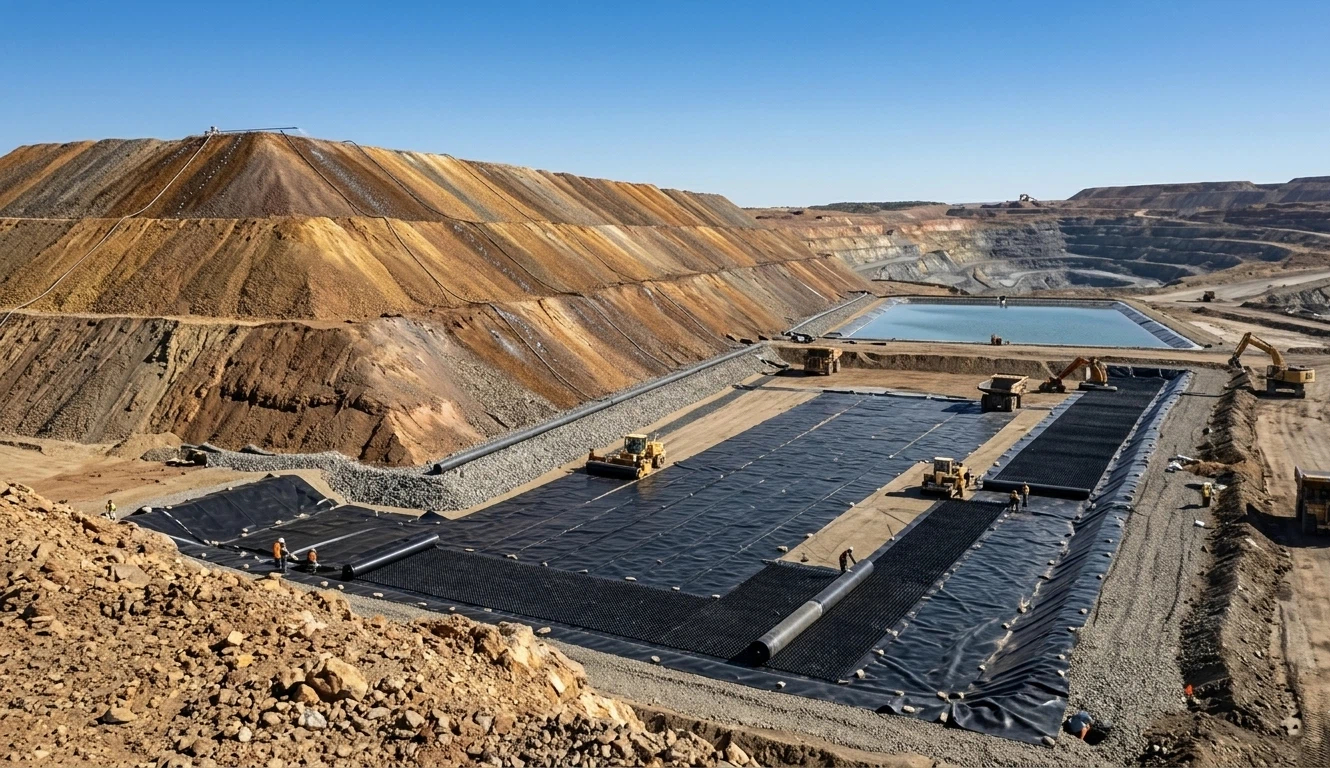
In the high-stakes world of hydrometallurgy, the efficiency of a mining operation often boils down to a single engineering structure: the Leach Pad. Whether extracting gold, copper, or uranium, the goal is to recover every possible ounce of Pregnant Leach Solution (PLS). If the containment system fails, the economic loss is compounded by severe environmental liabilities and regulatory fines.
A modern Leach Pad is more than just a site for chemical processing; it is a critical infrastructure asset designed to isolate aggressive lixiviants from the natural environment. Achieving superior Seepage Control is not an option—it is a baseline requirement for any profitable mining project in the 21st century.
Table of Contents
The Engineering of a High-Yield Containment Cell
The design of a Leach Pad must account for extreme physical stressors. Unlike landfill systems, mining facilities are subjected to massive “heap” heights, often reaching 100 meters or more. This exerts tremendous downward pressure on the underlying liner layers.
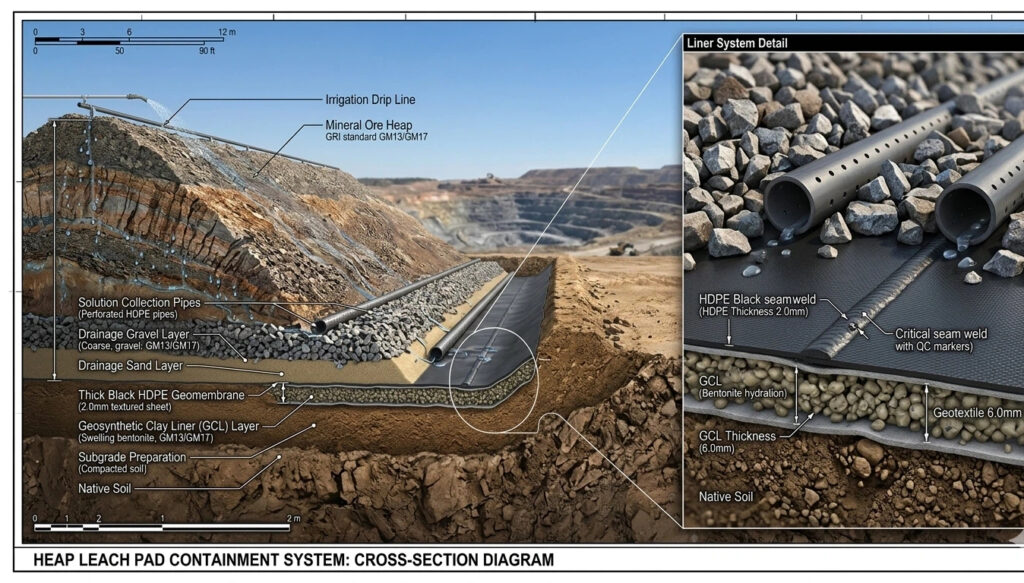
A successful Leach Pad infrastructure relies on a composite liner system. This usually includes a low-permeability soil layer topped with a thick, high-density geomembrane. The primary function of the geomembrane for gold/copper mining heap leach pads is to serve as the ultimate barrier, ensuring that the expensive cyanide or sulfuric acid solutions do not migrate into the subgrade.
Why Seepage Control Is the ROI Driver
Every drop of solution that escapes the containment area represents a direct hit to the miningcompany’s bottom line. In large-scale operations, even a Seepage Control failure of 1% canlead to millions of dollars in lost gold or copper recovery annually.
Effective containment requires a dual-focus strategy: preventing leaks and optimizing drainage. By using a textured geomembrane for gold/copper mining heap leach pads, engineers can ensure the heap remains stable on sloped terrain. If the mineral mass slides, it can tear the liner, leading to catastrophic failure and immediate loss of the leaching solution.
Material Selection: The Superiority of HDPE
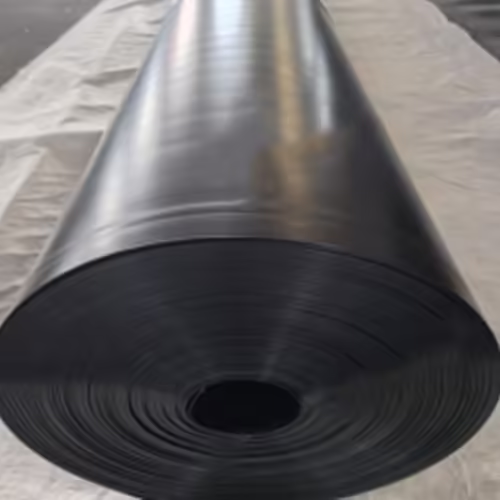
Why is High-Density Polyethylene (HDPE) the industry standard for the Leach Pad? The answer lies in its molecular structure. HDPE offers the highest level of chemical resistance against the aggressive acids and bases used in mining.
To ensure long-term stability of the Leach Pad, engineers must specify materials that exceed standard commercial grades. HDPE, particularly when manufactured to GRI-GM13 standards, provides the necessary tensile strength and multi-axial strain resistance to accommodate foundation shifts without cracking.
Technical Comparison: Liner Requirements for Mining
The following matrix outlines the physical properties required to maintain site integrity under heavy ore loads.
Table: Critical Performance Specs for Mining Containment
| Property | Requirement (GRI-GM13) | Purpose in Mining |
| Thickness | 1.5mm to 2.5mm | Resisting puncture from heavy ore loads. |
| Chemical Resistance | High (HDPE) | Withstanding sulfuric acid/cyanide contact. |
| Interface Friction | High (Textured) | Preventing slope failure of the mineral heap. |
| Puncture Resistance | > 500 N | Protecting the Leach Pad during ore loading. |
| Stress Crack Resistance | > 500 hours | Ensuring the liner doesn’t fail under pressure. |
Installation: Protecting the System During Construction
The most vulnerable time for any Leach Pad is during the initial ore placement. If the “overliner” drainage gravel is not placed carefully, heavy machinery can puncture the geomembrane for gold/copper mining heap leach pads.
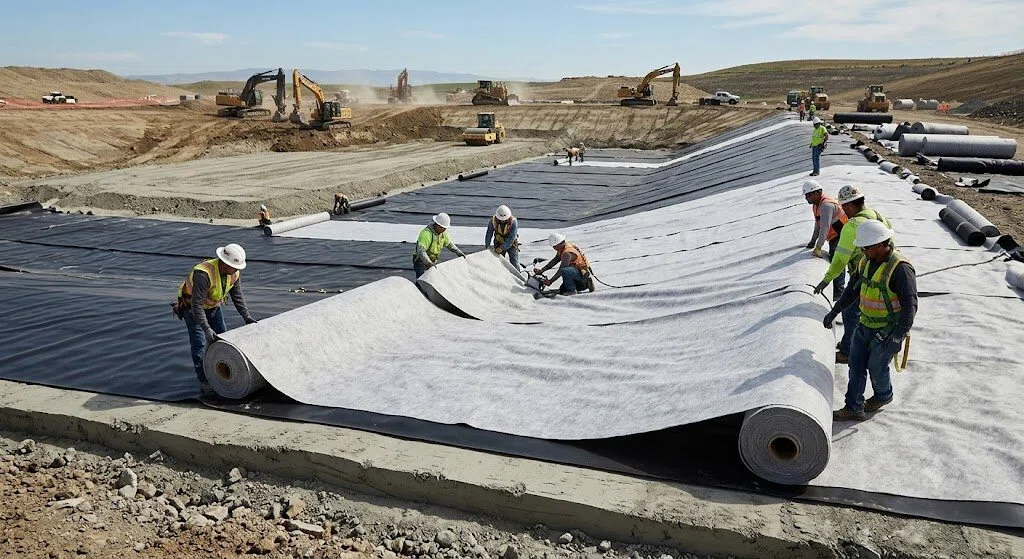
During installation, professional Seepage Control specialists use specialized welding techniques. Dual-track fusion welding is the preferred method for the Leach Pad seams, as it creates an airtight channel that can be pressure-tested. Every square meter of the Leach Pad must be inspected using spark testing or vacuum boxes to ensure zero-defect containment before the first ton of ore is stacked.
Regulatory Compliance and Global Standards
A Leach Pad must adhere to strict international environmental codes to maintain a “Social License to Operate.” Most global mining jurisdictions require that the Seepage Control system meets or exceeds the guidelines set by the Geosynthetic Research Institute (GRI).
According to GRI-GM13, the resin used must contain specific antioxidants to prevent thermal degradation. In high-altitude or desert mines, the liner may be exposed to intense UV radiation before it is covered by ore. Using a high-quality geomembrane for gold/copper mining heap leach pads ensures that the plastic doesn’t become brittle during this exposure phase.
Maintenance and Post-Leach Management
The life of a mining facility doesn’t end when recovery slows down. Once the ore is “spent,” the site must be rinsed and decommissioned. This process can take years. The Seepage Control system must remain intact throughout this period to ensure that no residual chemicals leach into the soil.
Proactive management involves installing a leak detection system beneath the primary geomembrane. By monitoring these secondary layers, mining engineers can identify small issues before they become environmental disasters, protecting both the environment and the company’s reputation.
Conclusion
By investing in superior Seepage Control and high-specification geomembrane for gold/copper mining heap leach pads, mining companies can ensure maximum mineral recovery while minimizing environmental risk. In an industry where margins are dictated by efficiency, a well-engineered containment system is not an expense—it is a long-term investment in operational stability and environmental stewardship.
FAQ
Can I use LLDPE for mining projects?
Yes, LLDPE is often used in colder climates due to its flexibility, but HDPE remains the standard for the best chemical resistance.
How do you prevent punctures during ore loading?
We use a protective “cushion” layer of non-woven geotextile and at least $30\text{cm}$ of fine-grain drainage material over the liner.
What is the lifespan of a geomembrane for gold/copper mining heap leach pads?
When properly buried and protected from UV, high-quality HDPE liners are designed to last for several decades.
Does textured geomembrane help with Seepage Control?
Indirectly, yes. It prevents the heap from sliding, which is a leading cause of liner tears and system failure.