
Outrigger Pad Applications Across Industries: Case Studies
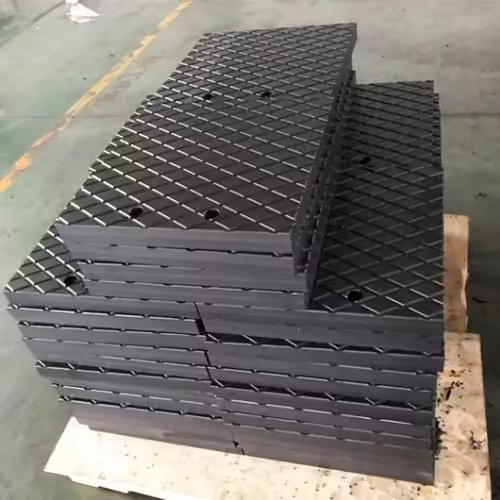
Table of Contents
Introduction
Outrigger pads play a critical role in ensuring the stability and safety of heavy equipment across multiple industries. From construction cranes and mobile lifting machinery to mining excavators and industrial equipment, the proper selection and use of outrigger mats can prevent ground damage, improve load distribution, and reduce the risk of accidents.
According to a 2023 Construction Equipment Safety Report, improper support of heavy machinery contributes to nearly 15% of equipment-related accidents on-site. Using high-quality outrigger pads significantly reduces these risks while improving operational efficiency.
This article explores the applications of outrigger pads across different industries, backed by data, case studies, selection guidance, and practical tips to help you make informed decisions.
Overview of Outrigger Pads
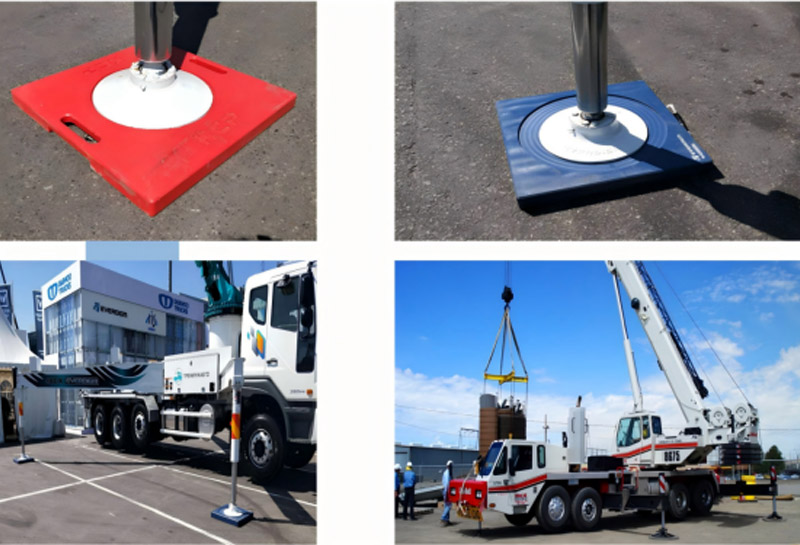
Outrigger pads are designed to distribute the weight of heavy machinery over a larger surface area. This prevents sinking or tipping when equipment operates on soft, uneven, or sensitive surfaces.
Key features include:
- Materials: HDPE, rubber, and composite options
- Load capacity: typically ranges from 5 to 50 tons depending on size and material
- Durability: UV resistant, weatherproof, and reusable for multiple operations
- Common applications: cranes, excavators, mobile lifts, and industrial machinery
Industry Applications and Case Studies
Construction and Crane Operations
Cranes and heavy lifting equipment often operate on variable ground conditions. Outrigger pads provide the necessary stability to prevent accidents and structural damage to both machinery and the site.
Case Example: A high-rise construction project used 800×800 mm HDPE outrigger mats under tower cranes. Load monitoring indicated even distribution, reducing localized ground pressure by 40% and improving operator confidence.
Energy and Utility Sector
In wind farm installation, substation construction, and pipeline work, uneven terrain often challenges equipment stability. Outrigger pads mitigate risk and allow machinery to operate safely on slopes and soft soil.
Case Example: Utility tower installation employed composite outrigger mats, which prevented equipment tilt and enabled precise alignment of turbines and poles without additional ground reinforcement.
Transportation and Logistics
Heavy-duty trucks and loading equipment require stable support during offloading and maintenance operations. Outrigger pads reduce ground deformation and increase safety for workers.
Case Example: A logistics company used rubber outrigger mats for container handling cranes in a yard with mixed gravel and soil. The pads distributed loads evenly and prevented rutting during repeated operations.
Industrial and Mining Applications
Excavators, drilling rigs, and other industrial machinery often exert high point loads on the ground. Outrigger pads protect surfaces while maintaining machine performance under heavy loads.
Case Example: A mining project installed HDPE outrigger pads under excavators working on tailings ponds. Data collected over six months showed zero equipment tipping incidents and reduced soil compaction by 35%.
Performance Comparison and Selection Guide
| Property | Typical Range | Recommended Application |
|---|---|---|
| Material | HDPE, rubber, composite | All heavy equipment support |
| Load Capacity | 5–50 tons | Cranes, excavators, mobile lifts |
| Size | 400×400 mm–1200×1200 mm | Depends on machine footprint |
| Durability | UV and weather resistant | Outdoor and long-term use |
| Reusability | 50+ operations | Construction, industrial, mining sites |
Selection Tips:
- Choose pad size and material based on the equipment’s footprint and maximum load.
- For outdoor applications, ensure UV and weather-resistant materials are used.
- Reusable pads provide cost efficiency for projects requiring multiple setups or relocations.
Conclusion
Outrigger pads are essential components for the safe operation of heavy equipment across construction, energy, logistics, and mining industries. Selecting the correct pad size, material, and load capacity ensures stability, protects surfaces, and enhances operational efficiency.
For personalized guidance on selecting the best outrigger mat for your project, contact EcoGeo Material. Our experts provide tailored solutions, technical support, and reliable products to ensure your equipment operates safely and efficiently. Take action today and optimize your project’s safety and performance with our outrigger pad solutions.
FAQ
How do I select the right outrigger pad for my crane?
Choose based on machine weight, footprint, and ground conditions. Larger pads distribute weight more effectively.
Can outrigger pads be used on soft or uneven terrain?
Yes, outrigger mats are designed to stabilize equipment on soft or irregular surfaces and prevent sinking.
What materials offer the best durability for heavy equipment support?
HDPE, rubber, and composite materials are widely used for their load-bearing capacity and weather resistance.
Are outrigger pads reusable across multiple projects?
Most high-quality outrigger mats are reusable for dozens of operations if handled correctly.
How do I calculate the number of pads needed for my equipment?
Divide the total weight by the load capacity of each pad, considering the number of contact points and safety factors.