
The Preferred Choice for Drainage & Filtration: Understanding Polypropylene Geotextile
Table of Contents
Polypropylene Geotextile performs the core job of letting water pass while retaining soil, and its combination of chemical resistance, controlled porosity and cost-effectiveness makes it a leading choice for drainage and filtration systems.
Properties of Polypropylene Geotextile
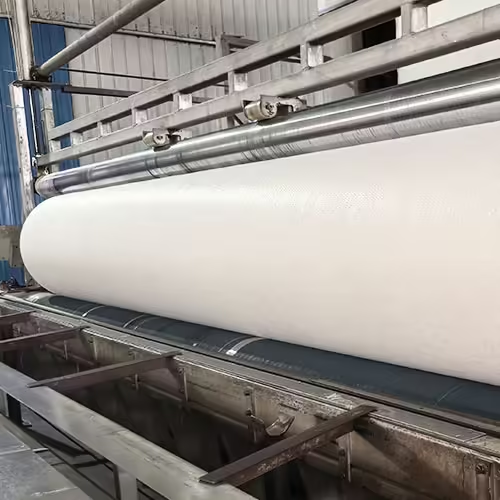
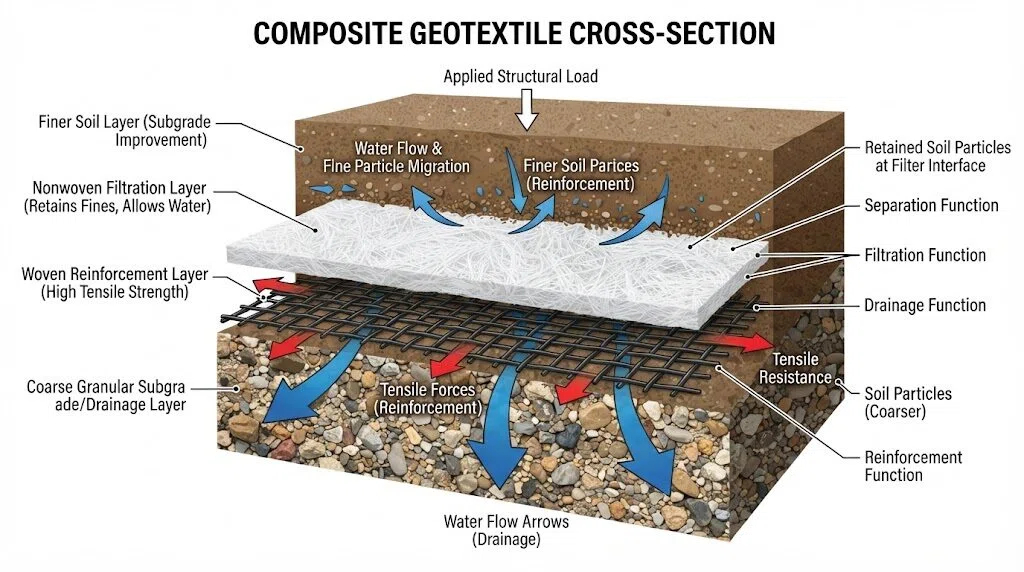
Polypropylene Geotextile is produced in woven, non-woven and knitted formats; each manufacturing route creates different pore structures, tensile strengths and elongation behaviors. Non-woven needle-punched fabrics typically offer high permittivity and good clogging resistance, while woven products deliver superior tensile capacity for reinforcement tasks. These distinctions matter when a project requires both filtration and load-bearing performance.
Key material advantages include very low water absorption, broad chemical compatibility (stable across common pH ranges), and good resistance to biological degradation. For environments where salts, acids or alkaline soils are present, polypropylene’s inertness increases design longevity compared with some polymer alternatives.
Filtration performance and hydraulic behavior
Filtration performance is quantified by properties such as apparent opening size (AOS), permittivity and in-plane permeability. Polypropylene Geotextile products are engineered to achieve a balance: pores must be fine enough to retain the native soil but open enough to pass design flows without producing excessive head loss. Design guides and empirical studies outline selection criteria that link soil gradation to required AOS and permittivity values.
Laboratory measures (e.g., ASTM D4751 for AOS and ASTM D4491 for permittivity) are commonly required in specifications; these tests provide the numeric basis for sizing a filter layer and predicting long-term hydraulic performance. Where tensile loads are expected, add tensile and dynamic fatigue criteria to the specification.
Drainage applications that favor Polypropylene Geotextile
Because of its filtration characteristics, Polypropylene Geotextile is widely used in French drains, trench drains, retaining wall backfills, and around perforated storm pipes. In each application the geotextile serves three simultaneous roles: separation (preventing intermixing of aggregates and fines), filtration (allowing water to pass while retaining soil), and protection (shielding drainage cores or membranes from damage).
For steep slopes and riprap channels, the geotextile’s ability to retain fine particles while letting high storm flows pass is critical to avoid system clogging and to preserve hydraulic capacity over decades.
Types and quick selection table
| Type | Typical manufacturing | Filtration trait | Typical uses |
|---|---|---|---|
| Non-woven (needle-punched) | Random fiber web, mechanically bonded | High permittivity, good clog resistance | Subsurface drains, pipe envelopes |
| Woven (mono/bi-axial) | Interlaced yarns | Lower permittivity, high tensile strength | Reinforcement, separation under loads |
| Heat-bonded non-woven | Thermally consolidated fibers | Controlled pore size, consistent AOS | Fine filtration, critical-flow drains |
When drainage and filtration are the priority, the non-woven polypropylene family is often preferred because it combines an open internal structure with the ability to retain fine particles without rapid loss of permeability.
Specification and standards to reference
Engineers commonly reference ASTM and AASHTO standards when specifying Polypropylene Geotextile. Standards cover test methods (AOS, permittivity, tensile) and performance classes for drainage filters. For projects subject to public procurement, include the required standards and acceptance criteria in the tender so manufacturers can supply certified test reports with roll delivery.
Beyond raw test values, good specifications define installation tolerances, overlap lengths, protection against UV exposure during storage, and acceptance checks after placement.
Installation, longevity and quality control
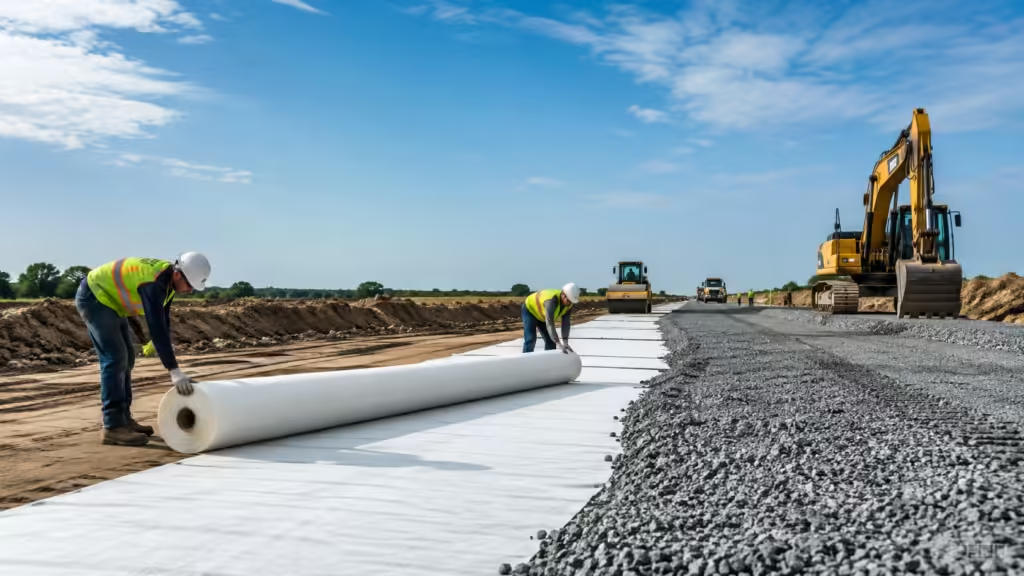
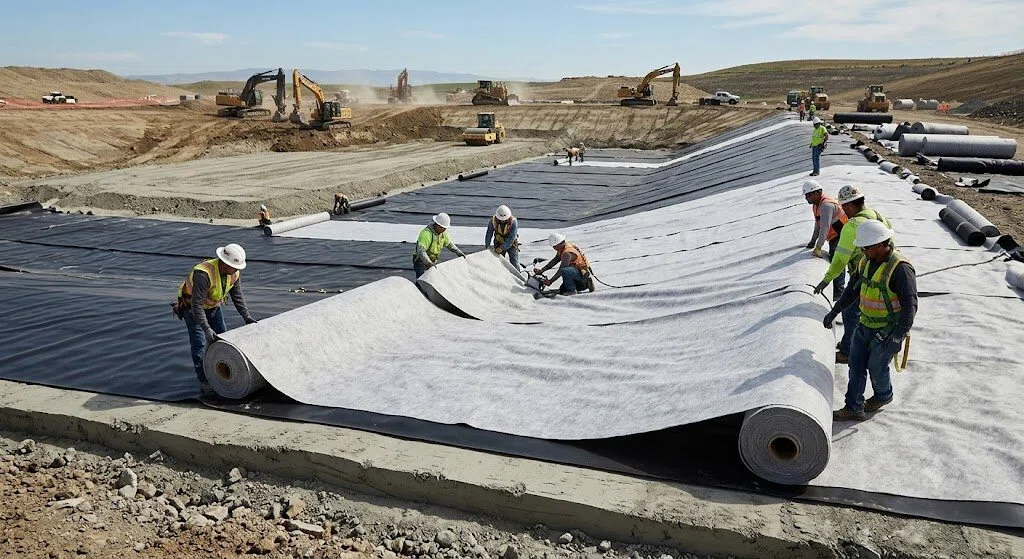
Correct installation preserves the intended filtration function. Key on-site practices include ensuring proper overlap or seam welding, protecting rolls from prolonged UV exposure before placement, and preventing soil contamination of the geotextile during backfilling. During construction, document roll numbers, test certificates and on-site inspection records to support quality assurance.
Designers should also anticipate maintenance access. In systems where sediment loading is expected, provide inspection ports or sediment traps to allow periodic cleaning without disturbing the filter layer.
Performance risks and mitigation
Clogging is the principal long-term risk to filtration performance. Mitigate this by selecting a Polypropylene Geotextile with the correct AOS for the soil gradation, and by ensuring the drainage aggregate is well graded to accept the filter’s retained fines. For abrasive environments or where hydrocarbons may be present, select materials and construction sequences that prevent premature damage or chemical attack.
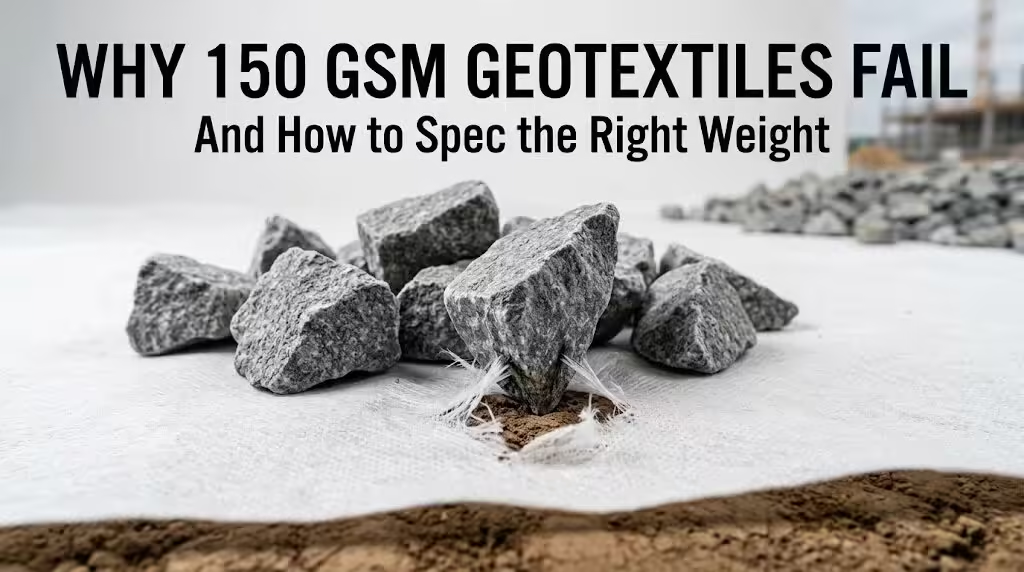
Another risk is mechanical damage during construction; protection layers or sacrificial covers reduce puncture likelihood when heavy equipment operates near the installed geotextile.
Practical design checklist
- Match AOS to the soil’s d85/d15 ratios per accepted filter design methods.
- Specify permittivity and in-plane permeability to meet peak flow requirements.
- Require manufacturer test certificates (AOS, D4491, tensile).
- Define minimum overlap and anchoring details for trench and wall applications.
- Plan inspection and maintenance access for service life management.
Conclusion
When drainage and filtration are design drivers, Polypropylene Geotextile offers a technically mature, cost-effective solution. Its low moisture uptake, chemical stability and adaptable manufacturing formats allow engineers to tailor filtration and separation performance across a broad range of civil and environmental projects. Careful selection—based on soil gradation, hydraulic demand and expected loads—plus robust installation controls, will deliver dependable, long-term function with minimal maintenance.
If you want to learn more about the Polypropylene Geotextileing Machine Nozzles, please click here.