
Why Is Your MSE Wall Bulging? How Retaining Wall Geotextile Fixes Lateral Shifting
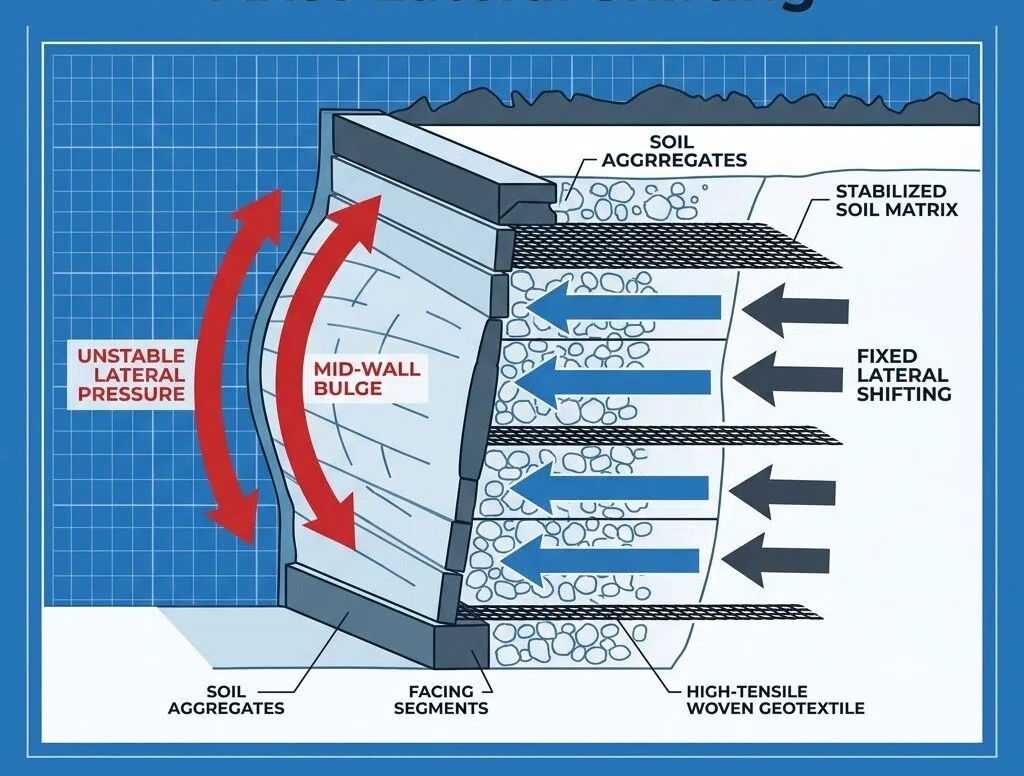
When earthwork structures begin to deflect, site managers often misdiagnose the failure as a simple facing block issue. In reality, structural shifting is an internal mechanics problem driven by massive lateral forces within the backfill zone. To arrest this movement, engineers must look past superficial aesthetic fixes and implement a heavy-duty retaining wall geotextile stabilization plan.
Throwing generic fabric at a high-load embankment will not solve the problem. If you select a material with too much elastic strain, the active earth pressure will simply stretch the geosynthetic, leading to catastrophic slope failure. This technical analysis provides the exact mechanical parameters and installation checkpoints required to halt structural shifting and restore shear equilibrium using a proper retaining wall geotextile.
Table of Contents
Why Is Your MSE Wall Bulging?
An Mechanically Stabilized Earth (MSE) wall depends on an internal balance between the weight of the backfill soil and the resisting forces embedded within it. When the active lateral earth pressure exceeds the internal shear resistance of the soil matrix, the lateral forces push outward against the facing blocks.
This mechanical imbalance is the primary catalyst for severe structural shifting. According to the structural mechanics detailed in the Federal Highway Administration’s report on mechanically stabilized earth walls design, water saturation drastically spikes this lateral load.
When pore water pressure increases inside clay or poorly graded backfill, the effective soil friction angle drops. The soil behaves less like a solid aggregate and more like a heavy liquid, creating an immense outward thrust that manifests as a mid-wall bulge. Integrating a retaining wall geotextile at correct lift heights is the only way to lock the backfill in place.
Woven vs. Non-Woven: Which Fabric Controls Wall Deformation?
When choosing an MSE wall reinforcement geotextile, you must evaluate the ultimate tensile strength at specific strain limits. This is where many procurement agents make a fatal mistake.
Non-woven fabrics possess excellent permittivity and are ideal for subgrade water filtration. However, as noted in the foundational definitions of geosynthetic engineering applications, non-woven materials exhibit high elongation—often stretching up to 50% before reaching their ultimate tensile strength. If used as primary reinforcement, a non-woven sheet will stretch under the soil load, allowing the wall face to tilt and buckle.
For structural reinforcement, a high-modulus woven geotextile for retaining wall applications is mandatory.
| Performance Metric | Non-Woven Geosynthetic | Woven Structural Fabric |
| Primary Engineering Function | Filtration, drainage, separation | Reinforcement, high-load stabilization |
| Grab Elongation Strain Rate | High (>50%), highly elastic | Low (<15%), rigid tension resistance |
| Ultimate Tensile Strength | Typically <30kN/m | Can exceed 100/m up to 400textkN/m |
| Deformation Control Rating | Poor (Allows lateral soil creep) | Excellent (Locks active pressure) |
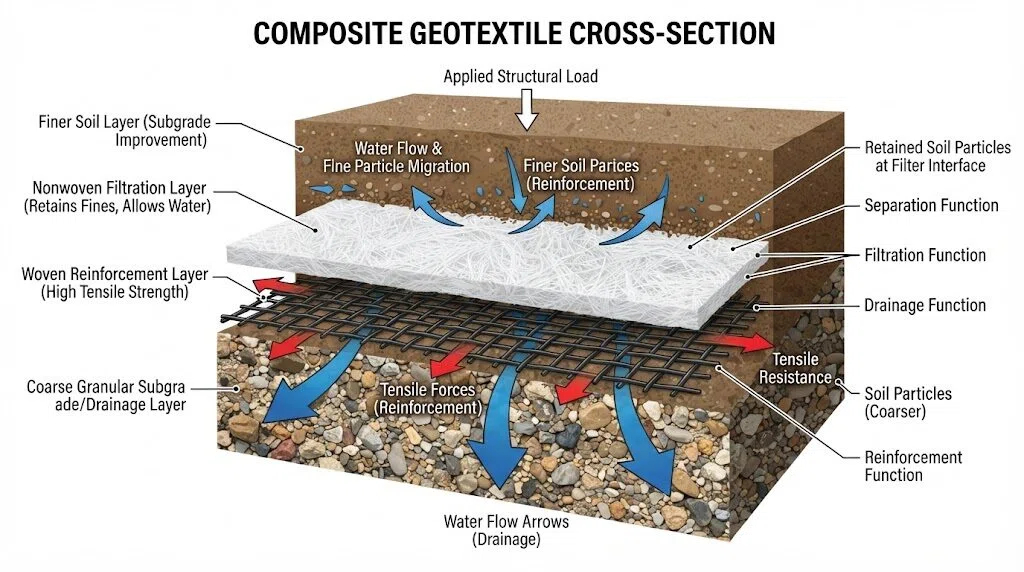
To prevent structural failure, the reinforcement layers must be constructed from high-tensile polypropylene yarns. Utilizing a rigid retaining wall geotextile directly counters internal lateral stresses because the fabric absorbs the tensile loads that the soil cannot support on its own. Every retaining wall geotextile must be tested for its long-term deformation profile.
How Does a Retaining Wall Geotextile Mitigate Structural Shifting?
1.Friction-Based Interlocking
A premium retaining wall geotextile does not just sit loosely between soil lifts; it locks the backfill aggregate in place.
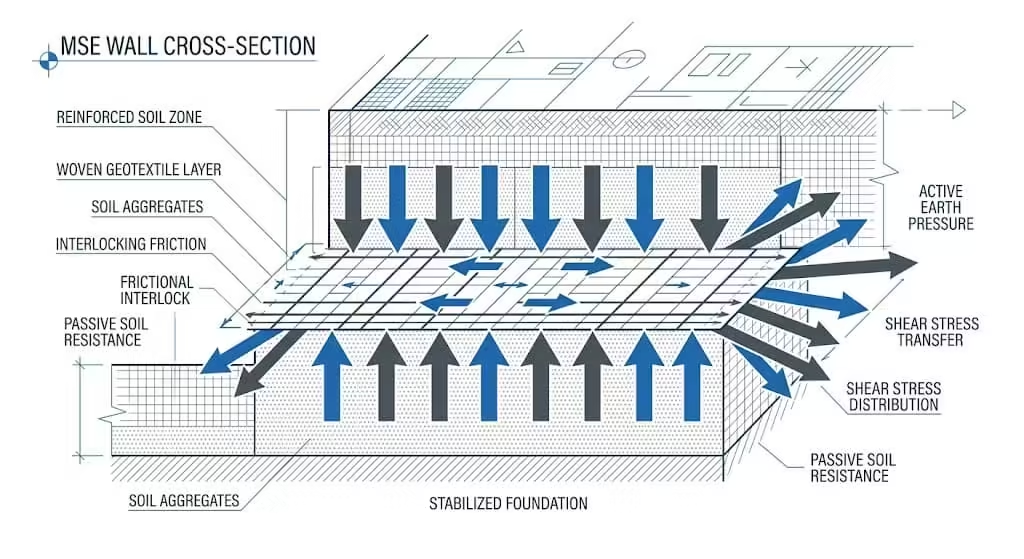
As backfill material is compacted over the textured surface of a high-strength woven fabric, individual soil particles become mechanically trapped within the weave. This interlocking mechanism transforms the soil mass from a loose, sliding threat into a unified, coherent structural block. The lateral earth pressure trying to push the wall face outward is converted into
2.Eliminating Hydrostatic Pressure
Water is the enemy of stable earthworks. When rain or groundwater builds up behind the facing segments, it creates hydrostatic pressure.
A properly specified retaining wall geotextile offers plane-strain hydraulic conductivity. It allows water to escape laterally along the fabric layer toward the wall’s drainage system while keeping fine soil particles tightly restrained. For a deeper look at how poor drainage triggers shear failure, the International Geosynthetics Society provides an excellent technical paper on geosynthetic drainage failures in retaining structures. A well-placed retaining wall geotextile manages this pore water pressure efficiently.
Critical Engineering Specifications for High-Load Structural Design
When submitting material data sheets for municipal or commercial approval, engineers do not look at generic marketing terms. They verify specific, standardized physical values.
If you are sourcing materials for a project with high lateral loads, you must focus on the Ultimate Tensile Strength in both the machine direction (MD) and cross-machine direction (CD). For massive vertical structures, specifying a high-modulus retaining wall geotextile with an ultimate strength exceeding 100kN/m is standard practice to maintain a safe factor of safety against pullout failure.
Furthermore, you must account for long-term creep deformation. Over a 75-year design life, polymers can slowly stretch under continuous loads. Premium woven fabrics utilize highly crystalline polypropylenes engineered to resist creep, ensuring the structure remains perfectly plumb decades after installation.
Choosing an engineered solution like a certified retaining wall geotextile ensures that your backfill retains its structural integrity under seasonal freeze-thaw cycles. For instance, the high-performance design of a dedicated woven geotextile provides the exact low-strain tensile resistance needed to lock up unstable backfill zones. Relying on a tested retaining wall geotextile eliminates common performance ambiguities.
Common Installation Overlooks That Trigger Structural Deflection
Why do walls built with quality materials still fail? In most cases, the issue stems from poor execution during the civil works phase.
- Insufficient Embedment Length (L): A common contractor mistake is cutting the fabric layers too short to save on material costs. The standard engineering rule of thumb dictates that the reinforcement length must be at least 70% of the total wall height (0.7H). If Lis too short, the fabric layer sits entirely within the active failure wedge, rendering your retaining wall geotextile useless.
- Improper Compaction Equipment Usage: Heavy, vibrating padfoot rollers should never be operated within 1 meter of the fragile facing segments. This aggressive vibration forces the facing blocks outward, creating a permanent bulge before the project is even completed. Lightweight rammer plates must be used near the face.
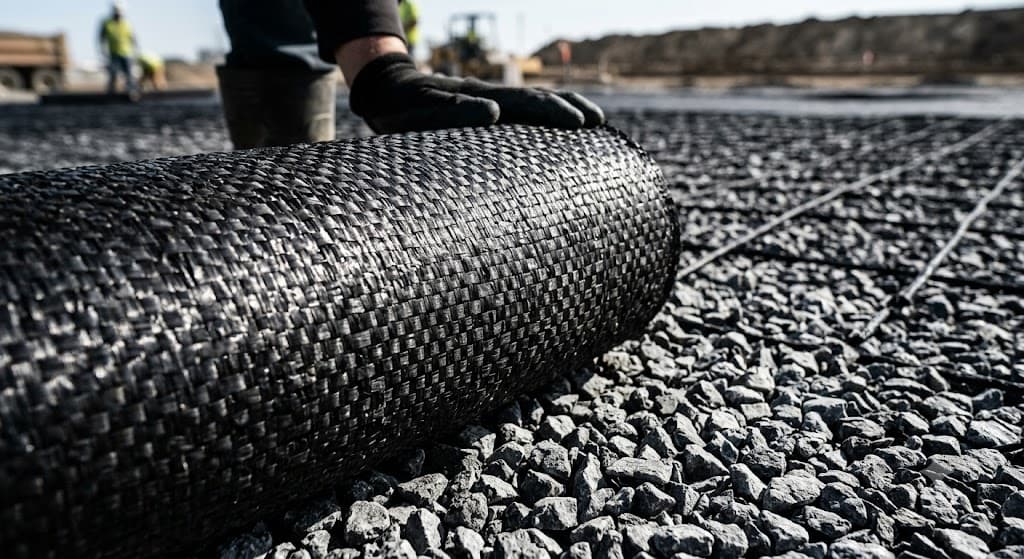
- Failing to Tension the Fabric: Prior to dropping backfill lifts, operators must pull the geosynthetic sheet completely taut and pin it into place. If the retaining wall geotextile is placed with wrinkles or slack, the soil will shift laterally until the wrinkles are pulled straight, causing noticeable deflection on the exterior wall face.
According to practical field field reports shared within the r/CivilEngineering community discussion on retaining wall collapses, unexpected movement is almost always traced back to contractors skimping on embedment lengths or ignoring moisture mitigation protocols. A properly installed retaining wall geotextile is only as good as the site execution.
Preventing structural deformation requires a clear understanding of soil mechanics and material limitations. If you are dealing with large vertical heights or poor quality on-site backfill, relying on gravity blocks alone is a high-risk gamble.
Integrating a robust retaining wall geotextile system into your design converts unstable soil wedges into a rigid, self-supporting structural asset. For a deep look at how specific geosynthetic designs compare against traditional steel mesh systems regarding installation speeds and total project budgets, you can consult our peer review of retaining wall stabilization methods.
By pairing precise embedment lengths with a low-strain, high-tensile retaining wall geotextile, you eliminate the threat of lateral shifting, ensuring your commercial infrastructure remains completely stable for its entire intended service life using the right retaining wall geotextile.
FAQ
Can I substitute a non-woven fabric for a woven fabric in an MSE wall?
No. Non-woven fabrics lack the tensile modulus required for load-bearing soil stabilization. Using non-woven sheets as primary reinforcement will cause the soil mass to shift, resulting in severe wall deformation. Only a structural retaining wall geotextile will hold the load.
What is the minimum required layer spacing for structural fabric?
In typical commercial designs, a retaining wall geotextile layer must be installed every 400mm to 600mm of vertical lift height. Closer spacing is required at the bottom of the structure where lateral pressures are highest.
How do I fix a wall that is already bulging?
If a wall is already exhibiting deflection due to internal shear failure, surface repairs are ineffective. You must either install deep soil nails (grouted tieback anchors) or completely excavate the backfill and rebuild using a high-modulus retaining wall geotextile to reinforce the soil matrix.