
Soil Erosion Control Strategies for Coastal Stability and Long-Term Ground Performance
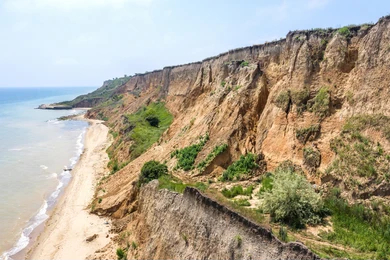
Soil stability is a critical factor in coastal and infrastructure projects, where land is constantly exposed to wind, water, and changing loads. Among the many environmental challenges engineers face, soil erosion stands out as one of the most destructive and costly. It gradually weakens foundations, accelerates shoreline retreat, and increases long-term maintenance demands. Addressing this issue requires not only surface protection, but also structural reinforcement within the soil itself—especially in areas such as coastlines, embankments, and reclaimed land where traditional methods often fall short.
Table of Contents
Understanding Soil Erosion in Coastal Environments

Coastal areas are naturally dynamic systems. Waves, tides, rainfall, and wind act together to remove fine particles from the soil surface. Over time, this process intensifies soil erosion, leading to slope instability, loss of bearing capacity, and damage to nearby infrastructure. Unlike inland erosion, coastal soil loss is often faster and more difficult to control due to constant hydraulic forces.

Another challenge is soil composition. Sandy or mixed-fill soils commonly used near shorelines have low cohesion. Once disturbed, they are highly susceptible to soil erosion, particularly under repeated loading or storm events. This makes coastal protection a long-term engineering concern rather than a one-time construction task.
Why Conventional Methods Are Often Not Enough
Traditional erosion control methods—such as riprap, concrete revetments, or vegetation—can be effective in certain conditions, but they also have limitations. Hard structures may reflect wave energy instead of dissipating it, increasing soil erosion in adjacent areas. Vegetation, while environmentally friendly, requires time to establish and may fail in saline or high-energy environments.
More importantly, surface-only solutions do little to improve the internal strength of the soil. When the underlying soil lacks confinement, soil erosion can continue beneath protective layers, eventually causing settlement or collapse. This has led engineers to focus more on reinforcement techniques that work within the soil mass itself.
Reinforcing Soil from Within: A Practical Approach
Modern geotechnical engineering increasingly relies on internal stabilization methods to combat soil erosion. These approaches aim to improve soil interaction, distribute loads more evenly, and limit particle movement under stress. One of the most effective techniques involves the use of polymer-based reinforcement materials that integrate directly with the soil structure.
By creating mechanical interlock with surrounding fill, reinforcement systems can significantly increase shear strength. This internal confinement plays a crucial role in resisting soil erosion, especially in areas exposed to cyclic loading such as coastlines and tidal zones.
How Plastic Geogrid Supports Erosion Control
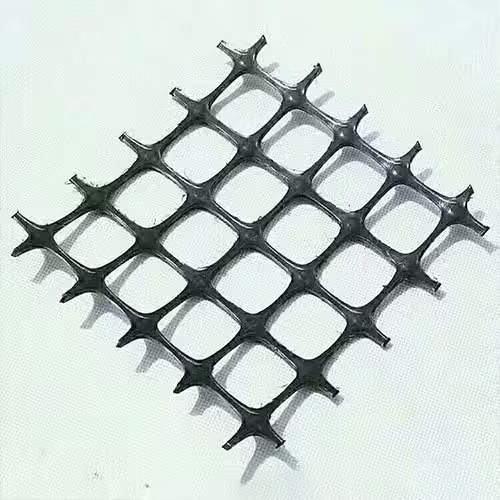
Plastic Geogrid, manufactured from materials such as PP, PE, HDPE, or PET, is designed with square apertures and optimized rib and node geometry. This structure allows soil particles to lock into the grid, forming a stable composite system. Instead of relying solely on surface protection, the soil itself becomes more resistant to displacement.
In erosion-prone environments, this interlocking mechanism is particularly valuable. As loads are applied—whether from waves, traffic, or overlying structures—the grid helps distribute stress laterally. This reduces localized deformation and slows the progression of soil erosion over time.
Performance Advantages in Coastal Applications
https://ecogeomat.com/product/plastic-geogrid/Coastal engineering places high demands on material durability. Exposure to moisture, salt, and temperature fluctuations can degrade conventional reinforcement products. Plastic Geogrid made from polypropylene or similar polymers offers excellent resistance to corrosion and chemical attack, making it suitable for long-term use near the sea.
Additionally, its high tensile strength ensures consistent performance even under repeated loading. In shoreline embankments and sea-adjacent roadbeds, this strength helps maintain structural integrity while limiting soil erosion beneath the surface. The result is a more stable foundation with reduced maintenance requirements.
Load Distribution and Cost Efficiency
One often overlooked aspect of erosion control is economic efficiency. When soil erosion compromises a base layer, repairs can be extensive and expensive. Reinforced soil systems help mitigate this risk by spreading loads more evenly across a wider area.
Plastic Geogrid’s load dispersion capability can reduce the required thickness of base layers. This not only lowers material consumption but also simplifies construction logistics, especially in coastal zones where access can be limited. Over the lifecycle of a project, this approach provides both structural and financial benefits.
Compatibility with Different Fill Materials
Coastal projects frequently rely on mechanically filled soils due to limited availability of natural aggregates. An effective reinforcement solution must work with a wide range of fill types. Plastic Geogrid is designed to interact with various granular materials, making it adaptable to different site conditions.
By maintaining strong interlock regardless of fill composition, the system helps control soil erosion even when local materials are used. This flexibility is particularly important in shoreline reinforcement and land reclamation projects, where imported materials may not be practical.
Long-Term Stability and Environmental Considerations
Sustainable engineering is not only about durability, but also about minimizing environmental disruption. By reinforcing soil internally, Plastic Geogrid reduces the need for massive surface structures that alter natural landscapes. At the same time, improved soil stability limits sediment runoff, which can otherwise worsen soil erosion in nearby marine ecosystems.
From a long-term perspective, reinforced soil structures are more resilient to extreme weather events. As coastal storms become more frequent, solutions that address soil erosion at its source are increasingly valuable.
A Reliable Solution for Coastal Soil Challenges
Managing soil erosion along coastlines requires more than reactive measures. It demands a system that strengthens the soil, adapts to harsh environments, and delivers consistent performance over time. Internal reinforcement using Plastic Geogrid meets these requirements by combining mechanical stability, material durability, and construction efficiency.
For engineers and project planners working near the sea, integrating soil reinforcement into erosion control strategies offers a balanced approach—one that protects infrastructure, controls costs, and enhances long-term stability in challenging coastal conditions.