
The Complete Guide to Geomembrane Liners: Types, Applications, and Key Elements
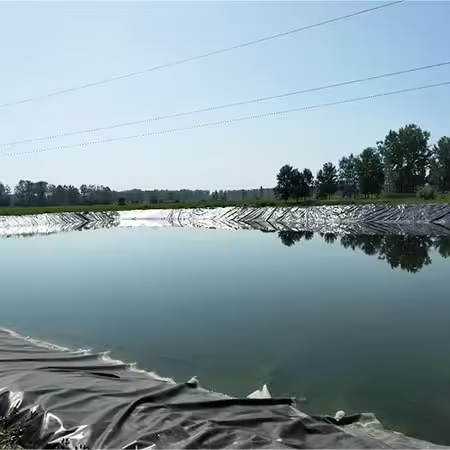
Table of Contents
Introduction
A geomembrane liner is a synthetic membrane used to control fluid migration in a wide range of civil, environmental, and geotechnical applications. Think of it as a protective barrier—a layer that keeps contaminants from leaking into soil or groundwater.
These liners are an essential element in:
- Waste management systems (landfills, leachate ponds)
- Mining operations (heap leach pads, tailing dams)
- Water conservation (reservoirs, canals, ponds)
- Industrial containment (chemical storage, wastewater treatment)
As environmental regulations tighten, geomembrane liners have become a core component in sustainable engineering solutions.
Types and Materials of Geomembrane Liners
HDPE, LLDPE, PVC, and Beyond
Geomembrane liners come in several materials, each with unique properties and applications.
Main material categories include:
- HDPE (High-Density Polyethylene)
- High chemical resistance
- Excellent UV durability
- Widely used for large containment areas
- LLDPE (Linear Low-Density Polyethylene)
- Greater flexibility
- Better adaptability to uneven surfaces
- PVC (Polyvinyl Chloride)
- Easy installation
- Good puncture resistance
- Limited UV stability (requires cover)
- EPDM Rubber & PP (Polypropylene)
- Exceptional elasticity
- Suitable for decorative ponds and small reservoirs
Comparing Material Properties
| Property | HDPE | LLDPE | PVC | EPDM |
|---|---|---|---|---|
| Flexibility | Low | Medium | High | Very High |
| Chemical Resistance | Excellent | Excellent | Good | Medium |
| UV Resistance | Excellent | Good | Fair | Good |
Manufacturing and Quality Control Elements
Key Elements of Production
A reliable geomembrane liner is the result of strict material control and process precision.
Essential production elements include:
- Raw material testing (resin purity, density, melt flow)
- Extrusion or calendering (uniform sheet formation)
- Surface treatment (textured or smooth finish options)
- Welding & seam integrity checks
Quality Testing Methods
To ensure durability and performance, manufacturers conduct:
- Thickness and density tests
- Tensile and tear strength assessments
- Permeability and leak tests
- Seam peel and shear strength tests
Installation and Construction Guidelines
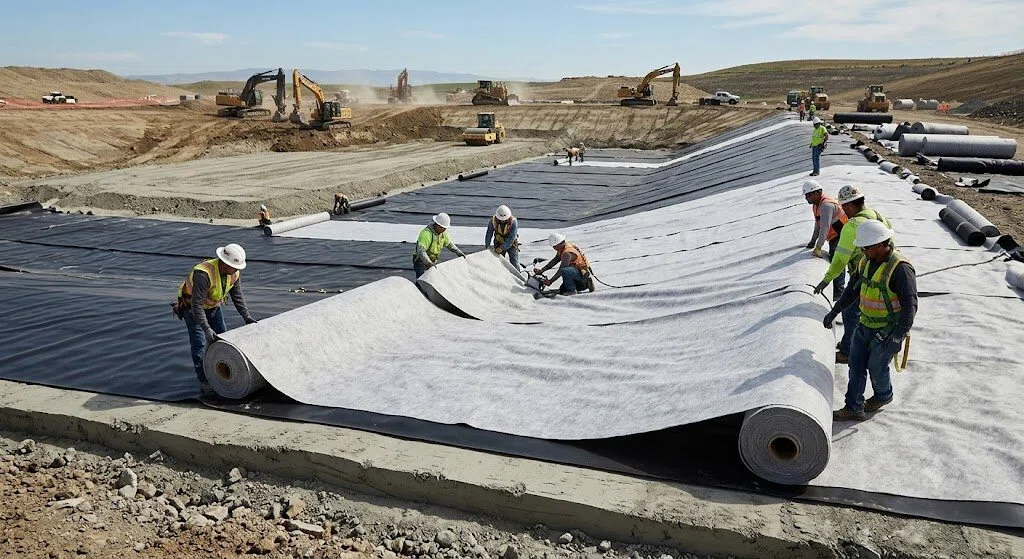
Preparing for Installation
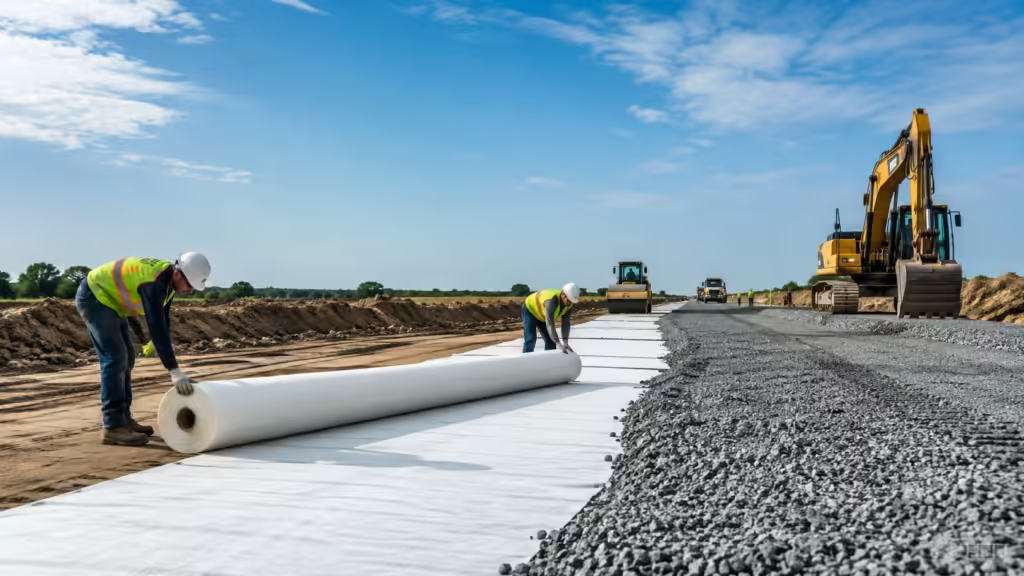
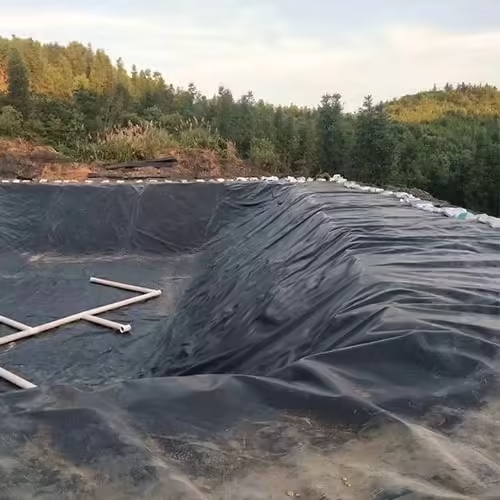
Before laying a geomembrane liner, the surface must be clean, smooth, and free from sharp objects.
Installation elements to consider:
- Ground leveling
- Cushion geotextile placement
- Overlap and welding plans
- Anchor trench design
Welding and Seaming
Hot Wedge Welding
This is the most common method for long, continuous seams. It uses a heated metal wedge inserted between overlapping geomembrane sheets to create strong, consistent welds at high speed. It’s ideal for large flat surfaces and factory-prepared rolls.
Extrusion Welding
Extrusion welding is used for detailed areas, repairs, and patches. A molten bead of the same material is extruded between two membrane surfaces, forming a solid bond when cooled. This method provides excellent control and adaptability to irregular shapes.
Seam Testing Methods
- Air channel testing
- Vacuum box testing
- Spark testing
Applications of Geomembrane Liners
Environmental and Industrial Uses
Landfills
Geomembrane liners are used to prevent leachate leakage, protecting soil and groundwater from contamination. They form the primary barrier at the base and sides of landfill cells.
Mining
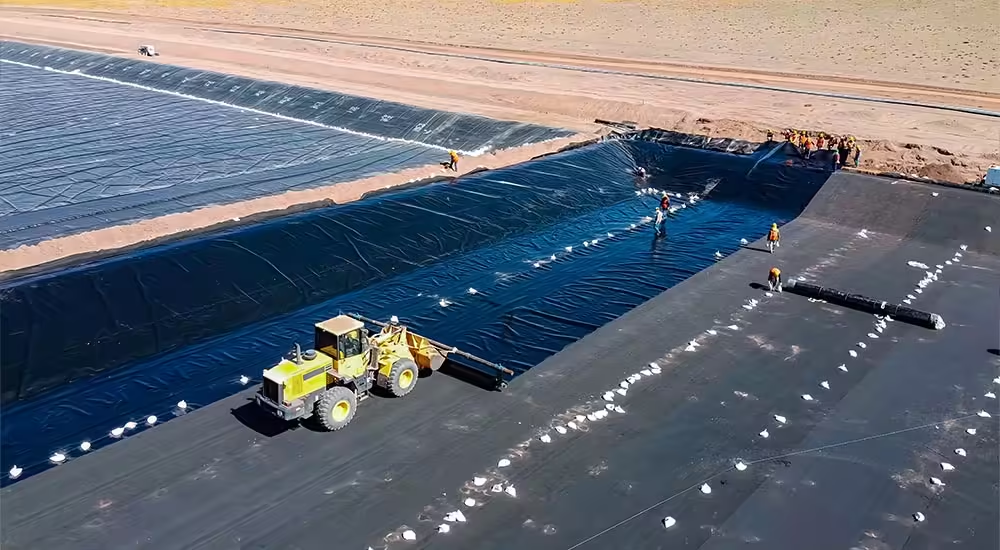
In mining operations, liners contain chemical leach solutions used to extract minerals from ore. They also help manage tailings ponds and prevent toxic seepage.
Water Reservoirs
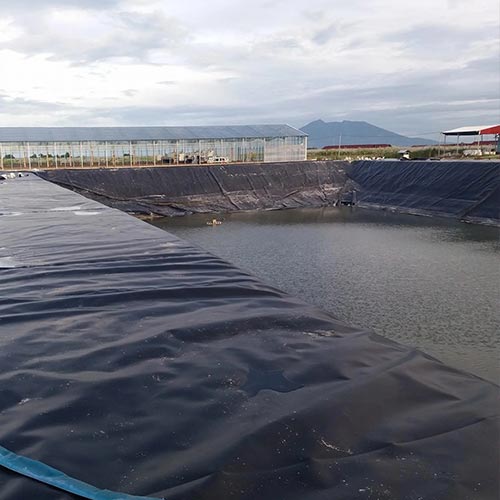
For water conservation projects, geomembrane liners minimize seepage losses in reservoirs, canals, and ponds. They are a cost-effective alternative to concrete or clay linings.
Agriculture
In agricultural applications, liners line irrigation canals and ponds to improve water use efficiency and prevent erosion or infiltration losses.
Wastewater Treatment
Wastewater treatment plants use geomembrane liners to contain sludge and effluent, ensuring safe treatment and storage of industrial and municipal wastewater.
Sustainable Advantages
Using geomembrane liners helps:
- Conserve water
- Reduce contamination risk
- Lower maintenance costs
- Improve project lifespan
Performance and Advantages
Core Advantages
A geomembrane liner delivers:
- Superior impermeability—virtually zero leakage
- High chemical resistance—withstands acids, salts, and hydrocarbons
- UV stability—for long-term outdoor exposure
- Cost efficiency—compared with concrete or clay barriers
Environmental Elements
Many geomembrane liners are:
- Recyclable
- Compliant with environmental standards (EPA, ISO)
- Contributing to lower carbon footprints in construction projects
Common Challenges and How to Avoid Them
Typical Problems
Even the best liner can fail if not handled correctly.
Common issues include:
- Improper seam welding
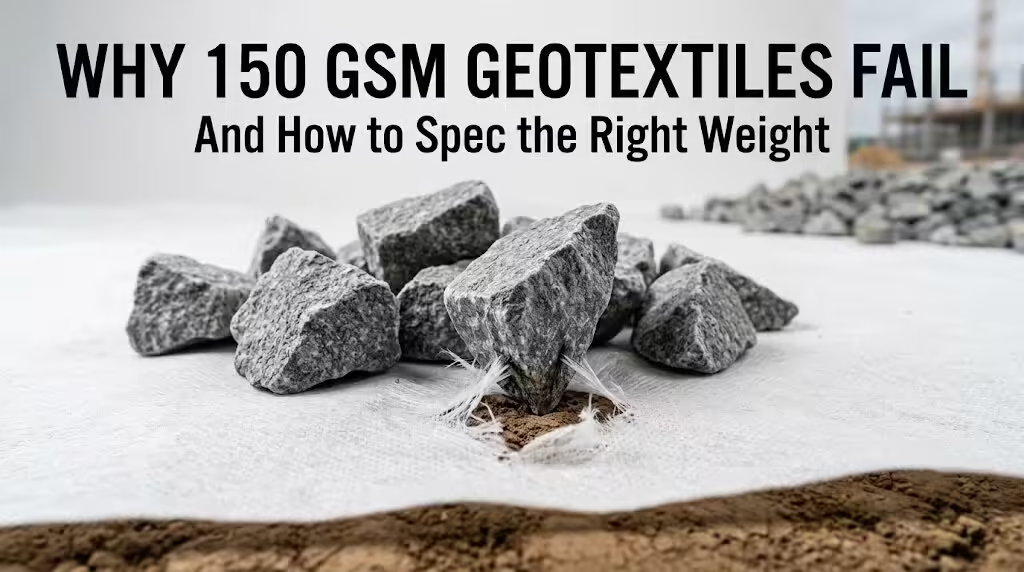
- Material puncture during installation
- UV degradation due to prolonged exposure
- Thermal contraction and expansion stresses
Preventive Solutions
- Always use trained installers
- Follow ASTM/ISO installation standards
- Use protective geotextiles
- Conduct post-installation integrity tests
Comparison: Geomembrane Liner vs. Geotextile
It’s easy to confuse geomembrane liners with geotextiles, but their functions differ fundamentally.
| Feature | Geomembrane Liner | Geotextile |
|---|---|---|
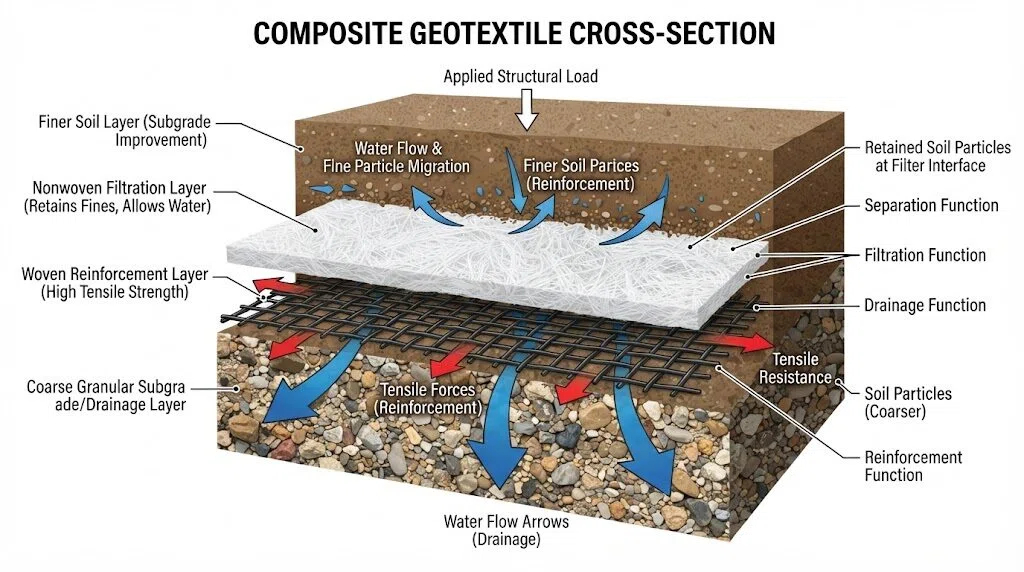
| Function | Acts as a barrier | Acts as a filter or separator |
| Material | Polyethylene, PVC, etc. | Woven or nonwoven fibers |
| Permeability | Impermeable | Permeable |
| Use Case | Containment | Drainage & reinforcement |
In many projects, both are used together—the geomembrane provides sealing, and the geotextile adds protection and drainage.
Environmental and Sustainability Aspects
Geomembrane liners play a vital role in reducing environmental pollution by preventing leaks and protecting soil and groundwater systems.
Sustainability elements include:
- Lower CO₂ emissions compared to concrete barriers
- Long-term reusability potential
- Support for green infrastructure development
Conclusion
Geomembrane liners are not just technical barriers—they are critical environmental protection elements in modern infrastructure. As materials science advances, we can expect:
- Smart liners with built-in leak detection sensors
- Self-healing membranes for automatic repair
- Bio-based polymers for greener production
FAQ
What exactly is a geomembrane liner used for?
It’s mainly used for leak prevention and containment in applications like landfills, mining ponds, and water reservoirs.
Is HDPE better than PVC for lining projects?
HDPE offers better chemical and UV resistance, while PVC is more flexible and easier to install. Your choice depends on the site conditions and budget.
How long does a geomembrane liner last?
Typically 20–50 years, depending on material quality, UV exposure, and maintenance.
How do I test if my geomembrane liner is leaking?
Common methods include vacuum box testing, electrical leak location surveys (ELL), and dye testing.
What’s the difference between geomembrane and pond liner?
All geomembranes can serve as pond liners, but not all pond liners meet the technical standards of engineered geomembranes.