
Woven vs Non Woven Geotextile: Key Differences Explained
Welcome to My Blog!
Before we dive into the content, if you’re interested in our products or have any questions, please feel free to visit our Contact Us page on the website. Our team is ready to assist you with inquiries, orders, or any support you may need.
Now, let’s get started on our journey together. I hope you find the content here insightful, engaging, and valuable.
Table of Contents
Introduction
Choosing between woven vs non woven geotextile is one of the most critical decisions in civil engineering, landscaping, drainage design, and large-scale infrastructure projects. Both geotextile types play essential roles in soil stabilization, separation, drainage, and reinforcement. However, their structural differences make them suitable for very different applications. Understanding these differences can directly impact project durability, long-term performance, and cost efficiency. This guide provides a clear and practical comparison of woven vs non woven geotextile fabrics, backed by industry data, field experience, and typical real-world applications to help you make a confident selection.
Key Characteristics of Woven Geotextile
Structure and Fabrication
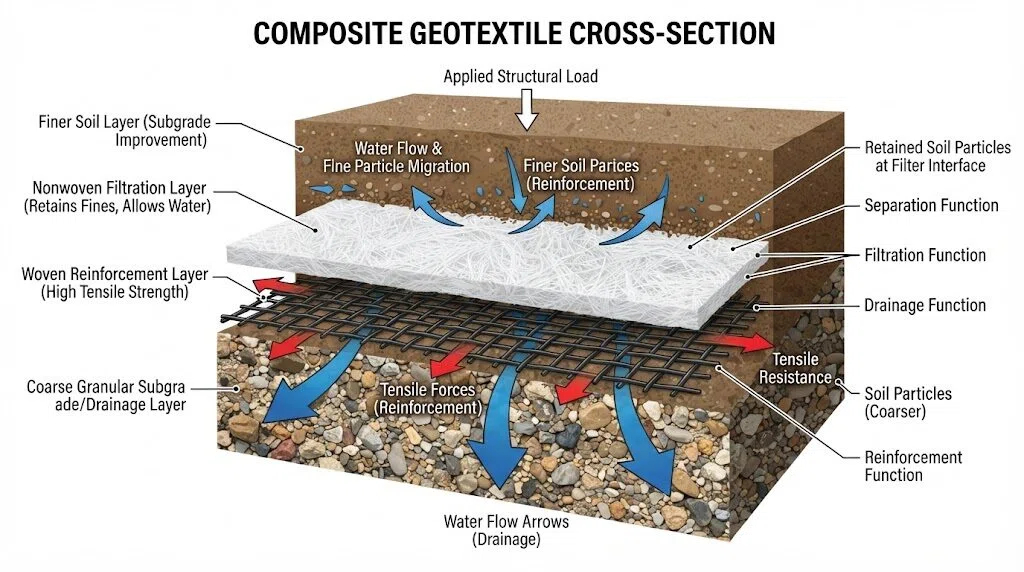
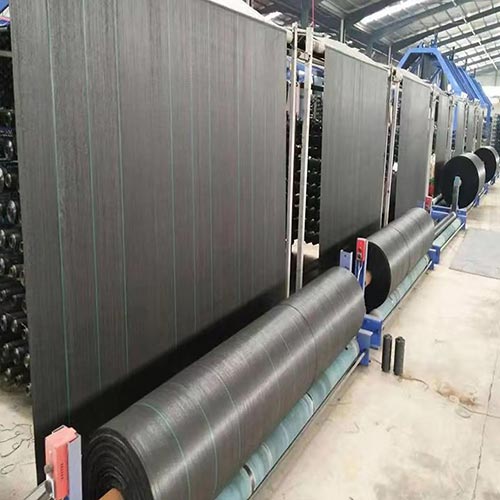
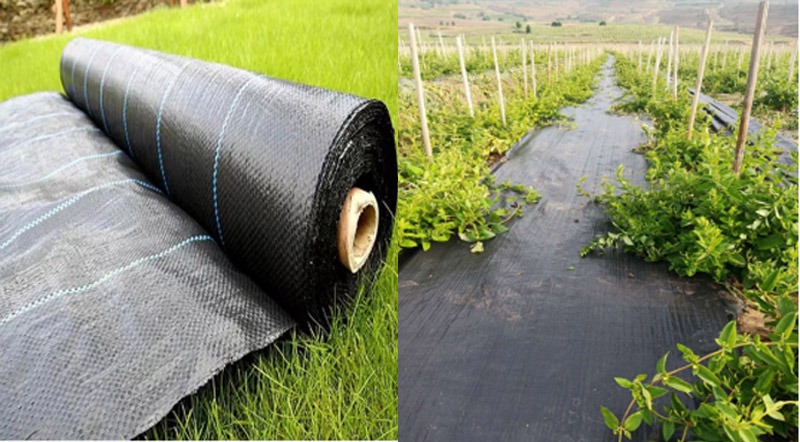
Woven geotextiles are produced by weaving polypropylene or polyester yarns into a uniform, grid-like structure. This manufacturing process gives woven geotextile materials a firm, stable, and highly structured fabric with minimal stretch. When comparing woven vs non woven geotextile, the woven type stands out for its rigidity and dimensional stability, which makes it exceptionally effective for reinforcement tasks where soil movement must be restricted.
Strength and Durability
Woven geotextiles are known for high tensile strength and low elongation. According to published manufacturer data, tensile strength for woven fabrics often reaches or exceeds 150 kN/m, making them ideal for high-load environments. This makes woven geotextile the preferred choice for retaining walls, road foundations, railways, and embankments that must resist long-term mechanical stress without deformation.
Typical Applications
Woven geotextiles are primarily used where strength and resistance to movement are critical. Common applications include:
• Road and railway embankments
• Soft soil reinforcement
• Retaining wall stabilization
• Heavy-duty erosion control
• Construction platforms for heavy equipment
Key Characteristics of Non Woven Geotextile
Structure and Fabrication
Non woven geotextiles are made from synthetic fibers that are mechanically needle-punched or bonded using heat or chemicals. Unlike the structured weave of woven fabrics, the fibers in non woven geotextile are randomly distributed, creating a flexible, porous fabric. When evaluating woven vs non woven geotextile for permeability, the non woven type clearly provides superior water flow and filtration performance.
Filtration and Drainage Performance
Non woven geotextiles excel in drainage projects. Their permeability values can reach up to 1000 l/m²/s depending on thickness and density, according to various engineering product specifications. This open, porous structure helps prevent clogging and allows efficient passage of water while filtering soil particles—critical in road drainage, French drains, and landfill systems.
Typical Applications
Non woven geotextile is best suited for filtration, separation, and drainage requirements such as:
• Landfill leachate collection
• Road base filtration layers
• Drainage trenches
• Slope erosion control
• Protection layers for geomembranes
Performance Comparison Table
Below is a direct comparison of woven vs non woven geotextile based on key engineering performance indicators:
| Feature | Woven Geotextile | Non Woven Geotextile |
|---|---|---|
| Tensile Strength | High (up to 150 kN/m) | Moderate (50–80 kN/m) |
| Elongation | Low | High |
| Permeability | Low | High |
| Soil Separation | Moderate | Excellent |
| Drainage Capability | Limited | High |
| Durability | Excellent under load | Excellent for filtration but lower tensile strength |
| Typical Applications | Reinforcement, roads, railways | Filtration, drainage, erosion control |
Factors to Consider When Choosing
Soil Type and Project Requirements
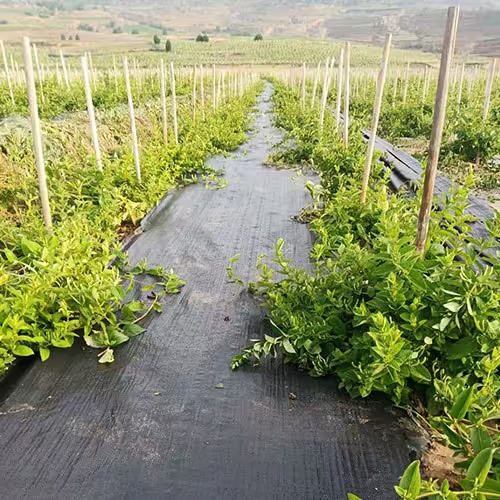
The woven vs non woven geotextile selection often depends on soil composition. Granular soils typically require high filtration capacity, making non woven geotextile more suitable. Clay or weak soils benefit more from the reinforcement strength offered by woven fabrics. Considering soil moisture content, compaction requirements, and expected traffic loads will guide the correct choice.
Environmental Conditions
Environmental exposure plays a major role in geotextile performance. Woven geotextiles maintain their structure under significant mechanical and UV stress. Non woven geotextiles, while less rigid, handle long-term water exposure effectively and maintain filtration performance even under varying moisture conditions.
Load-Bearing Needs
For projects expecting high vehicular loads, construction equipment, or long-term structural loads, woven geotextile typically provides the best reinforcement results. Non woven geotextiles are preferred when the primary objective is to allow water movement while preventing soil migration.
Case Studies / Industry Applications
Road Construction
Many roadway stabilization projects demonstrate that woven geotextile significantly reduces rutting and extends pavement life by distributing loads more evenly across weak soils.
Landfill Systems
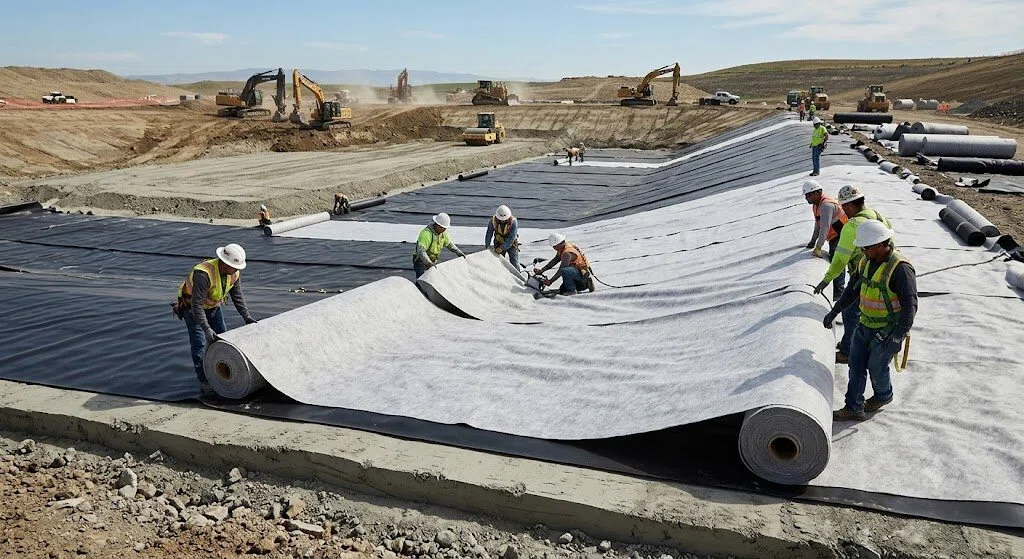
Non woven geotextile is widely used in landfill leachate drainage layers, both as a filtration layer and a cushioning layer protecting geomembranes from puncture.
Riverbank Protection
Non woven geotextile helps reduce erosion while maintaining natural drainage through the soil, preventing water pressure buildup behind banks.
Railway Embankments
Woven geotextiles are commonly placed beneath ballast layers to increase stability and reduce long-term settlement or lateral movement.
Landscaping and Hardscape Projects
Non woven geotextiles are often used under gravel walkways and retaining walls to prevent soil intermixing while maintaining permeability.
Installation Tips for Long-Term Performance
Surface Preparation
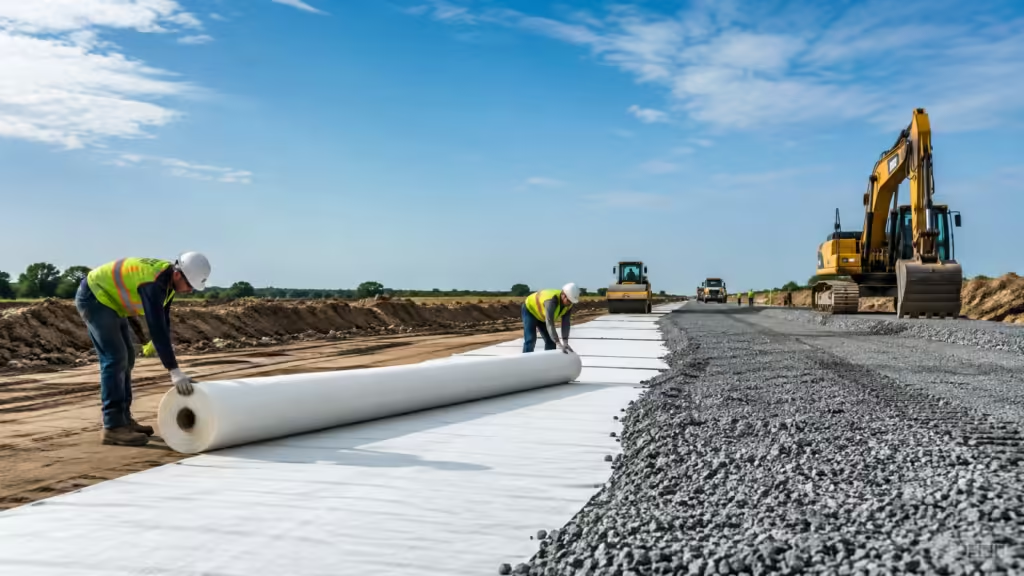
Proper installation begins with preparing a clean, debris-free surface. Rocks, roots, and sharp objects should be removed to minimize puncture risk. A smooth base helps both woven and non woven geotextile fabrics maintain contact with the soil for maximum performance.
Laying and Joining Techniques
• Overlap fabrics sufficiently to prevent gaps.
• Secure sheets with pins, anchors, or adhesives when required.
• Woven geotextiles benefit from tensioning during placement, while non woven varieties should follow natural ground contours.
Maintenance
Regular inspection for tears, displacement, or clogging enhances long-term efficiency. Depending on the application, geotextiles can perform effectively for 20–30 years with minimal maintenance.
Conclusion
Understanding the differences between woven vs non woven geotextile is essential for selecting the right material for any construction, drainage, or erosion-control project. Woven geotextiles offer superior strength and reinforcement, while non woven geotextiles provide exceptional filtration and drainage performance. If you need expert guidance on choosing the best geotextile for your project, contact EcoGeo Material today. Our team can help you assess your requirements and recommend the most efficient solution. Reach out now to ensure long-term stability and performance for your next project.
FAQ
What is the main difference between woven vs non woven geotextile?
Woven geotextiles deliver high tensile strength for reinforcement, while non woven geotextiles provide superior filtration and drainage.
What is the main difference in performance between woven vs non woven geotextile?
The main difference in woven vs non woven geotextile performance lies in strength and permeability. Woven geotextile offers higher tensile strength, while non woven geotextile provides better filtration and drainage.
Which is stronger in the comparison of woven vs non woven geotextile?
In a woven vs non woven geotextile comparison, woven geotextiles are stronger because they are manufactured using interlaced yarns that provide high tensile strength for reinforcement applications.
Are non woven geotextiles durable enough?
Non woven geotextiles are highly durable for filtration and separation tasks, though they have lower tensile strength compared to woven types.
How do I choose the best geotextile for my project?
Evaluate soil conditions, load requirements, drainage needs, and environmental exposure before deciding between woven vs non woven geotextile.