
How Filtration Geotextile Keeps Fine Soil Out of Drainage Systems
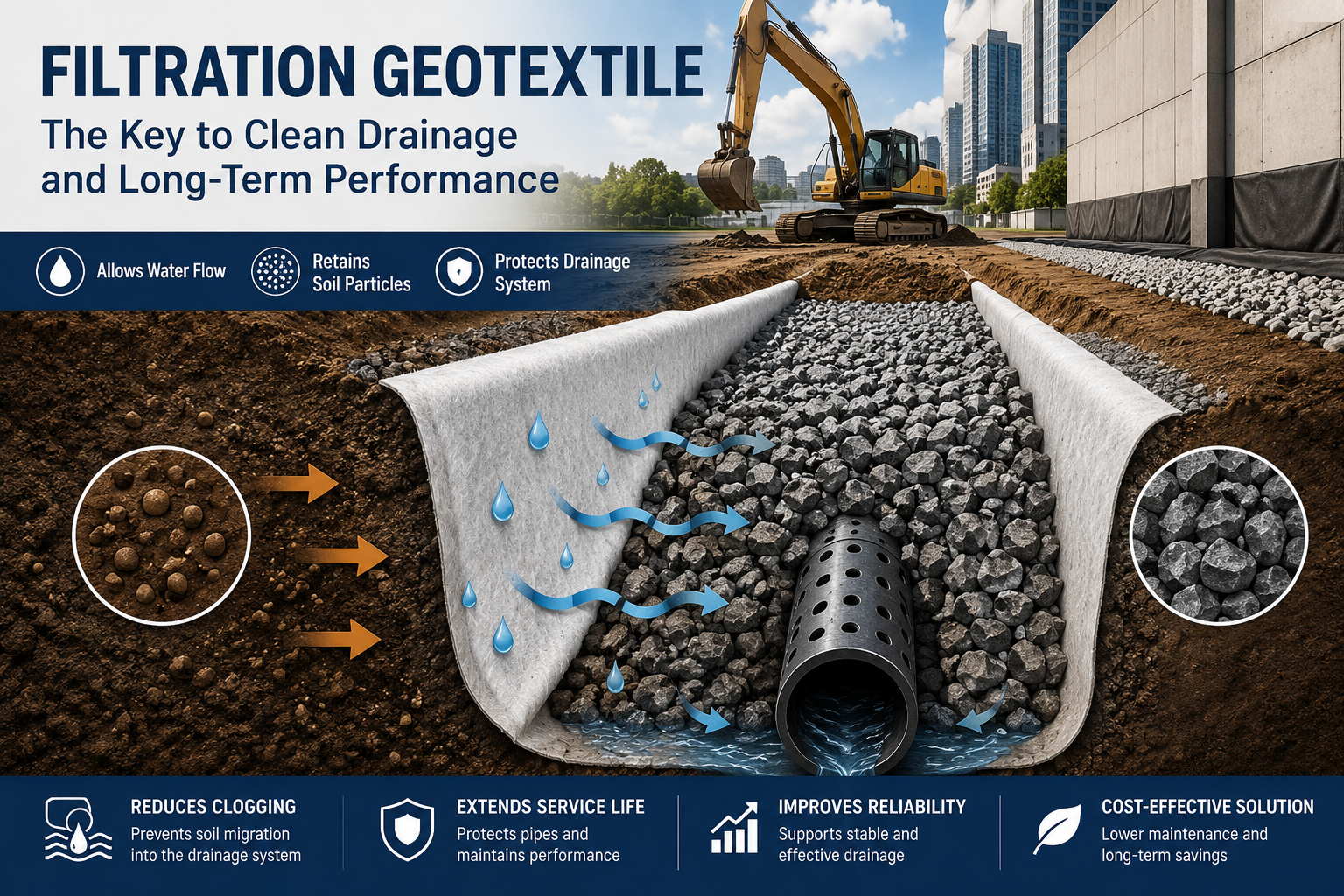
Filtration Geotextile is used when drainage systems need two things at the same time: water must keep moving, but fine soil must not migrate into the gravel layer or drainage pipe.
That balance matters in blind drains, subsurface channels, French drains, retaining wall drainage, road edge drains, and underground gravel trenches. Once fine particles move into the drainage layer, the system may still look fine from the surface, but water flow can slow down year after year.
Table of Contents
What Is Filtration Geotextile?
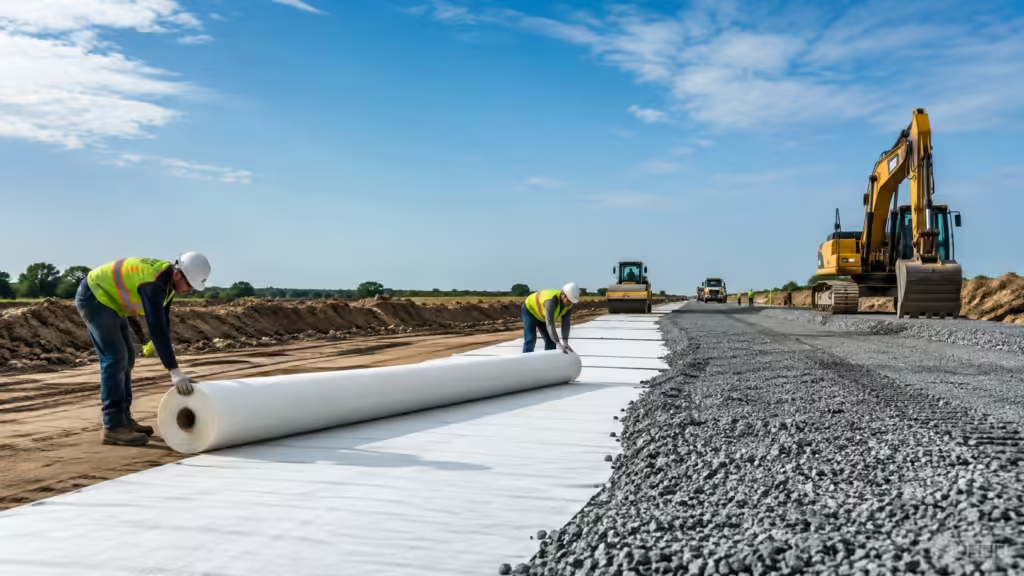
Filtration Geotextile is a permeable geotextile fabric placed between soil and drainage aggregate. Its job is to let water pass while reducing soil particle migration.
It is commonly used around gravel trenches, perforated drainage pipes, blind drains, retaining wall drainage layers, road subdrain systems, and other buried drainage structures.
The FHWA’s geotechnical guidance explains that moving water can transport soil particles and cause problems such as drain clogging and pumping of fines. That is the reason drainage design must consider both water movement and soil movement, not just pipe size or trench depth. The FHWA chapter on groundwater and drainage is a useful reference for this basic drainage risk.
A Filtration Geotextile is not a plastic sheet. It does not block water. It creates a filter layer that helps control the boundary between fine soil and drainage material.
Why Blind Drains and Subsurface Channels Get Clogged
Blind drains and subsurface drainage channels usually fail slowly.
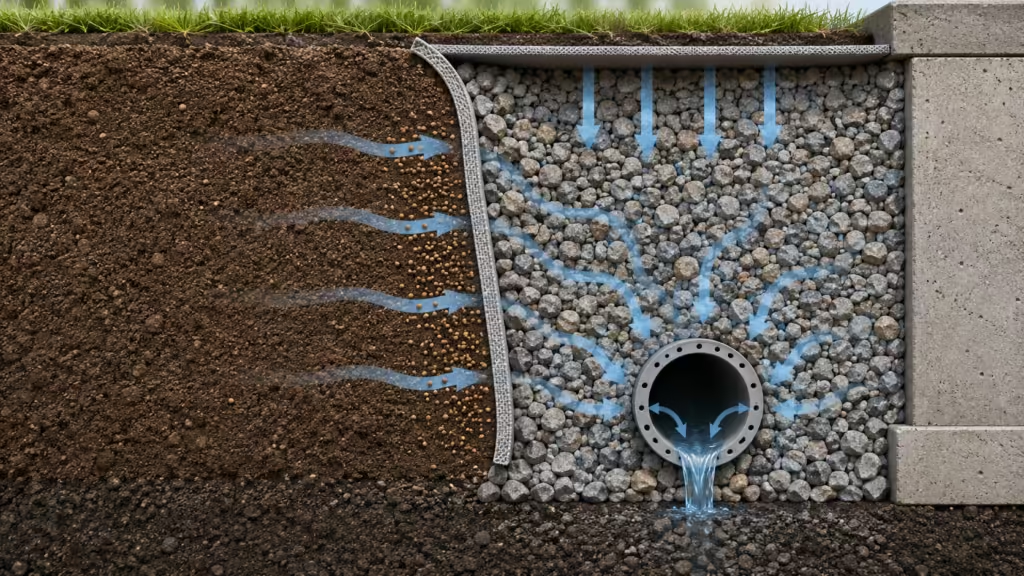
At first, water enters the trench and moves through the gravel layer. Over time, fine soil particles can be carried by groundwater into the voids between gravel stones. If the system includes a perforated pipe, fines may also move toward pipe openings.
Common causes include:
- fine soil migration into gravel
- poorly selected geotextile filter fabric
- incorrect apparent opening size
- low water permeability
- trench backfill contamination
- geotextile damage during gravel placement
- insufficient overlap at joints
- poor drainage slope
- continuous flow carrying silt or clay particles
The problem is rarely one single mistake. It is usually the combination of soil type, water flow, fabric selection, and installation quality.
How Filtration Geotextile Prevents Soil Migration
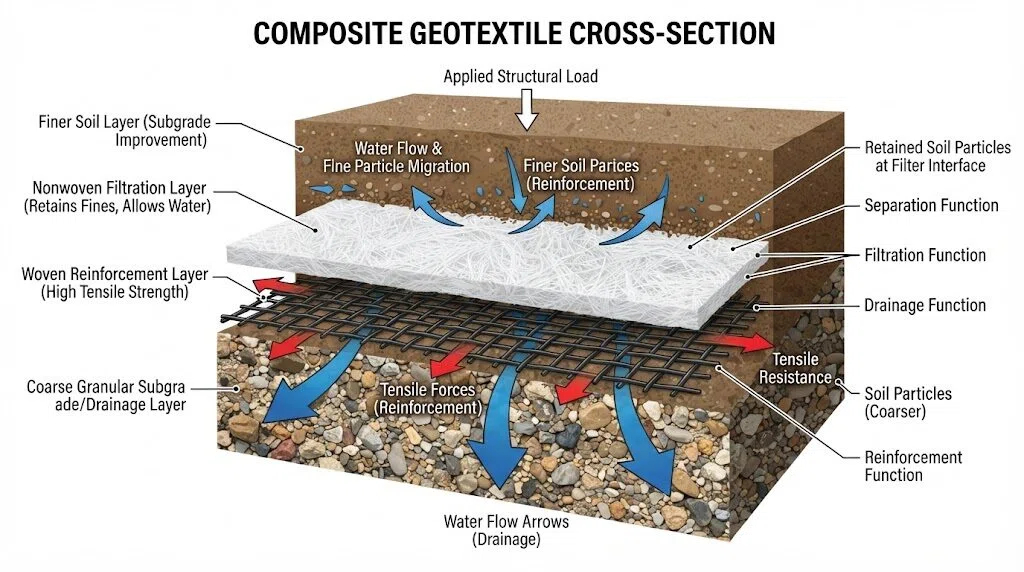
Filtration Geotextile works by forming a stable filter interface.
Water can move through the geotextile. Fine soil particles are reduced from entering the drainage layer. This helps the gravel remain open and functional for longer.
The goal is not to stop water. The goal is to stop soil from moving with the water.
A review article on geosynthetics for filtration and stabilisation explains that a geotextile filter must retain soil while allowing water to pass, and that filter design involves both geometrical and hydraulic criteria. In plain language, the fabric must be open enough for water but controlled enough to retain soil.
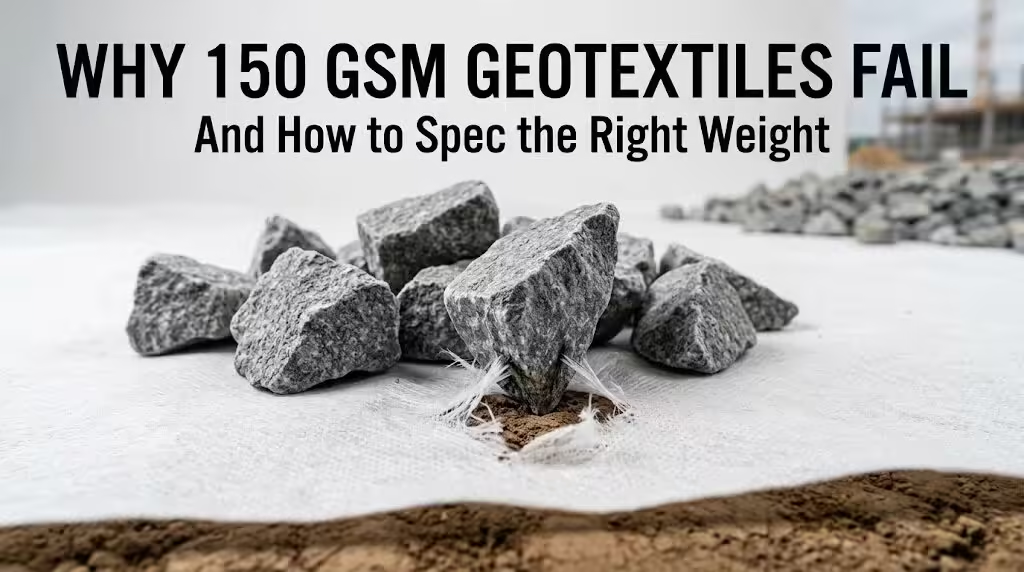
That is why choosing by weight alone is risky. A heavier fabric is not automatically better if the opening size, permeability, and soil compatibility are wrong.
Soil Retention vs Water Permeability
A drainage geotextile has to balance two competing requirements.
| Requirement | Why It Matters |
|---|---|
| Soil retention | Helps prevent fine particles from entering the drainage layer |
| Water permeability | Allows groundwater to pass into the drainage path |
| Proper opening size | Reduces soil migration without blocking flow |
| Thickness | Supports cushioning and filtration stability |
| Tensile strength | Helps the fabric survive installation stress |
| Puncture resistance | Protects fabric during gravel placement |
| Clogging resistance | Helps maintain flow under long-term soil contact |
ASTM D4751 is used to indicate the apparent opening size of a geotextile. ASTM D4491/D4491M covers water permeability of geotextiles in terms of permittivity under standard testing conditions.
For buyers, these test values matter because a drainage fabric must be selected for the soil and water conditions of the project.
Why Staple Fiber Geotextile Works Well for Drainage Filtration
Staple fiber geotextile is often used in drainage filtration because its nonwoven fiber structure can create a three-dimensional pore network.
This structure can support:
- filtration
- separation
- drainage protection
- soil retention
- cushioning around aggregate
- installation flexibility in trenches
For drainage projects that need soil retention and water flow support, this staple fiber geotextile can be considered for blind drains, gravel layers, retaining wall drainage, and subsurface drainage systems.
Where It Is Used in Drainage Projects
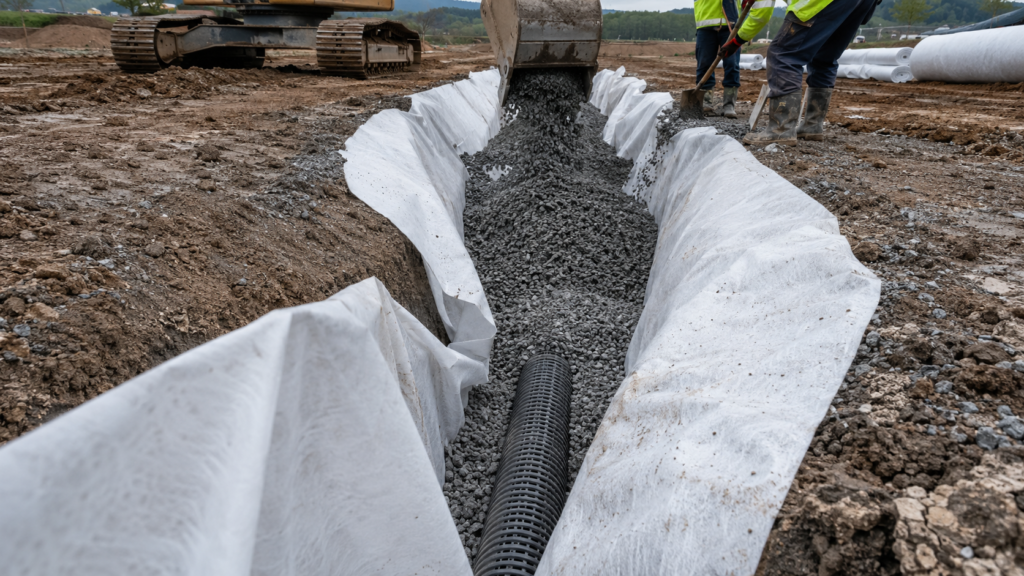
Filtration Geotextile is useful in many underground drainage applications.
| Application | Function |
|---|---|
| Blind drains | Prevents fine soil from entering gravel trenches |
| French drains | Wraps gravel and pipe to reduce clogging risk |
| Retaining wall drainage | Separates backfill soil from drainage aggregate |
| Roadside drainage | Helps maintain water flow near pavement edges |
| Landscape drainage | Controls soil migration in garden drainage beds |
| Sports fields | Helps subsurface drainage stay open |
| Landfill drainage layers | Reduces soil intrusion into drainage media |
| Underground channels | Supports long-term water movement through aggregate |
The FHWA’s Geotextile Design and Construction Guidelines note that geotextiles for filtration should meet soil retention, permeability, clogging resistance, and constructability requirements. That is a good summary of what buyers should look for.
Common Mistakes That Cause Geotextile Drainage Failure
A good material can still fail if it is selected or installed poorly.
Common mistakes include:
- using landscape fabric instead of engineering geotextile
- choosing only by gram weight
- ignoring soil particle size
- ignoring water permeability
- wrapping only the pipe when the gravel trench also needs protection
- allowing mud to contaminate the fabric before backfilling
- tearing the fabric during stone placement
- using insufficient overlap
- placing the fabric in the wrong position
- ignoring drainage slope
In drainage systems, the fabric must be part of the whole design. Gravel size, trench geometry, pipe type, soil gradation, and water flow all affect performance.
How to Choose Filtration Geotextile for Blind Drains
Filtration Geotextile selection should start with the site, not the catalog.
Buyers should check:
1.Soil type
2.Fine particle content
3.Groundwater flow condition
4.Trench depth
5.Gravel size
6.Pipe opening size
7.Apparent opening size
8.Permittivity or water flow data
9.Tensile strength
10.Puncture resistance
11.Installation method
12.Overlap and wrapping design
AASHTO M288 is often referenced in transportation projects for geotextile applications. A technical note on AASHTO M288 geotextiles explains that the specification addresses applications including subsurface drainage, separation, stabilization, erosion control, sediment control, and paving fabrics, while also noting that it is not a project-specific design guideline.
That reminder is important: standard requirements help, but soil and water conditions still need engineering judgment.
Filtration Geotextile vs Ordinary Landscape Fabric
Many drainage failures start when buyers treat all fabrics as the same.
| Factor | Filtration Geotextile | Ordinary Landscape Fabric |
|---|---|---|
| Main use | Engineering filtration and drainage | Weed control or light landscaping |
| Strength | Higher project-oriented strength | Usually lower |
| Water flow | Designed for drainage conditions | Varies widely |
| Soil retention | Selected for soil filtration | Not always suitable |
| Durability | Better for buried drainage layers | Depends on product |
| Best use | Blind drains, roads, retaining walls, channels | Gardens and light-duty landscape work |
Ordinary landscape fabric may work for light surface uses, but buried drainage systems need geotextile filter fabric selected for hydraulic and soil retention performance.
Correct Installation Matters as Much as Fabric Selection
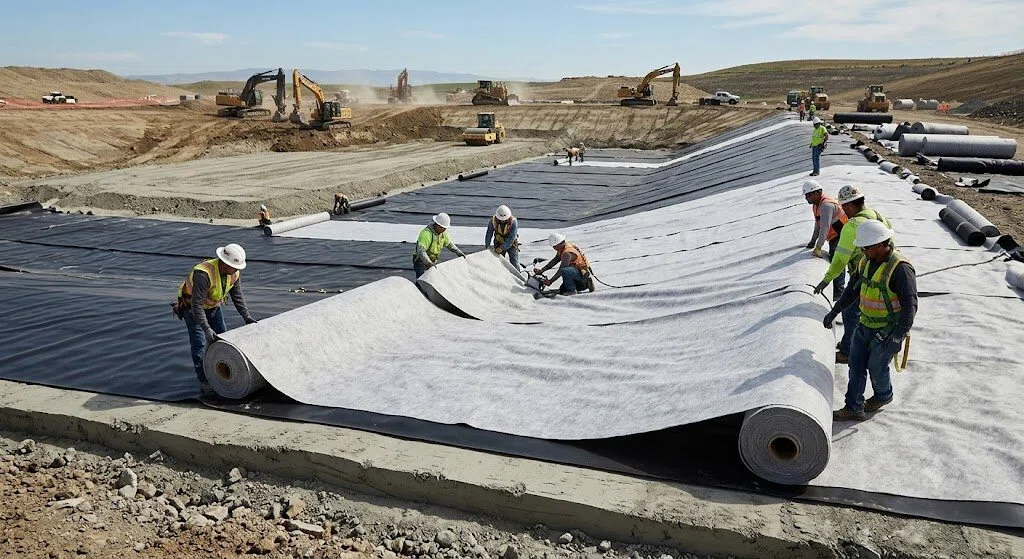
Filtration Geotextile does not work well if it is damaged, contaminated, or placed incorrectly.
During installation:
- keep the fabric clean before backfilling
- avoid dragging it across sharp stones
- use proper overlap at seams
- wrap the gravel zone correctly
- avoid wrinkles that block flow paths
- place drainage aggregate carefully
- protect the fabric from puncture
- follow project drawings and site instructions
A Unified Facilities Guide Specification for geotextiles for earthwork includes installation-related requirements and shows why geotextile placement is not just a material choice. Site handling affects final performance.
Conclusion
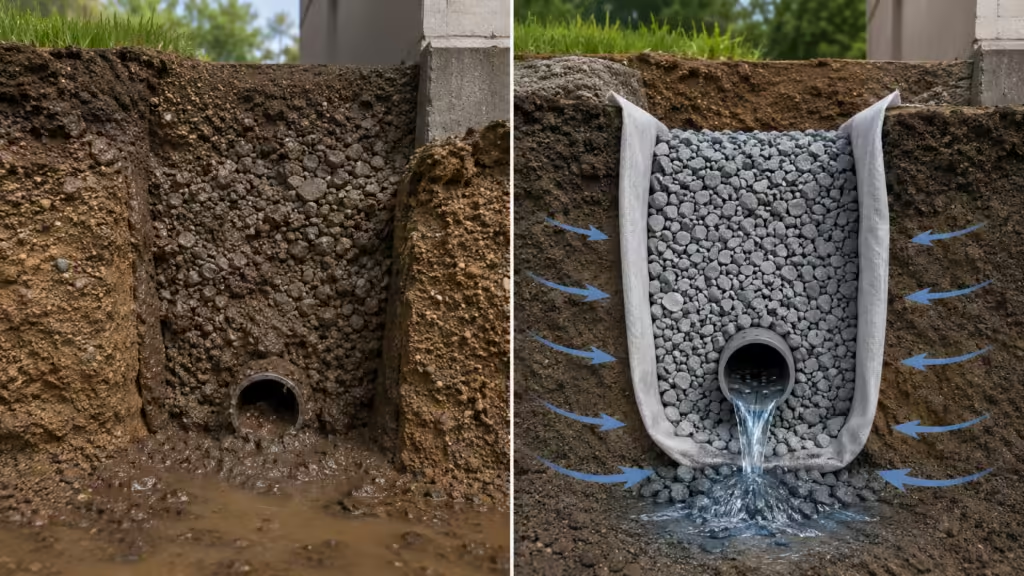
Filtration Geotextile helps drainage systems stay functional by balancing soil retention and water permeability. It allows water to enter the drainage path while reducing fine soil migration into gravel trenches, blind drains, subsurface channels, and perforated pipes.
A Filtration Geotextile is not just “a layer of fabric.” It is a filtration interface. When the product is matched with the soil, water flow, aggregate, and installation method, it can reduce clogging risk and support long-term drainage performance.
FAQ
What is Filtration Geotextile?
Filtration Geotextile is a permeable geotextile fabric used to let water pass while reducing soil particle migration into drainage layers.
Why is geotextile used in blind drains?
It helps prevent fine soil from entering the gravel trench or drainage pipe, reducing the risk of long-term clogging.
Is nonwoven geotextile good for drainage?
Yes. Nonwoven geotextile is commonly used for drainage filtration because its fiber structure can allow water flow while supporting soil retention.
Can Filtration Geotextile stop all clogging?
No. It reduces clogging risk, but correct soil evaluation, fabric selection, gravel grading, trench design, and installation are still important.
Should geotextile wrap the pipe or the gravel?
In many drainage systems, wrapping the gravel trench provides better filtration protection than wrapping only the pipe. The final design should follow project conditions.
What should buyers check before choosing geotextile filter fabric?
Buyers should check soil type, apparent opening size, permittivity, tensile strength, puncture resistance, thickness, installation method, and drainage requirements.
Is landscape fabric the same as geotextile filter fabric?
No. Landscape fabric is usually for weed control or light landscaping. Geotextile filter fabric is selected for engineering filtration, drainage, and soil retention.