
How to Avoid Common Geomembrane QA/QC Mistakes in 2026
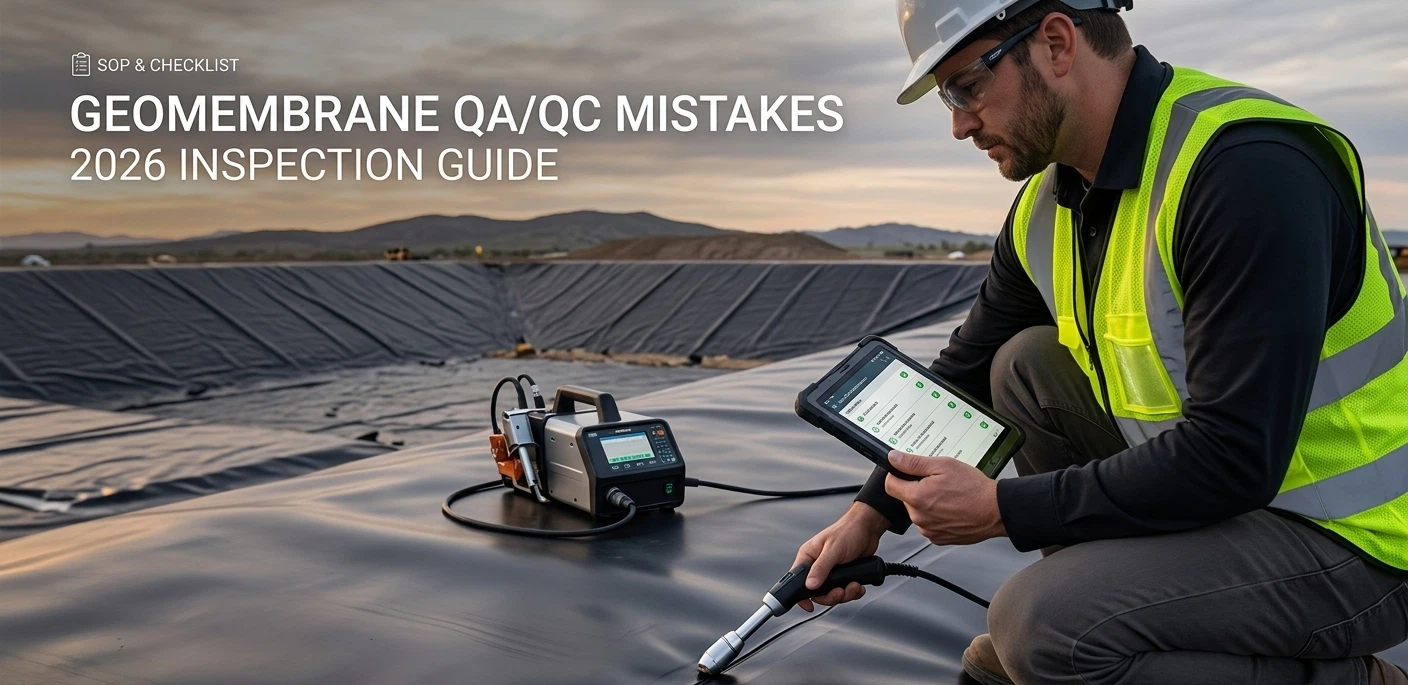
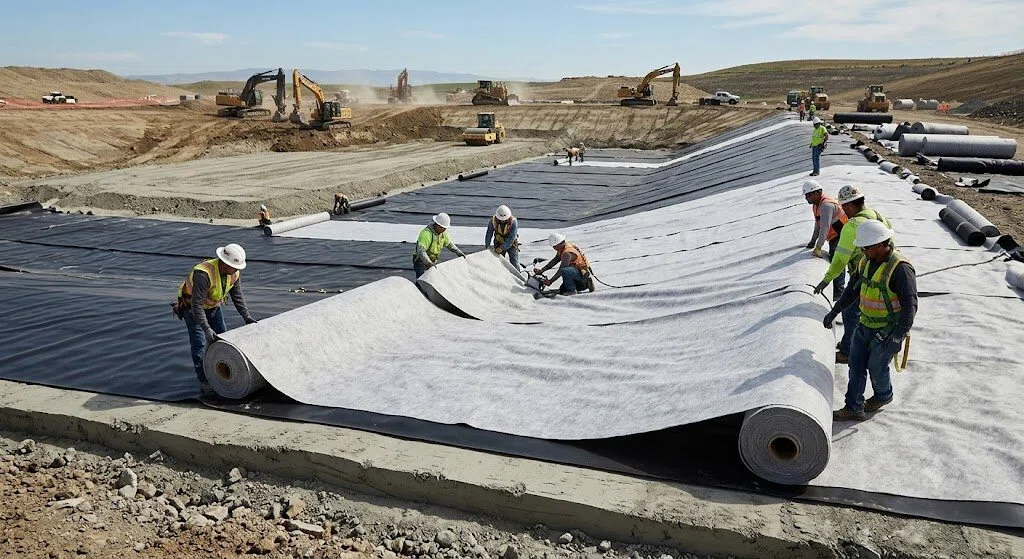
In high-stakes containment projects—from municipal landfills to industrial tailings dams—the integrity of the lining system is the only line of defense against environmental catastrophe. However, even with premium materials, geomembrane QA/QC mistakes during the installation phase remain the primary cause of post-acceptance leaks.
As we move through 2026, the industry has shifted from basic visual inspections to rigorous, data-driven protocols. Understanding common inspection errors and implementing a robust standard operating procedure is no longer optional; it is a regulatory necessity. This guide analyzes the most frequent geomembrane QA/QC mistakes and provides a professional geomembrane installation checklist to ensure your site meets the latest global acceptance criteria.
Table of Contents
The Most Critical Geomembrane QA/QC Mistakes in 2026
The transition to high-performance liners has exposed new vulnerabilities in traditional quality control. Based on recent field audits, these are the most prevalent geomembrane QA/QC mistakes:
Ignoring Electrical Leak Location (ELL) Post-Backfill
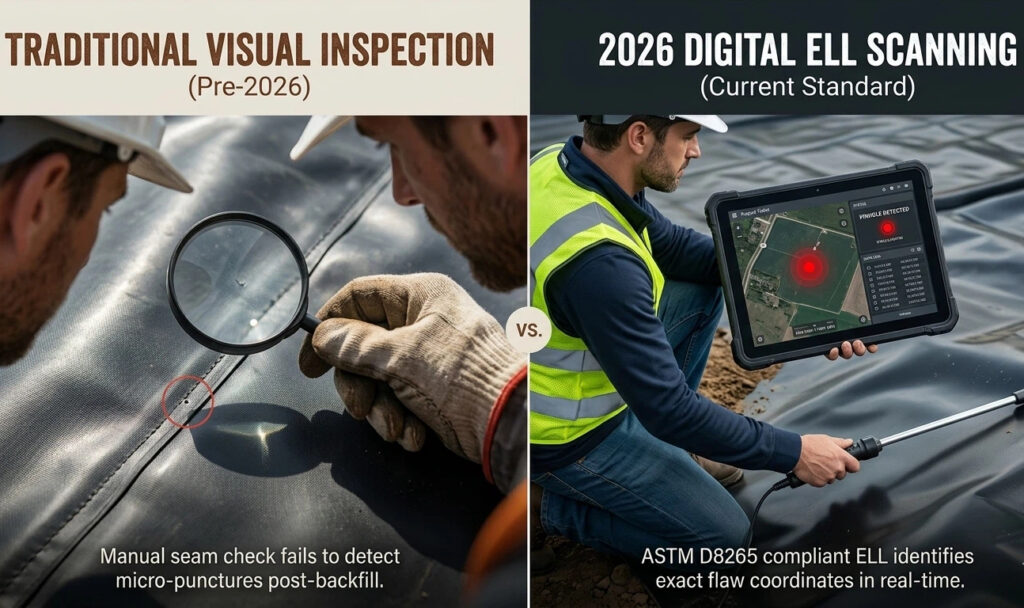
Many contractors rely solely on air pressure tests for double-track seams. However, statistics show that over 80% of punctures occur during the soil backfilling process. Failing to perform a post-installation ELL scan is one of the most expensive geomembrane QA/QC mistakes, as it leaves 0.5mm micro-perforations undetected.
Inadequate Subgrade Preparation
One of the most frequent geomembrane QA/QC mistakes isn’t about the liner itself, but the surface beneath it. Residual sharp stones, roots, or excessive moisture in the subgrade can lead to “stress cracking” or localized punctures under the weight of the liquid column.
Thermal Expansion (Wrinkling) Mismanagement
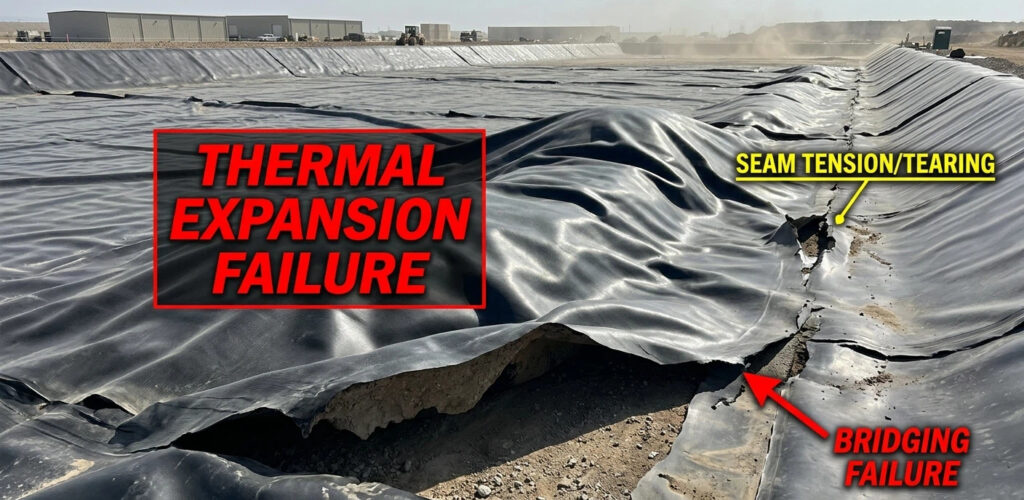
In 2026, extreme temperature fluctuations are more common. A major geomembrane project QA oversight is failing to account for “bridging” (when the liner pulls tight over a corner in cold weather) or excessive “wrinkling” in the heat, both of which compromise long-term seam stability.
Standard Operating Procedure (SOP) for Modern Inspection
To mitigate these geomembrane QA/QC mistakes, a digitized standard operating procedure must be implemented from day one.
1.Trial Seam Verification: Before any production welding, trial seams must be performed and tested for peel and shear strength at the start of each shift and after every weather change.
2.Continuous Data Logging: Utilize smart welders that automatically record temperature, pressure, and speed. These digital logs are now a core part of the acceptance criteria for geomembrane projects.
3.GPS-Tagged Documentation: Every seam test and repair should be photographed with a GPS timestamp to ensure traceability in the final geomembrane project QA report.
2026 Digital Geomembrane Installation Checklist
A comprehensive geomembrane installation checklist acts as the final gatekeeper for project quality. Below is a condensed version of the standard geomembrane project QA requirements:
| Inspection Phase | Critical Checkpoint | Requirement |
| Subgrade | Surface Smoothness | No particles > 10mm; no standing water. |
| Deployment | Panel Overlap | Minimum 100mm-150mm overlap for thermal welding. |
| Welding | Smart Log Review | Verify temp/pressure sync with manufacturer specs. |
| Testing | Vacuum Box/Pressure | 30 kPa for 15s (Vac) / 200 kPa for 5m (Air). |
| Final Sign-off | ELL Scanning | ASTM D7002 / D8265 Compliance. |
Why You Need a Standardized QA/QC Log Template
The difference between a successful project and a legal nightmare is documentation. Using a standardized geomembrane QA/QC log template ensures that nothing is overlooked. A professional template should capture:
- Roll and batch numbers for every panel.
- Ambient weather conditions (temp/wind/humidity).
- Destructive vs. non-destructive test results.
- Repair logs for any identified “pinholes.”
Implementing this standard operating procedure significantly reduces the likelihood of geomembrane QA/QC mistakes and ensures a smooth handover to the owner.
Conclusion
In the race to complete projects, it is tempting to cut corners on documentation. However, the data is clear: the cost of remediating geomembrane QA/QC mistakes after a site is operational is 50x higher than the cost of a rigorous inspection. By following a proven standard operating procedure and utilizing a detailed geomembrane installation checklist, you protect both the environment and your bottom line.
FAQ
What is the most effective way to prevent geomembrane QA/QC mistakes?
Shift from manual paper logs to a digital geomembrane installation checklist that requires photo verification for every critical step.
How do you handle acceptance criteria for geomembrane welding in cold weather?
Pre-heating the material and increasing the frequency of trial seams are mandatory steps in our standard operating procedure for sub-zero environments.
Is a vacuum box test sufficient for final acceptance?
No. While it tests the seams, it doesn’t test the panel body. An ELL scan is the 2026 industry standard for a comprehensive geomembrane project QA sign-off.