
Geotextiles: Essential Materials for Modern Engineering Projects
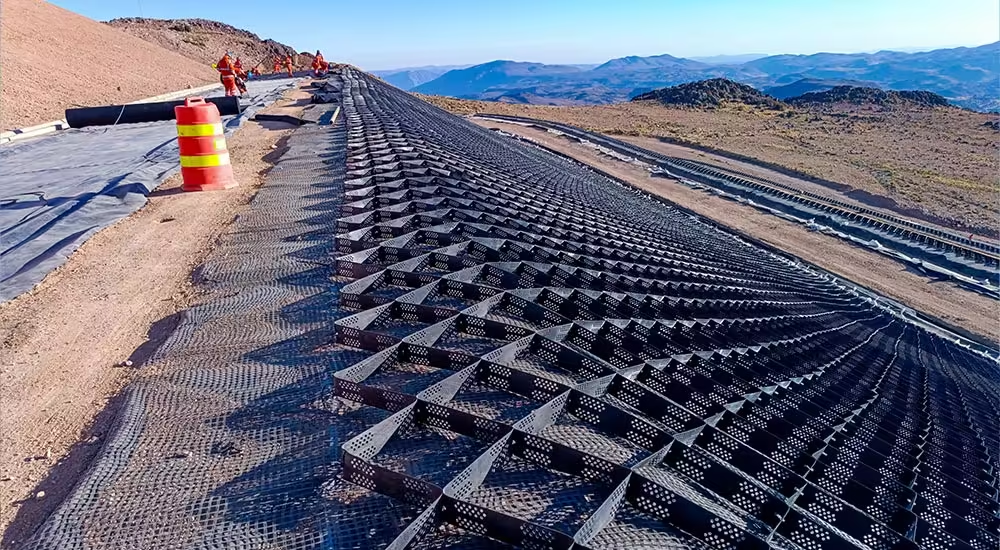
Table of Contents
Introduction
Geotextiles are versatile engineering fabrics that have transformed modern infrastructure and environmental projects. They are used to separate, reinforce, filter, and protect soil and geomembranes across a wide range of applications. From highways and railways to landfill liners and slope stabilization, geosynthetic fabrics improve durability, reduce maintenance costs, and ensure long-term project stability.
Incorporating geosynthetic fabrics into construction projects allows engineers to manage soil behavior, control water flow, and prevent erosion, which is crucial for the sustainability of large-scale civil engineering works. In this article, we explore the essential elements, types, benefits, applications, selection criteria, installation guidance, and frequently asked questions to help you understand how geotextiles can optimize your projects.
What are Geotextiles?
Material Composition
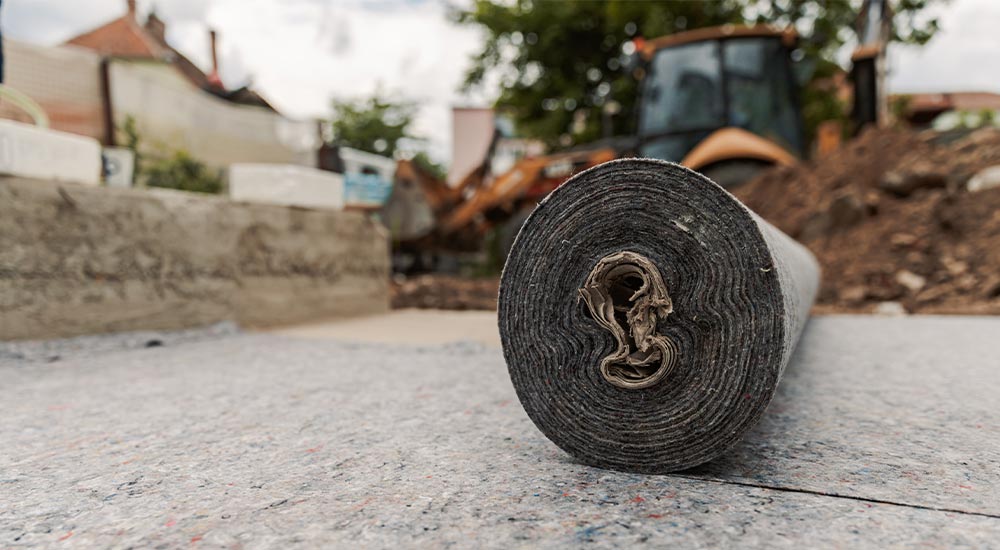
Geotextiles are primarily made from synthetic fibers like polypropylene (PP) or polyester (PET). These materials are chosen for their durability, chemical resistance, and ability to maintain performance under stress. Some geosynthetic fabrics are reinforced with additives to enhance UV resistance and longevity, making them suitable for both short-term and long-term projects.
Core Elements
Key elements that define the performance of a geotextile include:
Permeability
Allows water to pass while retaining fine soil particles, maintaining soil structure and preventing clogging.
Tensile Strength
Determines the geotextile’s ability to withstand heavy loads without tearing or stretching, crucial for roads, embankments, and reinforced slopes.
Durability
Resistance to UV radiation, chemical attack, and mechanical abrasion ensures long-term functionality in harsh environments.
Flexibility
Allows geotextiles to conform to uneven terrain, fill gaps, and adapt to complex construction geometries.
Thickness
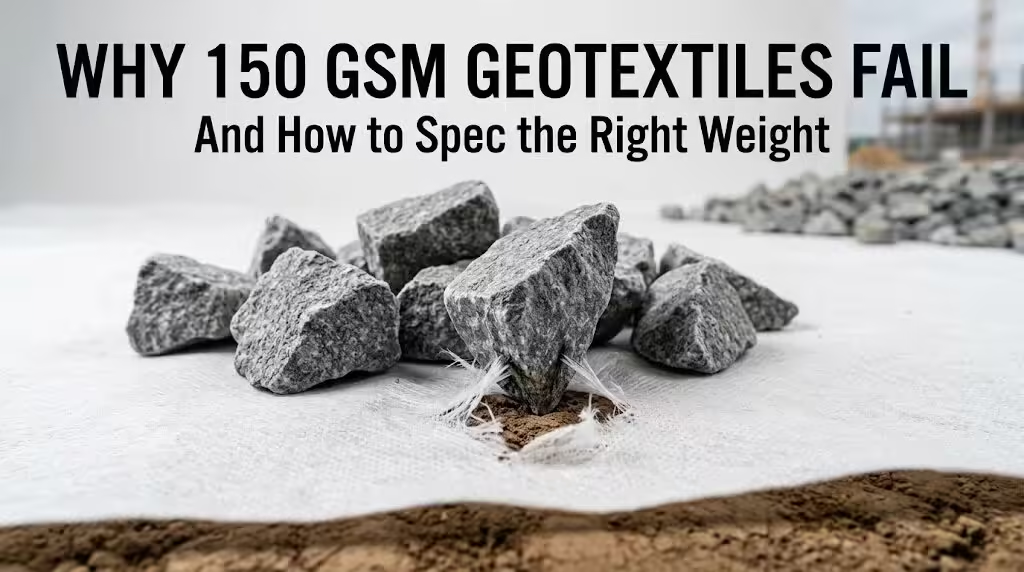
Directly affects load distribution, protection of underlying layers, and puncture resistance. Thicker fabrics are ideal for landfill liners and heavy-load applications.
Key Functions and Benefits of Geotextiles
Separation
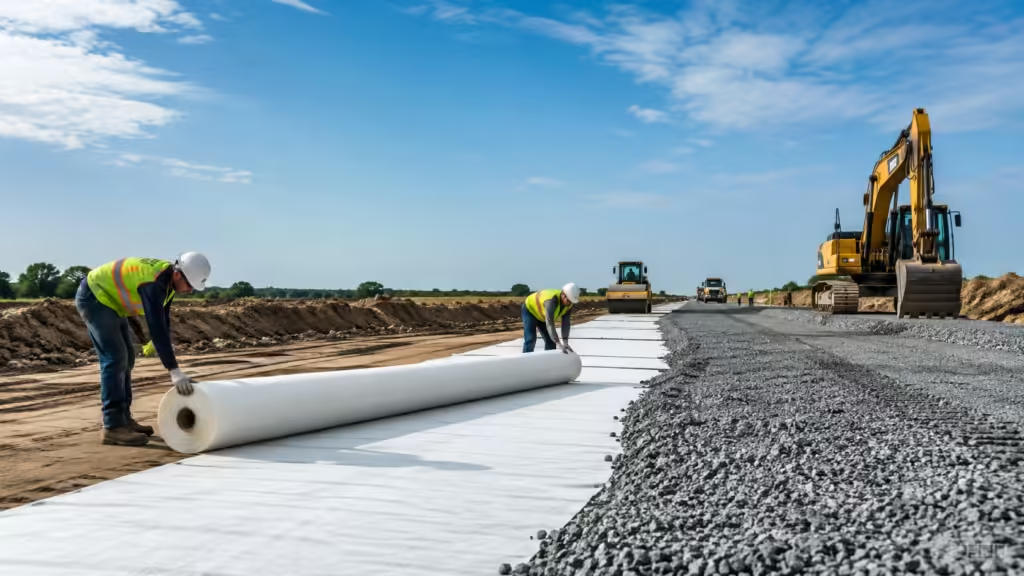
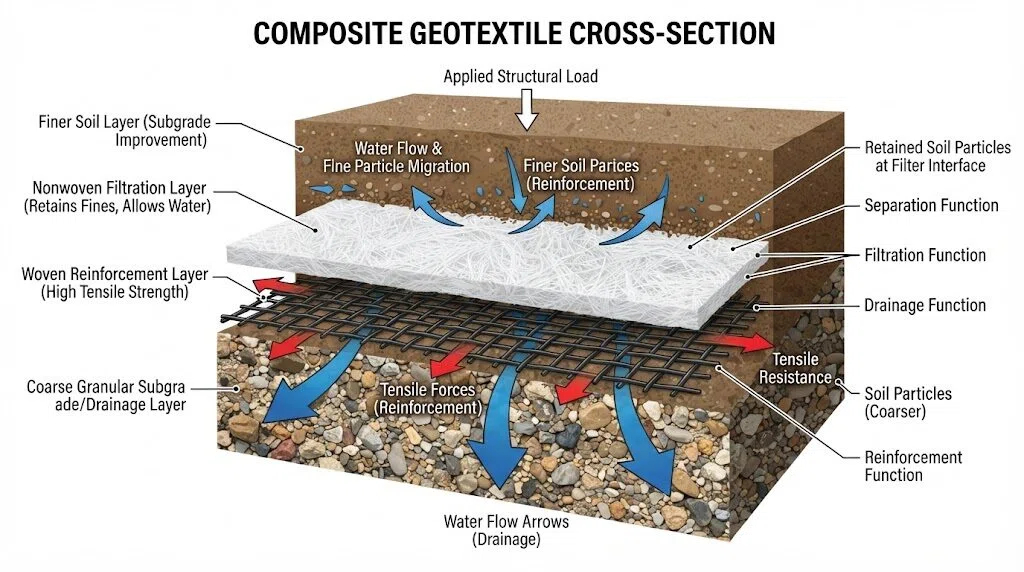
Geotextiles prevent different soil layers from mixing, maintaining structural integrity and reducing settlement. For example, in road construction, they separate subgrade soil from aggregate layers, preventing rutting and prolonging pavement life.
Filtration
By allowing water to pass through while retaining soil particles, geosynthetic fabrics prevent clogging of drainage systems. In embankments and dikes, this property protects against erosion and ensures efficient water management over time.
Drainage
Geotextiles channel water away from foundations, slopes, or landfill bases, reducing hydrostatic pressure and preventing waterlogging. Proper drainage is critical to maintain the strength and stability of soils under heavy loads.
Reinforcement
Geotextiles reinforce soil by distributing loads evenly and improving bearing capacity. This function allows construction on soft soils or reclaimed lands that would otherwise be unsuitable for heavy infrastructure projects.
Protection
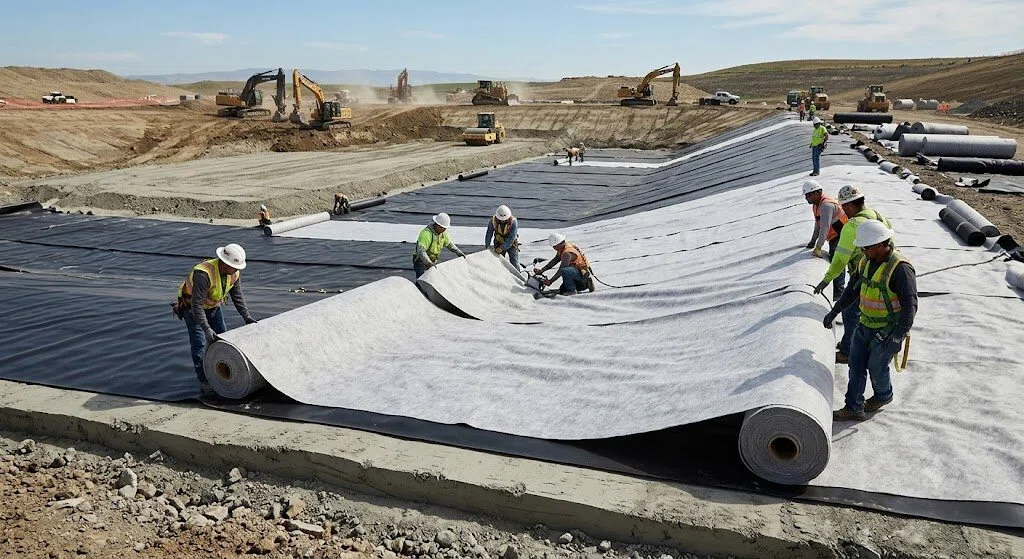
Geotextiles protect geomembranes and other engineering layers from puncture, tearing, or abrasion caused by heavy machinery, sharp objects, or uneven terrain. In landfill liners, for instance, this prevents leaks and environmental contamination.
Types of Geotextiles
Woven Geotextiles
Woven fabrics are made by interlacing fibers to produce high tensile strength. They are suitable for heavy-load applications such as roads, railways, and embankments. Their primary function is reinforcement and load distribution.
Non-Woven Geotextiles
Non-woven geosynthetic fabrics are manufactured using needle-punching or heat-bonding methods. They excel in filtration, drainage, and protection due to their permeability and flexibility. Non-woven fabrics are often used in landfill liners and drainage systems.
Knitted Geotextiles
Knitted geosynthetic fabrics offer moderate tensile strength and elasticity, ideal for temporary erosion control, slope stabilization, and landscaping applications where light reinforcement is sufficient.
Geotextile Membranes
Membrane-style geotextiles combine impermeability and protective functions. They are often used under geomembranes in landfill or waterproofing applications, providing an additional safety layer against leaks and mechanical damage.
Elements to Compare
When selecting geotextiles, consider the following elements:
Strength
Woven fabrics provide the highest tensile strength, suitable for heavy-load areas.
Permeability
Non-woven geotextiles allow superior water flow while retaining soil particles.
Flexibility
Non-woven fabrics adapt well to uneven terrain, whereas woven fabrics are less flexible.
Typical Applications
Woven: roads, embankments, and reinforced soil structures
Non-woven: filtration, drainage, landfill liners
Knitted: temporary erosion control
Applications of Geosynthetic Fabrics
Roads and Highways
- Reinforce subgrades and prevent soil mixing
- Improve load distribution and reduce rutting
- Extend pavement lifespan and reduce maintenance costs
Landfill Liners and Waste Management
- Protect geomembranes from puncture and tearing
- Facilitate drainage and filtration
- Prevent environmental contamination
Slope and Erosion Control
- Stabilize embankments and hillsides
- Reduce soil loss in landscapes, parks, and embankments
- Enhance vegetation growth for long-term slope stability
Water Management
- Support drainage in canals, ponds, and irrigation systems
- Filter sediments while allowing water flow
- Prevent erosion in high-flow channels
Mining and Industrial Projects
- Reinforce tailings and waste containment areas
- Protect soil and groundwater from contamination
- Improve stability in high-stress industrial zones
How to Choose the Right Geotextile
Project Requirements
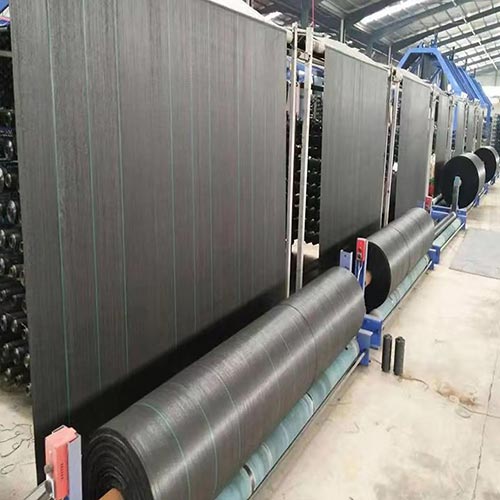
Evaluate the expected load, soil type, and water conditions. Heavy-load projects like highways or railways require high-strength woven geotextiles, while drainage or filtration applications benefit from non-woven fabrics.
Material Properties
- Tensile Strength: Essential for load-bearing and reinforcement
- Permeability: Important for drainage and filtration
- Durability: Ensures longevity under UV, chemical, and mechanical stress
Installation Considerations
- Ease of cutting and handling
- Overlap and anchoring requirements
- Protection from machinery and sharp objects during installation
Installation and Maintenance Tips
Ground Preparation
Clear debris, level, and compact the base soil to prevent punctures and ensure uniform support.
Proper Overlapping
Ensure geotextile sheets overlap sufficiently according to specifications to maintain separation and filtration functions.
Protection from Damage
Avoid dragging heavy machinery across the fabric, and consider temporary protective layers during construction.
Regular Inspection
Periodically inspect high-stress areas for displacement, wear, or clogging, especially in drainage channels and landfill applications.
Comparison: Woven vs Non-Woven Geosynthetic Fabrics
| Feature | Woven | Non-Woven |
|---|---|---|
| Strength | High | Moderate |
| Filtration | Moderate | Excellent |
| Drainage | Limited | High |
| Flexibility | Low | High |
| Typical Uses | Roads, embankments | Filtration, drainage, landfill liners |
This comparison helps engineers and contractors choose the optimal type based on project-specific requirements.
Practical Tips and Insights
- Select non-woven geotextiles for drainage-heavy projects
- Combine geotextiles with geomembranes for extra protection
- Implement color-coding or labeling for large-scale installations
- Conduct periodic inspections of high-stress areas to prevent premature failure
- Consider environmental conditions (UV, chemicals, moisture) when selecting material type
Conclusion
Geotextiles are a critical component in modern engineering projects, offering separation, filtration, reinforcement, drainage, and protection. Choosing the right type, understanding core elements, and following proper installation practices ensures project durability, environmental safety, and cost efficiency.
FAQ
What is the difference between woven and non-woven geotextiles?
Woven geotextiles provide high tensile strength, suitable for reinforcement, while non-woven fabrics excel in filtration and drainage.
How long do geosynthetic fabrics last?
High-quality synthetic geosynthetic fabrics can last 20–50 years depending on exposure to UV, chemicals, and mechanical stress.
Can geotextiles be recycled?
Many synthetic geosynthetic fabrics can be recycled, but it depends on contamination levels and material type.
How do geosynthetic fabrics improve soil stability?
They reinforce soil layers, distribute loads, prevent mixing, and reduce erosion, enhancing the structural integrity of the project.
Are geosynthetic fabrics suitable for highways and heavy-load areas?
Yes, particularly woven geosynthetic fabrics designed for high tensile strength and reinforcement.
How should geotextiles be installed correctly?
Proper ground preparation, sufficient overlaps, anchoring, and protection from mechanical damage are critical.
Can geosynthetic fabrics be used with geomembranes?
Absolutely. Geotextiles protect geomembranes from puncture and extend the functional life of landfill or waterproofing systems.