
Ground Protection Mats: Quick & Easy Temporary Roadway Setup
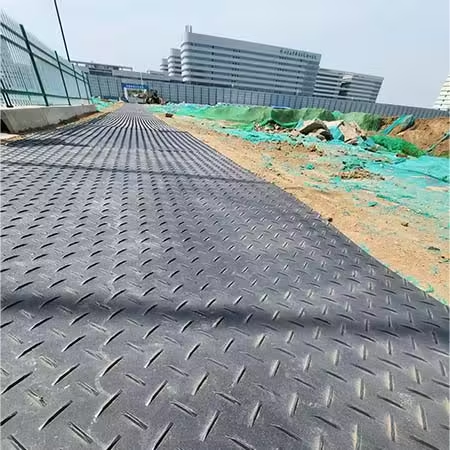
Table of Contents
Introduction
In construction, events, and utility work, time and site integrity are the most valuable assets. Establishing stable, temporary access over sensitive ground—especially in challenging weather—no longer has to be a slow, labor-intensive process. Ground protection mats offer the most rapid and reliable solution for creating temporary roadways and work platforms. This guide provides a detailed look at how to leverage these mats for quick, effective site setup.
Why Temporary Roads Need Ground Protection Mats?
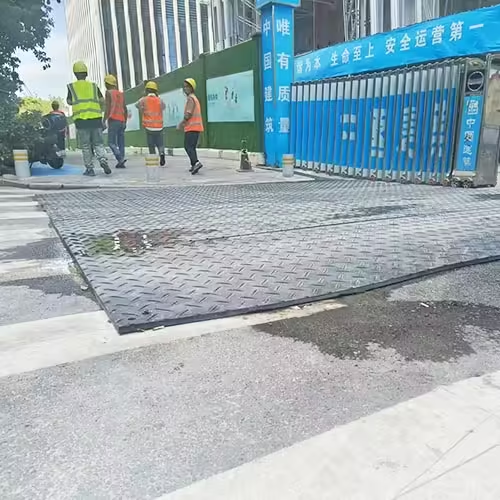
Project managers often face a crucial decision: how to move heavy equipment without destroying the underlying terrain. Traditional methods are often inadequate or costly.
The Pitfalls of Traditional Methods
Historically, solutions like plywood were used, but they quickly degrade in moisture, offer minimal load-bearing capacity, and easily slip, creating significant safety risks. Crushed stone or aggregate is a robust option but involves high material costs, intensive labor for spreading, and an even greater expense for cleanup and site remediation after the project concludes.
Dual Benefit: Protection and Access
Modern ground protection mats, like those supplied by EcoGeo Material, provide a true win-win solution:
- Ground Protection: They distribute heavy loads over a wide area, drastically reducing the ground pressure applied by tires and tracks. This prevents costly soil compaction and the deep ruts that damage sensitive turf or paved surfaces.
- All-Weather Access: They ensure continuous, safe vehicle and pedestrian access across challenging conditions, including mud, sand, snow, and soft soil, minimizing project delays and keeping your schedule on track.
Selecting the Right Mats for Quick Setup
The speed of your installation directly relates to the material and design of the mats you choose.
Material and Portability: The HDPE Advantage
For quick deployment, HDPE (High-Density Polyethylene) mats are generally superior. Their light weight, compared to heavy steel plates or solid composite mats, allows them to be handled by one or two people without specialized lifting equipment, significantly reducing labor time and costs. This portability is key to rapid deployment.
Size and Interlocking Systems
Choosing the right size, typically 4’x8′ or 3’x8′, balances optimal coverage area with manageable weight. Crucially, look for a robust interlocking system. High-quality mats utilize quick-locking or four-way connectors that securely fasten the mats together, transforming individual pieces into a continuous, stable road surface in minutes, not hours.
Load Rating and Application Match
Before selecting a mat, you must confirm its maximum load capacity can handle your heaviest equipment (e.g., cranes, drilling rigs, or fully loaded haul trucks). Mismatching the mat’s rating to the application is the number one cause of material failure and site damage, inevitably leading to time-consuming replacements.
Ground Protection Mats vs. Traditional Materials
| Feature | Ground Protection Mats (HDPE) | Plywood Sheeting | Crushed Aggregate (Gravel) |
| Installation Speed | Fastest (Quick-lock systems) | Medium (Manual placement) | Slowest (Requires machinery/dumping) |
| Load Capacity | High (Up to 80+ tons) | Low (Prone to breaking/warping) | Medium to High (Depends on depth) |
| Ground Protection | Excellent (Distributes load evenly) | Poor (Creates point loads/ruts) | Medium (Causes compaction) |
| Weather Resistance | Excellent (Impervious to water/chemicals) | Poor (Absorbs water, rots quickly) | Good |
| Cleanup & Removal | Excellent (Lift and store) | Medium (Disposal/Scraping) | Poor (High cost/labor to remove) |
| Reusability / ROI | Excellent (Durable, multi-project use) | Poor (Single-use life) | None (Lost material) |
The 5-Step Rapid Installation Guide
Creating a secure temporary road is straightforward with the right mats and technique.
Site Preparation: Leveling and Clearance
Although ground protection mats are flexible, always remove major obstacles, such as sharp stumps, large rocks, or metal debris, before beginning the setup. This minimizes point-loading stress and prolongs the lifespan of the mats.
Mat Placement and Starting Line
Determine the most efficient layout and begin by laying the first row of mats end-to-end, establishing a straight, continuous starting line. This sets the template for the entire road.
Rapid Interlocking: Creating a Stable Surface
Connect the mats using the manufacturer’s recommended connector system. Ensure all mats are secured to one another before any vehicle drives onto them. This step is critical; properly interlocked mats prevent shifting and buckling under load.
Temporary Ramps and End Sections
For sections where the temporary road meets the existing ground, use specially designed ramp accessories. These sloped edges ensure a smooth transition for vehicles, preventing damage to both the mats and vehicle tires and reducing the risk of tripping hazards.
Final Inspection and Safety Check
Before allowing traffic, walk the length of the temporary road. Confirm all connection points are secure, check for any rocking or movement, and verify the path is clear of debris. Safety first ensures efficiency later.
Installation Tips for Various Terrains
The ground mat’s utility shines on challenging ground, but some terrains require nuanced installation.
Muddy and Soft Substrates
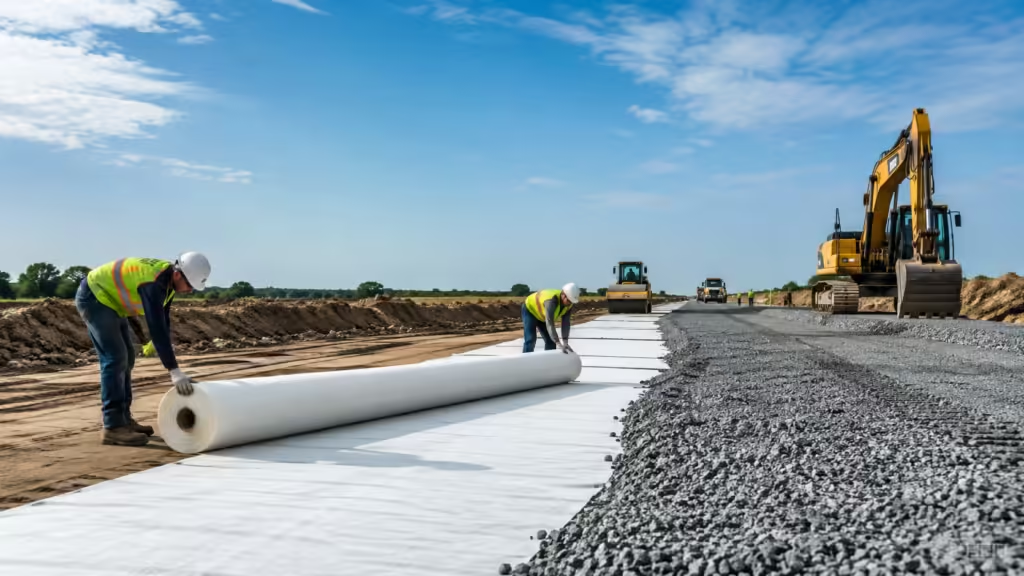
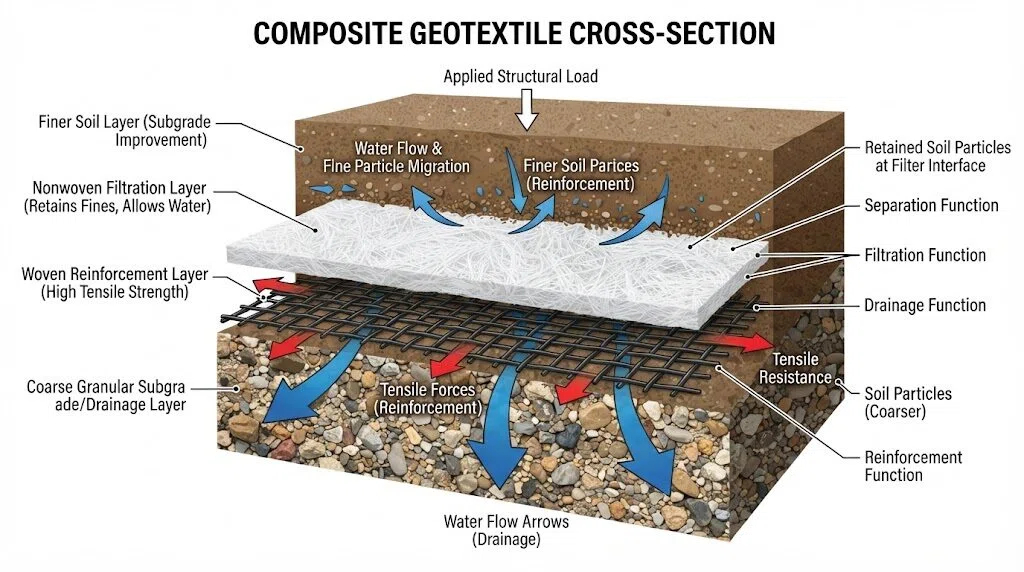
On extremely soft or saturated ground, consider placing a layer of non-woven geotextile fabric beneath the mats. The geotextile acts as a separation and filtration layer, preventing fine mud from migrating upwards and ensuring the ground mats maintain a firm footing.
Sensitive Turf and Golf Courses
When protecting high-value grass, use ground protection mats with a smooth or non-aggressive backside pattern. This minimizes the shearing action when vehicles turn, reducing damage to the grass roots and aiding quick recovery after the mats are removed.
Slopes and Inclined Sections
When laying ground protection mats on slopes, orient the longest dimension of the mat perpendicular to the slope to provide maximum stability and traction. Use aggressive, heavy-duty connectors to prevent the entire section from sliding downhill under load.
Project Benefits of Rapid Deployment
The speed of installation translates directly into significant cost savings and project advantages.
- Significant Labor Cost Reduction: The ease of handling and connecting HDPE mats drastically reduces the crew size and hours required compared to spreading and compacting aggregate.
- Reduced Project Downtime: Mats allow work to proceed almost immediately after they are deployed, ensuring schedules are met even when weather turns the site into mud.
- High Return on Investment (ROI): As reusable assets, ground protection mats eliminate the recurring purchase and waste disposal costs associated with single-use materials like plywood, offering a clear ROI over multiple projects.
Removal, Cleaning, and Storage
Proper end-of-project procedures maintain the longevity of your mats.
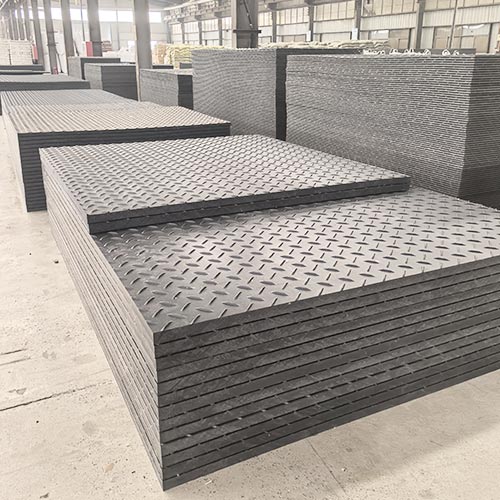
The removal process is the reverse of installation, and it is equally fast. Once removed, cleaning can be done efficiently using a pressure washer or simple brush and hose. Store the mats stacked flat on a pallet or level ground to prevent warping, ensuring they are ready for immediate deployment on your next job site.
Why Choose EcoGeo Material: Your Rapid Roadway Expert
At EcoGeo Material, we manufacture ground protection mats designed for real-world heavy-duty applications. Our focus is on providing durable, high-load-bearing HDPE solutions that feature robust, quick-lock interlocking systems, ensuring the absolute fastest setup and takedown times in the industry.
FAQ
Can one person install a 4’x8′ HDPE ground protection mats?
Yes, the lightweight nature of most commercial HDPE ground protection mats allows one or two workers to easily handle and position them.
How do you prevent the ground protection mats from sliding on slick surfaces?
High-quality ground protection mats have aggressive traction patterns on the bottom side to grip the ground. Using the recommended interlocking hardware is essential to tie the system together, preventing lateral movement.
How much connection hardware is needed?
This depends on the manufacturer and ground protection mats size, but typically you need enough connectors to join every corner and midpoint of the adjacent mats for maximum stability.
Need Help Choosing the Right Ground Protection Mats?
If you’re unsure about which HDPE ground protection mat (by load capacity, size, or interlocking system) is best for your construction site, event, or utility project, our geomaterials experts are here to help.
Contact EcoGeo Material today for a personalized consultation on product specifications, site assessment, and setup guidance, and ensure your temporary roadway is stable, safe, and efficient.