
High Strength Woven Geotextile: A Complete Guide for Builders
Welcome to My Blog!
Before we dive into the content, if you’re interested in our products or have any questions, please feel free to visit our Contact Us page on the website. Our team is ready to assist you with inquiries, orders, or any support you may need.
Now, let’s get started on our journey together. I hope you find the content here insightful, engaging, and valuable.
Table of Contents
Introduction
Ground-related failures often stem from weak soils, poor drainage, or uneven load transfer. Woven geotextile addresses these issues through mechanical reinforcement and soil separation, creating a stable interface between layers. Widely adopted in road construction, embankments, drainage structures, and erosion control, woven geotextile is valued for its strength, durability, and predictable performance. This article explains what sets it apart, where it works best, and how to select the right option for your project.
Understanding High Strength Woven Geotextile

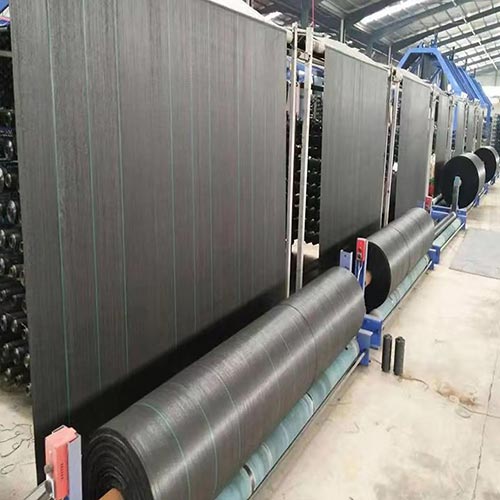
Woven geotextile is manufactured by interlacing synthetic yarns, typically polypropylene, in a regular pattern. This weaving process creates a fabric with high tensile strength and low elongation, allowing it to resist stretching under load.
Unlike felt-like materials, the structured geometry of woven geotextile provides directional strength. According to guidance published by international geosynthetics institutes, woven products often deliver tensile strengths exceeding 50 kN/m in reinforcement applications, making them suitable for demanding load-bearing environments.
Key characteristics include consistent strength, controlled permeability, chemical resistance, and long-term performance in buried conditions.
Key Features and Performance Benefits
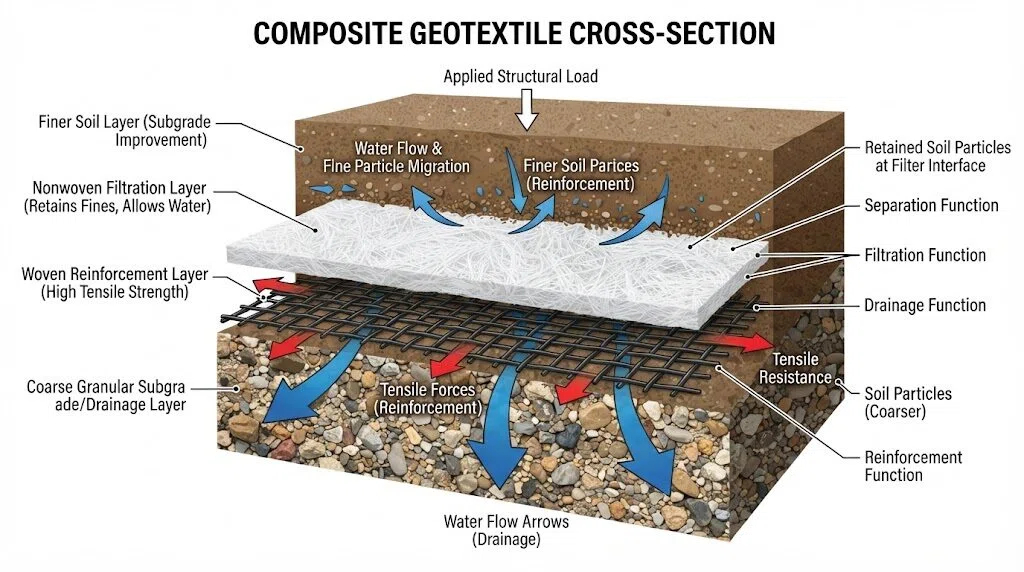
Woven geotextile delivers value through multiple functional mechanisms rather than a single property.
Primary performance elements include:
- Soil reinforcement that spreads loads and reduces settlement
- Separation that prevents mixing of aggregates and subgrade soils
- Filtration that allows controlled water flow while retaining fines
- Long service life under constant stress
Field studies from infrastructure projects have shown that reinforced bases using woven geotextile can reduce rutting and deformation by more than 30 percent compared to unreinforced layers, based on long-term pavement performance observations.
Common Applications Across Construction Sectors
Road Construction and Pavement Reinforcement
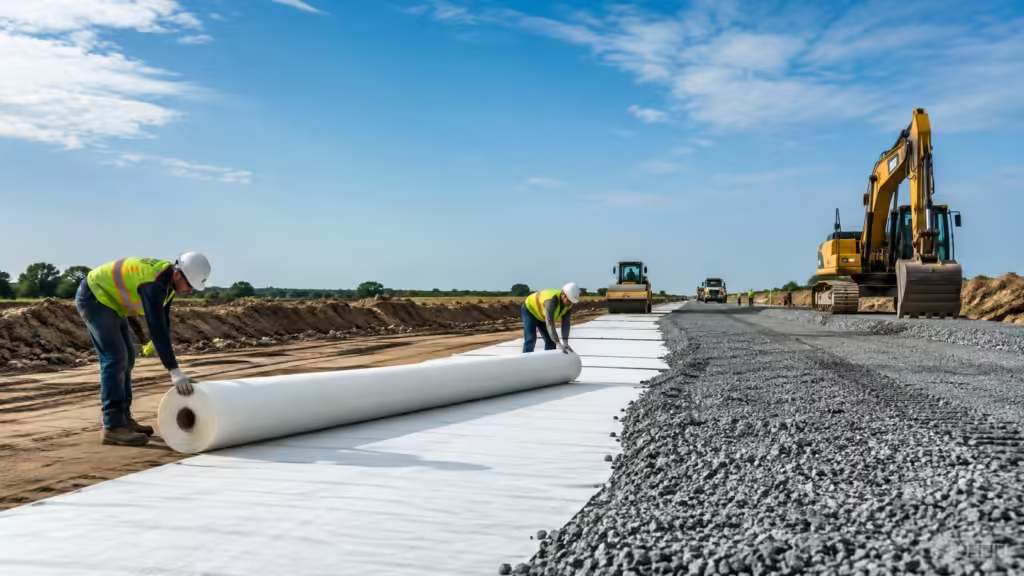
In road and highway construction, woven geotextile is used beneath base and subbase layers to improve load distribution. It minimizes aggregate loss into weak soils and enhances bearing capacity, particularly in soft or variable ground conditions.
Erosion Control and Drainage Systems
On slopes, channels, and embankments, woven geotextile contributes to erosion resistance by holding soil in place while allowing water to pass through. Its structural integrity makes it suitable for areas exposed to flowing water and repeated wet-dry cycles.
Landscaping and Civil Engineering Projects
Outdoor facilities, access roads, and load-bearing landscaped areas benefit from geotextile by maintaining surface stability while minimizing maintenance requirements over time.
Material Selection and Product Comparison
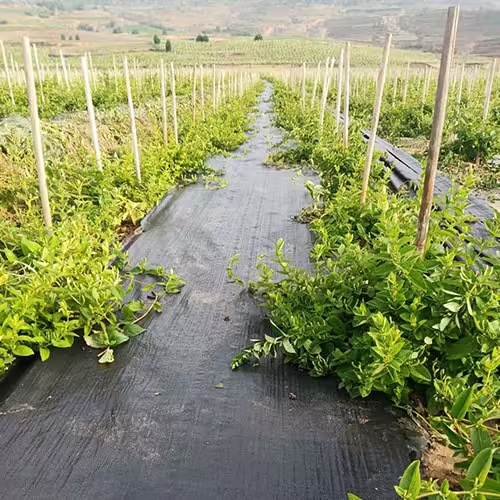
Choosing the right woven geotextile requires understanding how it compares to alternatives and how material composition affects performance.
Woven vs Non-Woven Geotextile
Woven products are designed for strength and reinforcement, while non-woven fabrics prioritize filtration and drainage. Selection depends on whether load support or water management is the dominant requirement.
Polypropylene-Based Structures
Polypropylene woven geotextile offers resistance to moisture, chemicals, and biological degradation. Laboratory aging tests referenced in materials engineering journals indicate minimal loss of tensile strength over decades in buried conditions.
Comparative Performance Overview
| Performance Factor | Woven Geotextile | Non-Woven Geotextile | Granular Separation Layers |
|---|---|---|---|
| Tensile Strength | High | Low to Medium | None |
| Load Distribution | Excellent | Limited | Moderate |
| Filtration Control | Moderate | High | Poor |
| Long-Term Durability | Very High | Medium | Low |
| Installation Thickness | Thin | Moderate | Thick |
Installation Guidelines for Reliable Results
Successful performance starts with proper installation. Even high-quality woven geotextile can underperform if placed incorrectly.
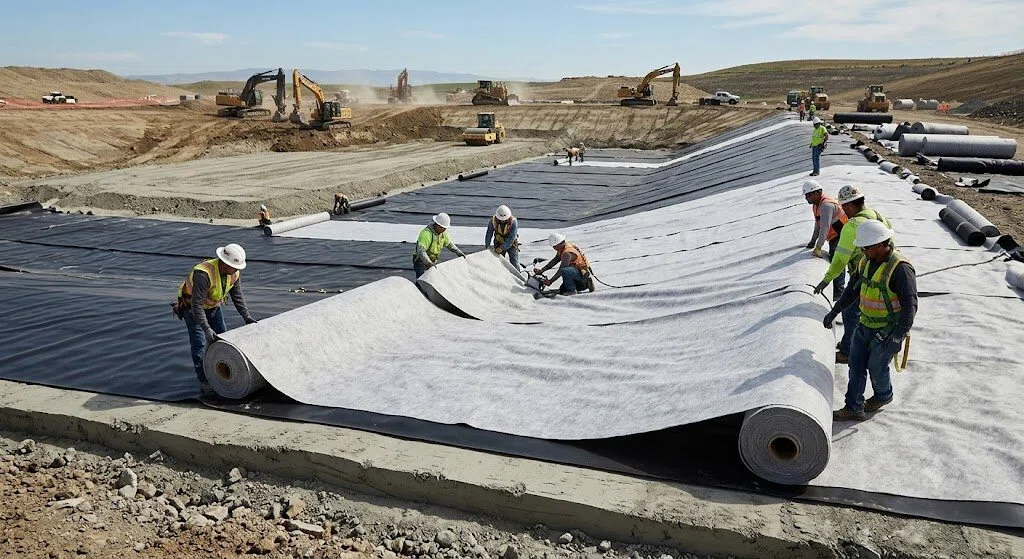
Site preparation should ensure a smooth subgrade free of sharp protrusions. The fabric should be laid flat with adequate overlap based on soil conditions and anticipated loads. In weak soils, overlap distances often exceed 300 mm to ensure continuity.
Anchoring and covering should follow promptly to prevent movement from wind or construction traffic. Protective cover layers help maintain fabric integrity during installation.
Durability and Maintenance Considerations
Woven geotextile is designed for long-term service with minimal intervention. Periodic inspections during early project stages help detect installation damage. Once buried and confined, the material typically requires no maintenance.
In reinforced soil structures, design guides suggest service lives exceeding 50 years when properly specified and installed, supported by accelerated aging tests and field data.
Practical Case Insights
Infrastructure projects involving soft subgrades often benefit from woven geotextile reinforcement by reducing the need for thick aggregate layers. In temporary access routes, its use has been shown to reduce material consumption and shorten construction timelines, improving both cost efficiency and sustainability.
Conclusion
Woven geotextile continues to be a cornerstone material for builders seeking reliable soil reinforcement and long-term performance. Its ability to combine strength, durability, and efficiency makes it a smart choice for demanding construction environments. By understanding its functions, applications, and correct installation practices, you can make informed decisions that improve structural integrity and project lifespan. When chosen carefully and applied correctly, woven geotextile becomes more than a material—it becomes a performance solution.
FAQ
What makes woven geotextile suitable for reinforcement?
Its high tensile strength and low elongation allow it to distribute loads effectively and stabilize weak soils.
Can woven geotextile be used in wet environments?
Yes. It maintains strength in saturated conditions and resists chemical and biological degradation.
How long does woven geotextile typically last?
When properly installed, service life commonly exceeds several decades based on laboratory and field data.
Is geotextile reusable?
In temporary works, it can sometimes be recovered and reused, depending on installation damage.
How do I choose the right strength grade?
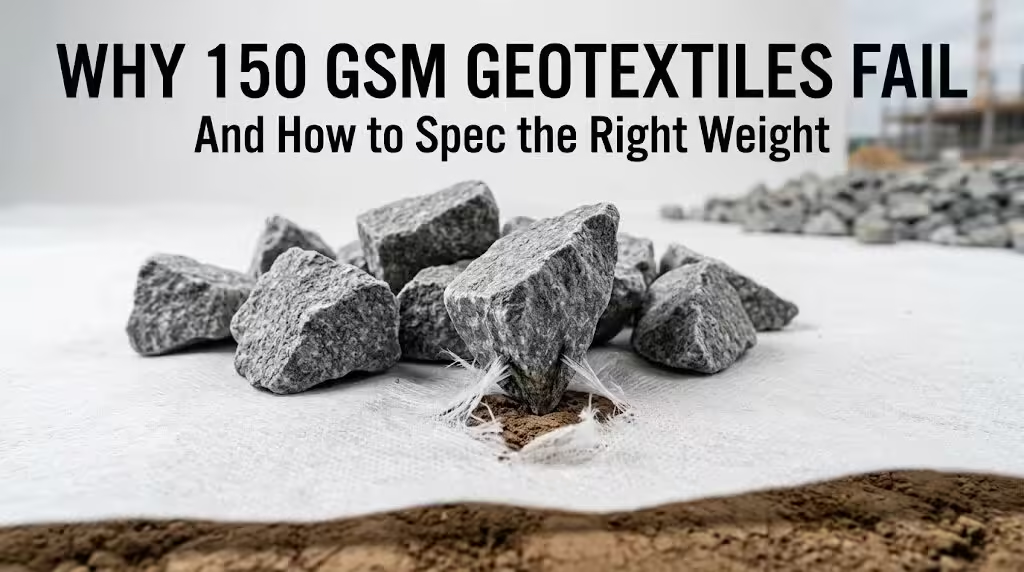
Selection depends on soil conditions, load levels, and project design requirements. Engineering calculations and load analyses are recommended.