
Comprehensive Guide to Industrial Geosynthetics and Engineering Materials
Welcome to My Blog!
Before we dive into the content, if you’re interested in our products or have any questions, please feel free to visit our Contact Us page on the website. Our team is ready to assist you with inquiries, orders, or any support you may need.
Now, let’s get started on our journey together. I hope you find the content here insightful, engaging, and valuable.
Table of Contents
Introduction
In modern civil and environmental engineering, geosynthetics play a vital role in improving construction performance, ensuring environmental protection, and extending infrastructure lifespan.
This guide covers geosynthetics and related materials including Geotextiles, Geomembranes, Geogrids, Ground Protection Mats, and Engineering Plastics — all designed to enhance soil stability, fluid containment, and structural reinforcement.
These materials offer:
- Long-term durability under harsh conditions
- Cost-efficient solutions for large-scale industrial projects
- Environmental compliance and sustainability benefits
- Versatility across construction, mining, chemical, and infrastructure sectors
Geotextiles: Key Elements and Industrial Applications
What Is Geotextile
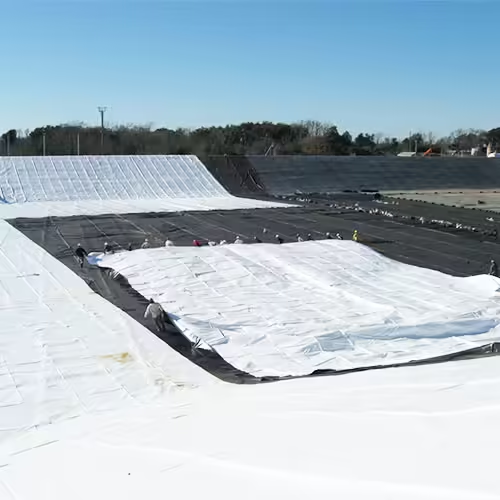
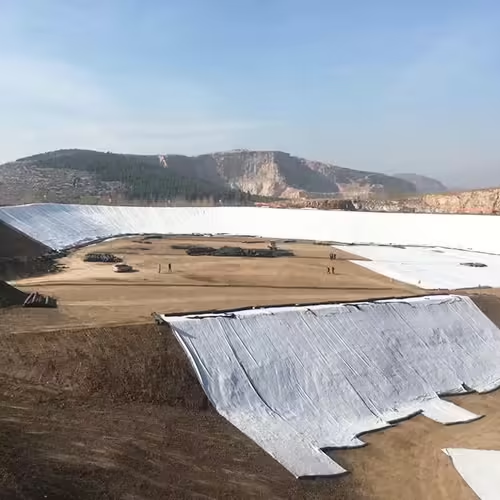
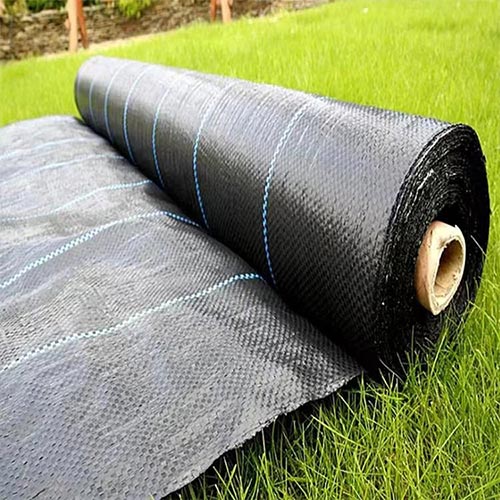
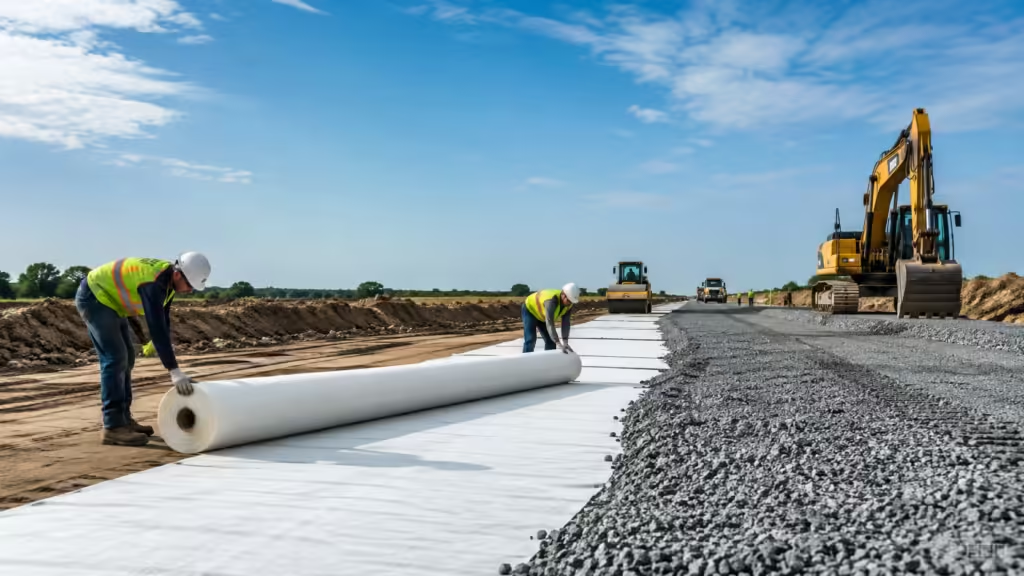
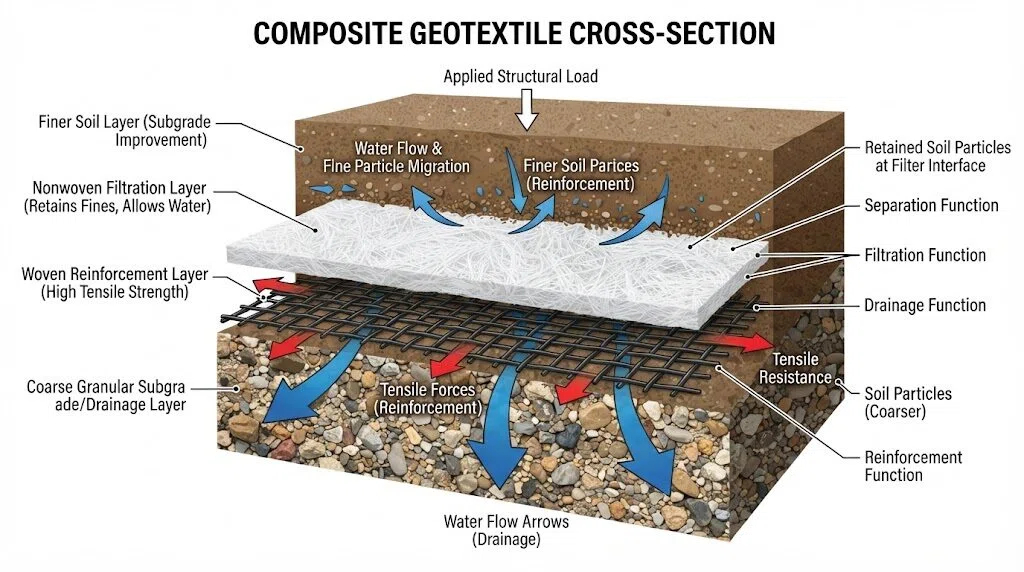
Geotextiles are one of the most widely used geosynthetics, offering excellent soil separation, filtration, and reinforcement functions. These woven or nonwoven fabrics are essential in road construction, drainage systems, and erosion control projects.
Key Properties and Elements
Mechanical Strength
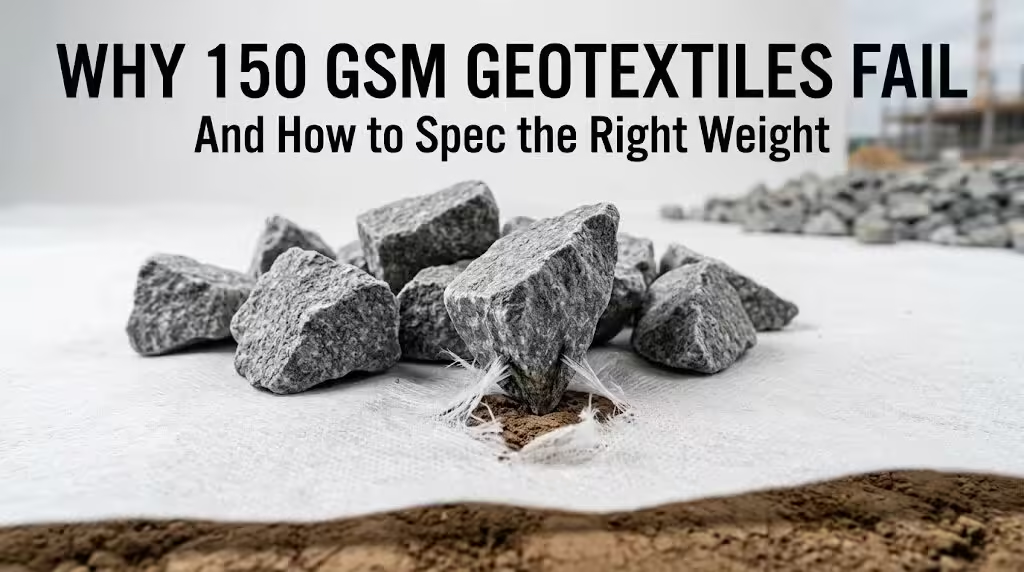
Geotextiles possess high tensile strength and puncture resistance, allowing them to reinforce soil layers effectively under heavy loads and prevent deformation or settlement over time.
Permeability
These fabrics allow water to pass while retaining fine soil particles, ensuring proper drainage and reducing soil erosion in slopes, embankments, and filtration applications.
Durability
Geotextiles are UV-stabilized and chemically resistant, maintaining performance in harsh outdoor environments for 20 years or more.
Types
Woven geotextiles offer high tensile strength, suitable for reinforcement, while nonwoven geotextiles excel in drainage and filtration applications due to their permeability.
Industrial Applications
Roadways and Highways
Geogrids reinforce the sub-base and base layers, reducing settlement and improving durability under heavy vehicular loads.
Retaining Walls and Embankments
They enhance soil strength and reduce lateral pressure, increasing the stability and lifespan of retaining structures.
Railways
Geogrids stabilize ballast layers, reducing track deformation and maintenance frequency.
Industrial Yards and Storage Areas
They prevent rutting and uneven settlement under heavy machinery or stacked materials.
Advantages
- Cost-effective solution for soil reinforcement
- Reduces maintenance and increases lifespan of infrastructure
- Compatible with various construction materials (gravel, sand, concrete)
Geomembranes: Industrial Barriers for Containment
What Is Geomembrane
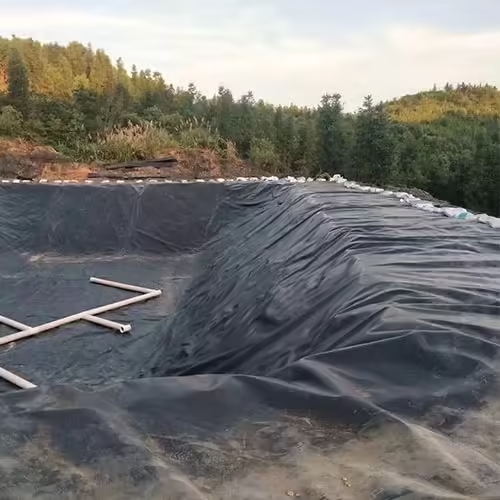
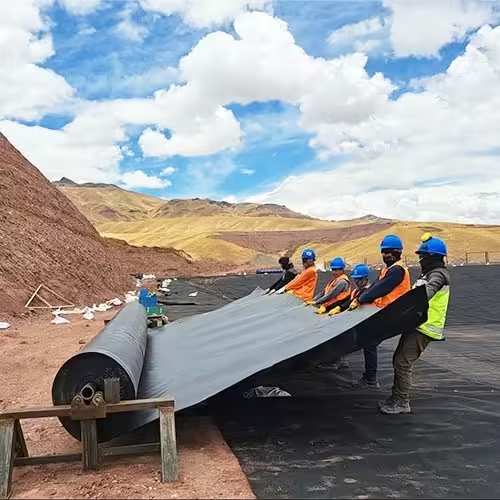
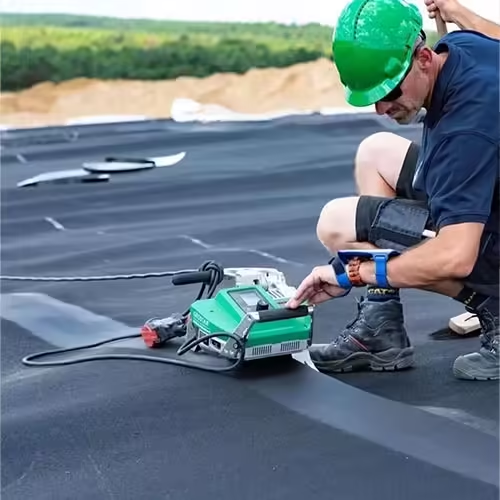
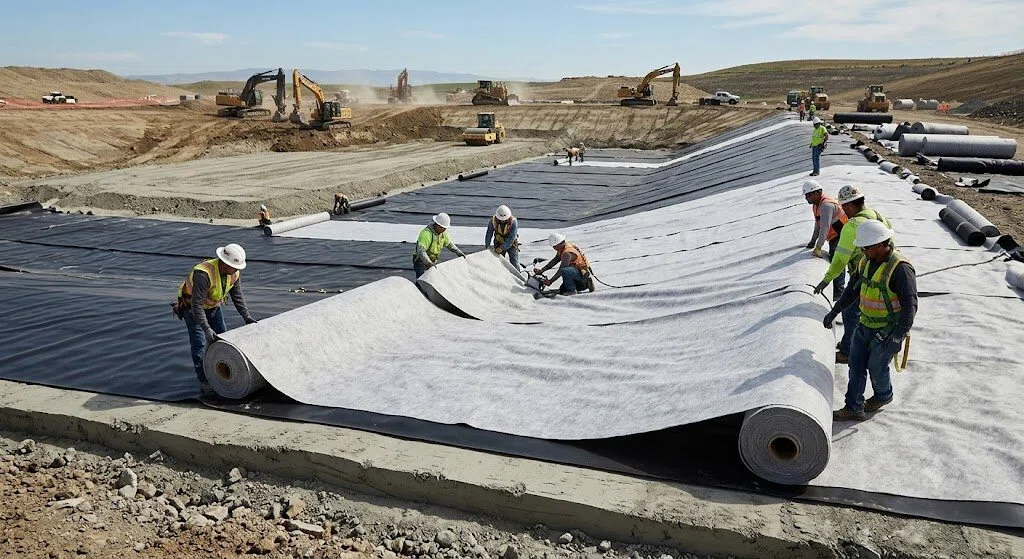
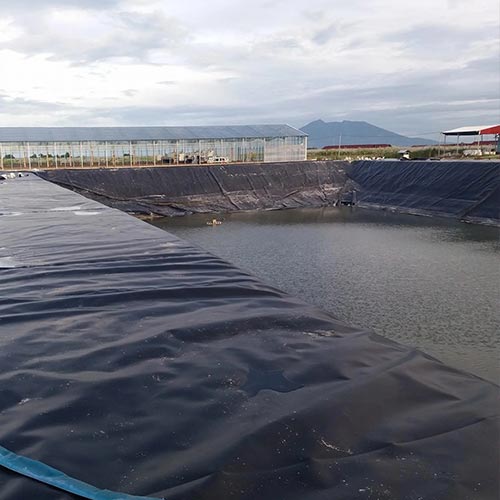
Geomembranes are impermeable geosynthetic liners used to contain liquids and prevent contamination in landfills, chemical storage areas, and water reservoirs.
As part of the broader geosynthetic family, they are valued for their chemical resistance, flexibility, and environmental protection performance.
Key Properties and Elements
Material Types
Geomembranes are made from HDPE, LLDPE, PVC, or EPDM, chosen according to chemical resistance, flexibility, and temperature requirements.
Thickness and Strength
Thickness ranges from 0.5 mm to 3 mm, providing sufficient tensile strength and tear resistance for industrial and environmental containment projects.
Chemical Resistance
Geomembranes resist acids, alkalis, and hydrocarbons, making them suitable for chemical tanks, mining ponds, and landfill liners.
UV and Weather Resistance
UV-stabilized geomembranes maintain integrity in outdoor environments, reducing maintenance and prolonging service life.
Industrial Applications
Landfills
Geomembranes line landfills to contain leachate, protecting soil and groundwater from contamination.
Mining Operations
Used in heap leach pads and tailings ponds, they prevent leakage of acidic or toxic solutions while ensuring regulatory compliance.
Chemical Storage
Geomembranes provide secondary containment for industrial chemical tanks, preventing environmental hazards.
Water Reservoirs and Irrigation
Liners reduce water seepage, conserve water resources, and prevent contamination in agricultural and municipal applications.
Advantages
- High impermeability and leak prevention
- Long lifespan under chemical exposure
- Reduces maintenance and environmental risks
- Can be combined with geotextiles for extra protection
Case Example
A mining operation in Australia used LLDPE geomembranes to line a tailings pond, preventing leakage of acidic solution and meeting regulatory compliance while reducing long-term remediation costs.
Geogrids: Reinforcement Elements for Soil and Pavements
What Is Geogrid
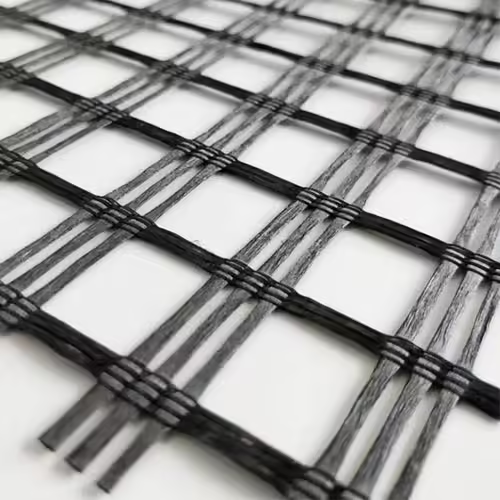
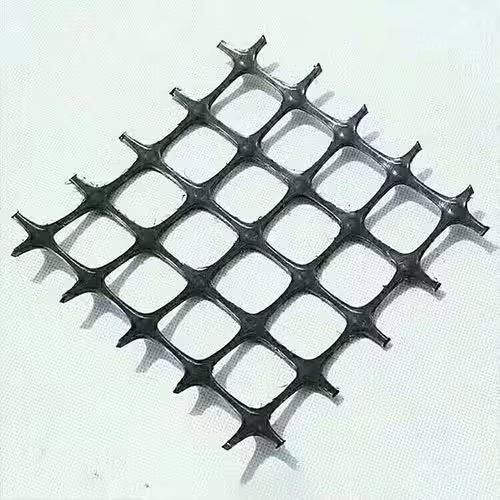
Geogrids are structural geosynthetics designed to reinforce soil, distribute loads, and improve long-term stability in roads, embankments, and retaining walls. Their grid-like structure provides high tensile strength, making them indispensable in heavy-load environments.
Key Properties
Tensile Strength
Geogrids have high tensile strength, allowing them to distribute loads effectively across soil layers and enhance overall structural stability.
Junction Stability
Stable grid intersections ensure that load is transferred evenly, preventing local deformation under heavy traffic or equipment.
UV Resistance
UV-resistant polymers allow geogrids to perform reliably in outdoor environments for extended periods.
Flexibility
Geogrids conform to uneven terrain, enabling installation on slopes, embankments, and irregular surfaces.
Industrial Applications
Roadways and Highways
Geogrids reinforce the sub-base and base layers, reducing settlement and improving durability under heavy vehicular loads.
Retaining Walls and Embankments
They enhance soil strength and reduce lateral pressure, increasing the stability and lifespan of retaining structures.
Railways
Geogrids stabilize ballast layers, reducing track deformation and maintenance frequency.
Industrial Yards and Storage Areas
They prevent rutting and uneven settlement under heavy machinery or stacked materials.
Advantages
- Improves soil load-bearing capacity
- Reduces foundation thickness requirements, lowering cost
- Extends infrastructure lifespan and reduces maintenance
Ground Protection Mats: Temporary Surface Solutions
What Is Ground Protection Mat
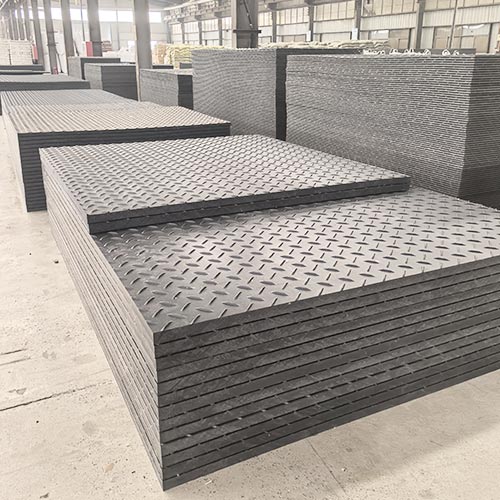
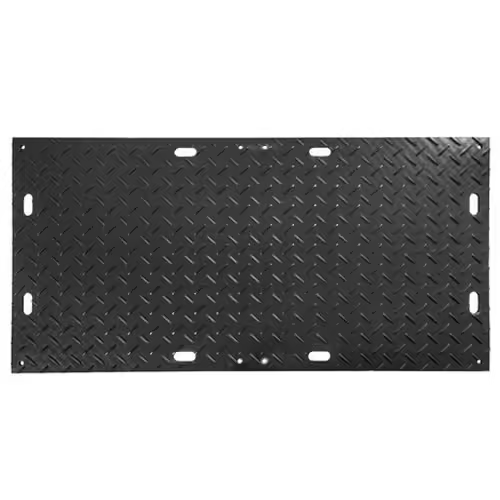
Ground protection mats are a form of geosynthetic surface protection used to prevent soil compaction and damage during temporary construction or events. They represent the practical, reusable side of geosynthetic applications in modern industries.
Key Elements
Materials
Ground protection mats are made of HDPE, rubber composites, or recycled plastics, chosen for strength, durability, and environmental sustainability.
Load-Bearing Capacity
Mats are engineered to withstand heavy machinery, vehicles, and construction equipment without deforming or damaging the underlying surface.
Durability
UV-stabilized and abrasion-resistant materials ensure long-term performance, even in harsh outdoor conditions.
Water Drainage
Some mats feature integrated drainage elements to prevent water accumulation and reduce slipping hazards.
Industrial Applications
Construction Sites
Mats create temporary roads and platforms, protecting soil and providing safe access for heavy machinery.
Event Spaces
Used for outdoor events to prevent turf damage while supporting equipment and pedestrian traffic.
Landscaping Projects
Ground mats allow heavy equipment to move over soft soil without causing compaction or erosion, minimizing restoration costs.
Advantages
- Protects soil and turf from compaction
- Reduces restoration and site preparation costs
- Easily deployed, moved, and reused
Case Example
A construction site in the UK used modular HDPE ground protection mats for crane and truck movement, preventing soil compaction and saving over $50,000 in restoration costs.
Engineering Plastics: Versatile Industrial Materials
What Are Engineering Plastics
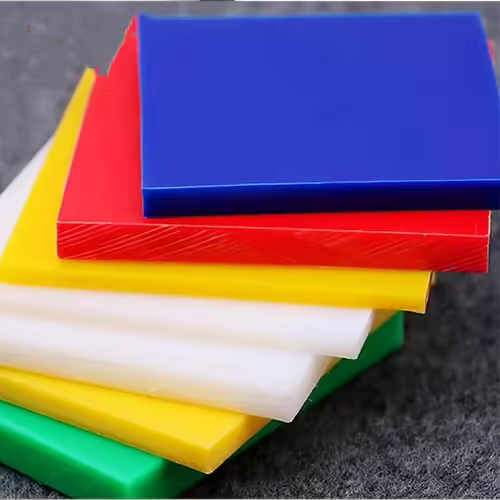
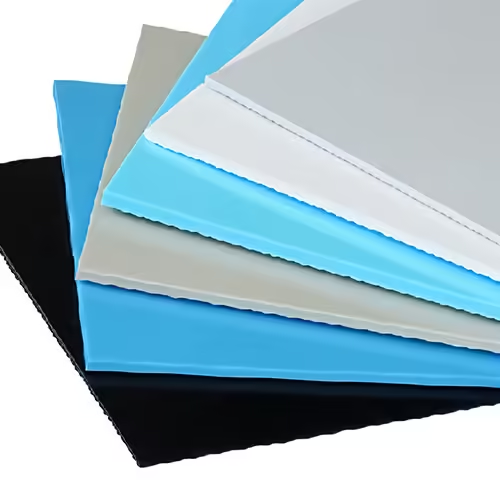
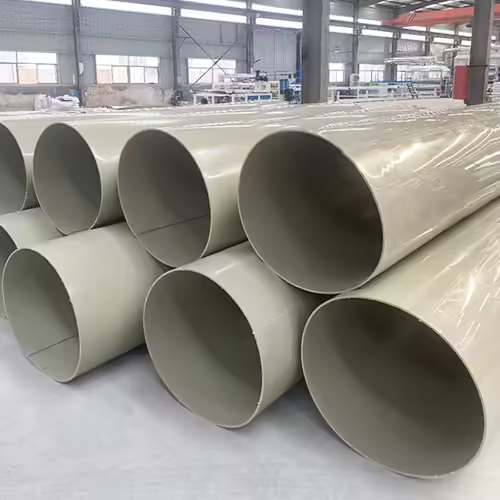
While not traditional geosynthetics, engineering plastics such as PP, PVC, and PE sheets often work alongside geosynthetic systems to provide chemical resistance and mechanical durability in industrial and environmental settings.
Key Elements
Material Types
Includes PP sheet, PVC, PE, PTFE, POM, chosen according to chemical resistance, mechanical strength, and temperature tolerance.
Mechanical Strength
High-performance engineering plastics can withstand repeated stress, impact, and pressure in industrial applications.
Chemical and Thermal Resistance
These materials resist corrosion, acids, bases, and solvents, maintaining integrity under elevated temperatures.
Fabrication Methods
Sheets, rods, and profiles can be cut, welded, thermoformed, or machined for custom industrial applications.
Industrial Applications
Chemical Tanks and Piping
Engineering plastics provide corrosion-resistant containment solutions for acids, alkalis, and chemical reagents.
Laboratory and Medical Surfaces
Used for benches, protective panels, and containers, offering durability and easy cleaning.
Mechanical Components
Plastics are used in gears, spacers, sliders, and protective panels due to high strength and low friction.
Packaging and Signage
Lightweight and printable panels are ideal for packaging layers, point-of-sale displays, and industrial signage.
Advantages
- Lightweight, corrosion-resistant, and durable
- Customizable for different industrial applications
- Reduces maintenance costs and increases operational efficiency
Comparative Overview: Selecting the Right Material
| Material | Key Elements | Applications | Advantages | Limitations |
|---|---|---|---|---|
| Geotextile | Tensile strength, permeability | Roads, slopes, drainage | Soil stabilization, filtration | Not impermeable |
| Geomembrane | Thickness, chemical resistance | Landfills, chemical tanks | Impermeable, durable | Sensitive to puncture without geotextile cover |
| Geogrid | Tensile strength, junction stability | Roads, embankments | Load distribution, soil reinforcement | Needs precise installation |
| Ground Protection Mat | Load-bearing, abrasion resistance | Temporary roads, construction sites | Protects soil, reusable | Limited to surface protection |
| Engineering Plastics | Chemical & thermal resistance | Tanks, lab surfaces, components | Versatile, lightweight, durable | UV and temperature limits for some types |
Consider project environment, chemical exposure, load requirements, and long-term maintenance when selecting materials.
Environmental and Sustainability Elements
- Most geosynthetics and engineering plastics are recyclable
- Reduce carbon footprint by substituting metals or concrete where feasible
- Reusable mats and durable liners lower waste and site remediation costs
- Compliance with ISO, ASTM, and local environmental regulations
Conclusion
Selecting the right geosynthetics—whether geotextiles, geomembranes, or geogrids—depends on soil conditions, load requirements, and environmental exposure.
High-quality geosynthetic materials deliver better performance, sustainability, and cost efficiency across industrial, environmental, and civil engineering projects.
- Enhanced project durability
- Cost-effective solutions
- Compliance with environmental and safety standards
By considering Geotextiles, Geomembranes, Geogrids, Ground Protection Mats, and Engineering Plastics, industrial and civil projects can achieve long-term efficiency, sustainability, and safety.
FAQ
What are geosynthetics and why are they important in construction?
Geosynthetics are synthetic materials—such as geotextiles, geomembranes, and geogrids—used to improve soil stability, control erosion, and manage water flow in construction projects. They enhance structural performance, reduce costs, and increase project lifespan.
What types of geosynthetics are commonly used in engineering projects?
The most common types include:
Geotextiles for separation, filtration, and drainage
Geomembranes for impermeable lining and containment
Geogrids for soil and base reinforcement
Geonets and Geocomposites for drainage and barrier applications
Ground Protection Mats for surface protection and access stability
How do geosynthetics improve soil performance?
Geosynthetics distribute loads evenly, reduce settlement, and prevent soil mixing between layers. This increases load-bearing capacity and prolongs infrastructure lifespan—especially in roads, railways, and embankments.
What is the difference between geotextiles and geomembranes?
Geotextiles are permeable fabrics that allow water to pass while filtering soil, while geomembranes are impermeable liners designed to contain liquids or gases. In many projects, both are used together for dual filtration and containment benefits.
Can geosynthetics be used for environmental protection?
Yes. Geosynthetics are essential in landfills, chemical storage facilities, and water reservoirs. They prevent leachate leakage, protect groundwater, and help achieve environmental compliance with international standards.
Are geosynthetics durable and weather-resistant?
High-quality geosynthetics are UV-stabilized, chemical-resistant, and designed to last for decades even under harsh conditions. Lifespan typically ranges from 20 to 50 years depending on material type and installation quality.
Are geosynthetics environmentally friendly?
Modern geosynthetics are often recyclable and help reduce the need for natural materials like gravel or clay, minimizing environmental disturbance. Their long lifespan also reduces replacement frequency and waste generation.
Need Help Choosing the Right Geosynthetics or Industrial Material?
If you’re unsure which geosynthetics—such as geotextile, geomembrane, geogrid, ground protection mat, or engineering plastic—is best for your project, our experts are here to help. Contact us today for a personalized consultation and ensure your construction or industrial system is efficient, durable, and fully compliant. Don’t wait until problems arise—get in touch now to find the perfect geosynthetic solution for your project’s success!