
Which Liner Is Right for You in 2026 HDPE Geomembrane or PVC
You want a liner that matches your needs. Choose HDPE geomembrane for tough jobs and harsh sites. Pick PVC when you need flexibility and easy handling. Check the quick table below. It shows market share and top uses for both liners.
| Material Type | Market Share |
|---|---|
| HDPE | 40% |
| PVC | 15% |
Table of Contents
Key Takeaways
- Pick HDPE geomembrane if you need strong material. It can resist chemicals very well. It lasts for more than 30 years. It works best in hard places like landfills and mines.
- Use PVC liners when you need something flexible. They are simple to put in odd shapes. They are good for short projects or water features.
- Think about the effect on nature. HDPE geomembrane can be recycled and is safe for nature. PVC might let out bad chemicals.
Quick Comparison
HDPE Geomembrane vs PVC Overview
It is important to know the differences between liners. The table below helps you compare HDPE geomembrane and PVC liners. It shows how they work in different ways.
| Property | HDPE Geomembrane | PVC Geomembrane |
|---|---|---|
| Flexibility | Tough and non-flexible | Flexible and easy to handle |
| Stress-Strain Behavior | Abrupt failure after sharp peak | Large elongation before failure |
| Field Seaming | Requires more field seams | Requires fewer field seams (as low as 20%) |
| Interface Friction Behavior | Lower friction angle due to stiffness | Unique behavior due to flexibility |
HDPE geomembrane is strong and tough. It is good for places that need a strong barrier. PVC liners bend easily and are simple to put in small spaces.
Tip: If your project needs a liner that bends and fits odd shapes, PVC may be the better choice. For projects that need a tough, long-lasting barrier, HDPE geomembrane is often preferred.
Here is another table with more features to help you decide:
| Feature | HDPE Liners | PVC Liners |
|---|---|---|
| Toxicity | Non-toxic, easy to recycle | Contains additives like phthalates, BPA, and dioxins |
| Permeability | Lower permeability, less risk of contamination | Higher permeability, more risk of soil and groundwater contamination |
| Chemical Resistance | Excellent, especially against acids, bases, and hydrocarbons | Inferior to HDPE |
| Low-Temperature Performance | Remains flexible at -90°C | Becomes brittle at -40°C |
| Durability | High strength and durability | Less durable over time |
| Additional Features | Can be manufactured with conductive layers for enhanced testing | Lacks advanced features |
Use these tables to pick the right liner for your project. Think about what is most important for your site. You may need strength, flexibility, or safety for the environment.
Material Properties
HDPE Geomembrane Features
HDPE geomembrane is strong because of its chemical structure. This liner uses high-density polyethylene. It is rigid and tough. The high molecular weight makes it less bendable. This helps the liner resist holes and rips. HDPE geomembrane works well in landfills, mining sites, and big ponds.
EcoGeo sells HDPE geomembrane in many thicknesses. You can pick from 0.2 mm to 3.0 mm. Choose thin for small ponds or thick for landfills. Each liner has CE and ISO certifications. These show it meets safety and quality rules. The material is waterproof and blocks UV rays. It is good for the environment. It keeps soil and water safe from pollution.
Note: HDPE geomembrane has great chemical and UV resistance. It lasts a long time in tough places.
Here are the main features:
| Feature | Details |
|---|---|
| Thickness Options | 0.2mm – 3.0mm (Customizable) |
| Certifications | CE, ISO |
| Environmental Features | Waterproof, UV-resistant, durable, environmentally friendly |
PVC Liner Characteristics
PVC liners have a different chemical structure. The material is more bendable than HDPE geomembrane. PVC liners are easy to fold and bend. They fit well in odd shapes and tight spots. PVC is good for uneven ground or complex designs.
Plasticizers make PVC liners even more flexible. These liners are easy to install. Prefabricated panels help with quick setup. Field studies show PVC liners bend in two directions and fit the ground well. They also resist holes.
Here is a table showing how PVC liners perform:
| Performance Characteristic | Rating |
|---|---|
| Biaxial Flexibility | Very Good |
| Uniaxial Elongation | Good |
| Conformance to Substrate | Very Good |
| UV Resistance | Generally covered |
| Thermal Expansion | Low to Moderate |
| Shear Friction | Low |
| Ease of Handling | Prefabricated Panels — easy |
| Point Puncture Resistance | Good |
- HDPE geomembrane is best for strength and chemical resistance.
- PVC liners are best for bending and easy setup.
Pick the liner that fits your project. HDPE geomembrane lasts long and protects nature. PVC liners bend and fit tricky spaces easily.
Durability & Longevity
Physical Strength
When you choose a liner, you want it to stand up to tough conditions. HDPE geomembrane gives you high strength and strong resistance to punctures. PVC liners offer flexibility, but HDPE geomembrane is tougher when you need protection from sharp objects or heavy loads. You can see the difference in their puncture resistance:
- HDPE offers a puncture resistance of 356 N.
- PVC has a puncture resistance of 267 N.
The thickness of each liner also affects its strength. HDPE geomembrane comes in thicknesses from 0.5 to 3.0 mm, while PVC liners range from 0.5 to 1.5 mm. The table below shows how yield and break strength increase with thickness:
| Thickness (mm) | Yield Strength (kN/m) | Break Strength (kN/m) |
|---|---|---|
| 0.5 | 15 – 18 | 22 – 25 |
| 1.0 | 25 – 27 | 35 – 40 |
| 1.5 | 35 – 38 | 50 – 55 |
| 2.0 | 45 – 48 | 65 – 70 |
| 3.0 | 65 – 70 | 95 – 100 |
Tip: If your project faces heavy equipment or sharp rocks, HDPE geomembrane gives you better protection.
Service Life
You want your liner to last for years. HDPE geomembrane can last over 30 years with proper care. Some buried HDPE liners can last up to 100 years. PVC liners usually last 15 to 20 years under normal conditions. The table below shows the average service life for each material:
| Material Type | Average Service Life |
|---|---|
| HDPE Geomembrane | 30–50 years |
| PVC Geomembrane | 15–25 years |
- HDPE geomembrane works well for long-term projects.
- PVC liners suit short-term or temporary uses.
Choose the liner that matches your project’s timeline and durability needs.
Installation & Maintenance
Installation Process
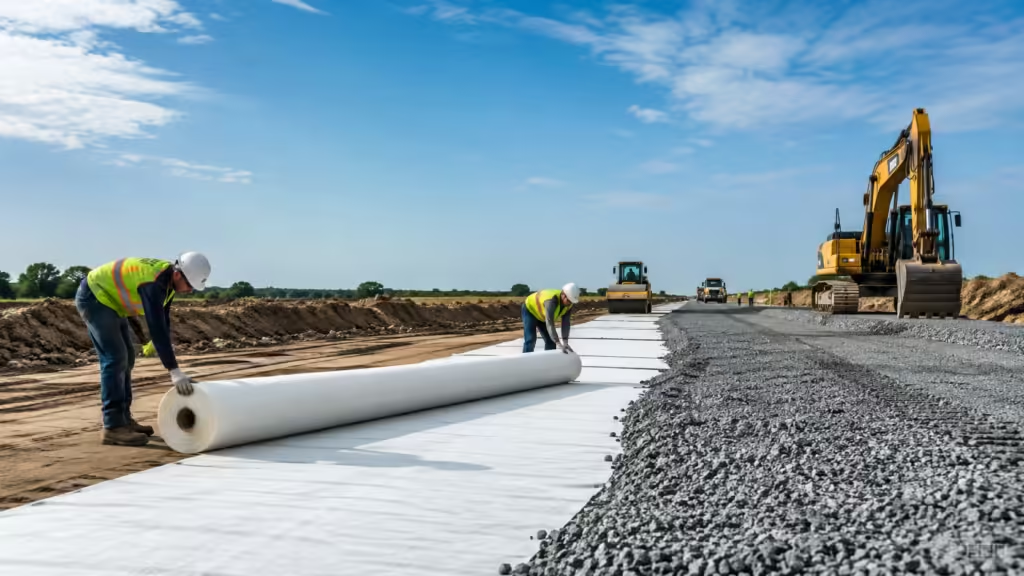
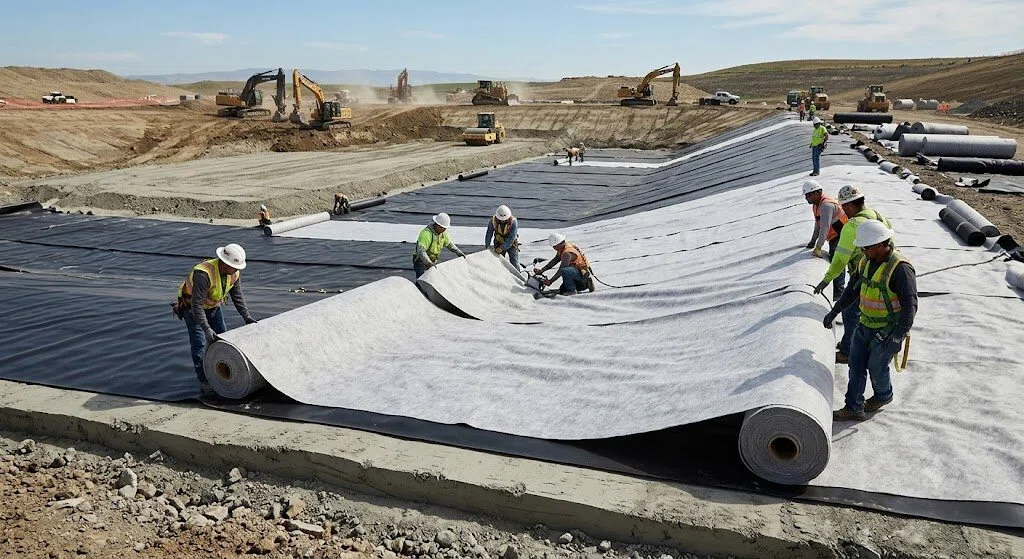
You want your liner to last a long time. First, get the site ready. Take away sharp rocks and trash. Make the ground flat and smooth. Be gentle with the liner so it does not tear. For HDPE geomembrane, follow these steps:
- Clean the site and remove all trash.
- Roll out the liner over the ground.
- Weld the sheets together for a tight seal.
- Look at the seams for leaks or weak spots.
- Pick smooth or rough surfaces for your project.
PVC liners use almost the same steps. But you often use panels made before you get them. These panels make the job faster and easier. This helps in small or odd-shaped places. Always do what the maker says for both liners. This makes sure your liner works well and meets the rules.
Tip: Learn how to weld and handle liners the right way. This stops mistakes and helps your liner last longer.
Maintenance Needs
Check your liner often to keep it working well. Look for holes, tears, or wrinkles. HDPE geomembrane is strong in most places. But big machines can poke holes if you do not use a cover. PVC liners may need more checks where people walk a lot.
Here is a table that shows common problems:
| Issue | Root Cause | Impact |
|---|---|---|
| Bad welding and wrinkles | HDPE is stiff on bumpy ground; not enough training | Delays and failed tests |
| Holes from big machines | No cover layer | Repairs and safety worries |
| Less stretch from oxidation | High oxidation in tough places | Risks and need for extra layers |
Check your liner often and fix problems fast. Good care keeps your liner working for many years.
Chemical Resistance
HDPE Geomembrane Performance
You need a liner that can handle strong chemicals. HDPE geomembrane protects well against acids and bases. Its packed structure keeps most chemicals out. Acids and bases cannot break down the liner easily. You can use it where chemical spills might happen. The liner also blocks many oils and fuels. Some hydrocarbons can make it swell after a while. If you need a barrier for waste or fuel, this liner works well.
Here is a quick look at how HDPE geomembrane handles different chemicals:
| Chemical Type | HDPE (High-Density Polyethylene) |
|---|---|
| Strong Acids | Excellent |
| Strong Bases | Excellent |
| Hydrocarbons (Oil/Fuel) | Fair (can swell) |
Tip: Pick HDPE geomembrane if you need a liner that blocks acids and bases for a long time.
PVC Liner Performance
PVC liners give some chemical resistance, but not as much as HDPE. Strong acids can damage PVC over time. Strong bases also break down the material faster. If you use PVC near oil or fuel, it may not last long. Hydrocarbons can weaken PVC and cause leaks. You should use PVC liners in places with low chemical risk. They work best for water features or mild chemicals.
Here is a table to help you compare:
| Chemical Type | PVC (Polyvinyl Chloride) |
|---|---|
| Strong Acids | Fair to Poor |
| Strong Bases | Fair |
| Hydrocarbons (Oil/Fuel) | Poor |
Note: Always check the chemicals at your site before picking a liner. The right choice keeps your project safe and lasting.
Environmental Performance
UV & Temperature Resistance
You want a liner that can handle sun and heat. EcoGeo HDPE geomembrane protects well in these tough places. It lasts up to 10 years outside because it has carbon black and antioxidants. You can use it in very cold weather, down to -70°C. It also works well when it is hot.
Here is a table that shows how EcoGeo HDPE geomembrane performs:
| Specification | Details |
|---|---|
| UV Resistance | Can be used for 10 years in open air exposure with added carbon black and antioxidants. |
| Temperature Range | Excellent heat and cold resistance, with a wide operating temperature range down to -70°C. |
HDPE geomembrane keeps its strength and bends better than PVC liners in the sun and heat. Lab tests show HDPE geomembrane stays strong and does not change shape as fast as PVC. PVC liners can lose plasticizers and get stiff in the sun. This makes them less bendy over time.
Sustainability Factors
You want to help the environment. HDPE geomembrane is safe and easy to recycle. It does not leak bad chemicals into the ground or water. PVC liners might let out plasticizers, which can hurt nature.
Here is a table comparing the environmental impact of both liners:
| Aspect | HDPE | PVC |
|---|---|---|
| Chemical Resistance | Generally more resistant | May leach plasticizers |
| End-of-Life Considerations | Better recycling pathways | More complex recycling options |
| Environmental Safety | Engineered to be chemically inert | May include leaching additives |
You can trust HDPE geomembrane because it meets important certifications like BIS under IS 15351. This means it follows strict rules for safety and quality. When you pick HDPE geomembrane, you help keep the earth safe and make recycling easier.
Cost Comparison
Upfront Costs
You want to know how much each liner will cost at the start. HDPE geomembrane usually costs less per square foot than PVC liners. You can see the price ranges in the table below:
| Liner Type | Cost per Square Foot | Installation Cost Factors |
|---|---|---|
| HDPE Geomembrane | $0.50 – $3.00 | Depends on project size and complexity |
| PVC Liner | $1.00 – $4.00 | Depends on project size and complexity |
HDPE geomembrane gives you a wide price range. You can choose a thickness and size that fits your budget. For large projects, the lower cost per square foot can save you a lot of money. PVC liners often cost more, especially if you need special shapes or extra flexibility.
Tip: If you have a big project, HDPE geomembrane can help you keep costs down from the start.
Long-Term Value
You want your investment to last. HDPE geomembrane stands out for its long service life and low maintenance needs. Here are some key points:
- HDPE geomembrane lasts 40–60 years when covered and over 20 years when exposed.
- You spend less on repairs because HDPE resists cracks and weather damage.
- The strong chemical resistance means fewer replacements.
- Over 20 years, you can save about 20% on replacement costs with HDPE compared to other liners.
PVC liners may need more repairs and replacements over time. If you want to save money in the long run, HDPE geomembrane gives you better value and peace of mind.
Best Uses & Applications
HDPE Geomembrane Applications
HDPE geomembrane works in many tough places. It is strong and lasts a long time. You can use it for landfills, water tanks, and mining sites. The table below shows where you might use it and some details:
| Application | Thickness (mm) | Standard ISO | Service Life (Years) | Environmental Impact |
|---|---|---|---|---|
| Landfill Liners | 1.5 – 2.5 | ISO 9001 | 30+ | Low (recyclable) |
| Water Containment | 1.0 – 2.0 | ISO 14001 | 20+ | Minimal (safe for aquatic life) |
| Mining Operations | 2.0 – 3.0 | ISO 45001 | 25+ | Moderate (requires monitoring) |
You can pick this liner for landfills or ponds. It gives a good seal and helps keep nature safe. HDPE geomembrane can last for many years, even in hard places.
Tip: Choose the right thickness for your job. Thicker liners are stronger and last longer.
PVC Liner Applications
PVC liners are good when you need to bend and fold them. They are easy to put in and work well for packaging. You see PVC liners in bottle caps to stop leaks and keep drinks fresh. In medicine and chemical jobs, these liners help keep products safe by blocking leaks and air.
PVC liners also help fix old pipes. Studies show they can handle pressure when fixing pipes without digging. If you need a liner for a small pond or a water feature, PVC liners are easy to use because they bend to fit.
Note: PVC liners are best for short jobs or places with odd shapes.
You need to pick a liner that fits your project. Think about what you need most.
- HDPE geomembrane is strong against chemicals and lasts many years.
- PVC bends more easily but does not last as long.
| Factor | HDPE | PVC |
|---|---|---|
| UV Resistance | High | Needs help |
| Cost | Lower | Higher |
| Environmental Impact | Recyclable | Concerns |
FAQ
What is the main difference between HDPE geomembrane and PVC liner?
HDPE geomembrane is stronger and blocks chemicals better. PVC liner bends more and is easier to put in.
Can you use HDPE geomembrane for drinking water ponds?
Yes, you can use it. HDPE geomembrane is safe and does not have toxins. It follows strict rules for storing water.
How long does HDPE geomembrane last in outdoor projects?
Condition Expected Lifespan
Covered 40–60 years
Exposed 20+ years
Your project will stay protected for many years.